House passes education finance bill with indexing, compensatory task force and contested unemployment provision
May 17, 2025 | 2025 Legislature MN, Minnesota
This article was created by AI summarizing key points discussed. AI makes mistakes, so for full details and context, please refer to the video of the full meeting. Please report any errors so we can fix them. Report an error »
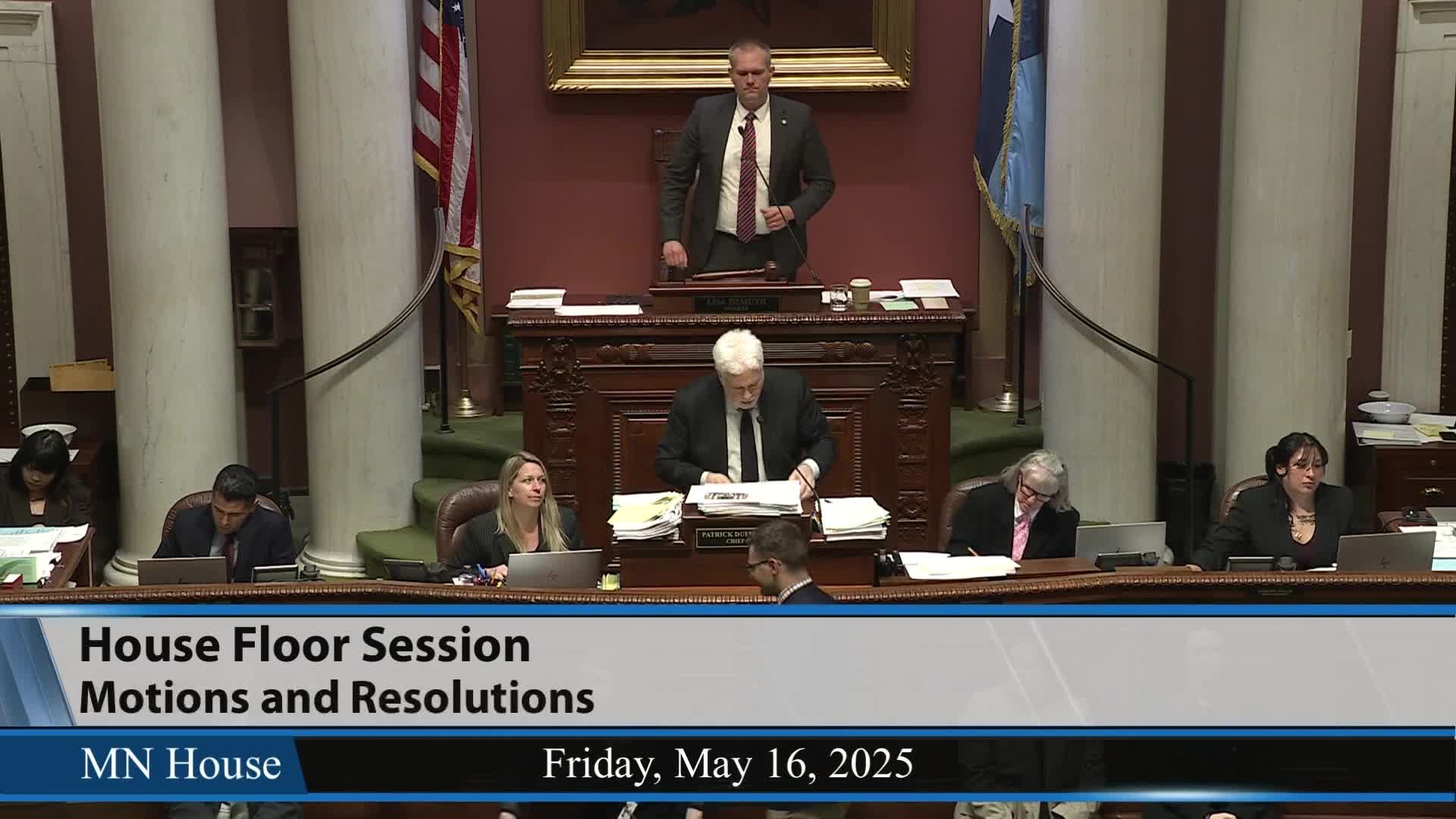
The House passed House File 2433 on May 16 by a 93–41 margin, a multi-part education finance bill that links general education formula growth to inflation, creates a task force to review compensatory revenue, and adjusts several grants and program funding streams.
Lawmakers described the measure as a compromise crafted under a constrained revenue target: an initial allocation aimed at supporting early-literacy investments (the READ Act) and basic supplemental aid to give districts more flexible resources. The bill includes funding for Math Corps, student-support personnel aid, long-term facilities maintenance, and other targeted items. Several legislatively appointed nonprofit grants were preserved for the first biennium but removed from the tails pending further review.
The bill also creates a task force to review and recommend changes to the compensatory revenue formula after testimony showed some districts would face sudden, large losses under recent data changes. Members from affected districts — including South St. Paul and Columbia Heights — described looming “compensatory cliffs” where per-student allocations could fall sharply because of changes in counting methods.
One of the most contested provisions in the House finance package is the repeal date tied to a seasonal unemployment-insurance eligibility policy for certain hourly school employees. Supporters said the change is necessary to hold the line on long-term state spending and to preserve district budgets; opponents said the repeal would remove an earned benefit from paraprofessionals, bus drivers and food-service workers and undermine workforce stability.
Lawmakers emphasized this bill represents an attempt to balance increased flexibility for districts, protection of previously enacted programs and limited new funding under a tight fiscal target. Several speakers urged the Senate and governor to preserve indexation and protect key investments during conference negotiations.
Supporters asked members to approve the package to move to conference committee and to preserve the state’s ability to fund ongoing K–12 needs in a volatile fiscal environment. The bill passed on a roll call of 93 yays and 41 nays.
Lawmakers described the measure as a compromise crafted under a constrained revenue target: an initial allocation aimed at supporting early-literacy investments (the READ Act) and basic supplemental aid to give districts more flexible resources. The bill includes funding for Math Corps, student-support personnel aid, long-term facilities maintenance, and other targeted items. Several legislatively appointed nonprofit grants were preserved for the first biennium but removed from the tails pending further review.
The bill also creates a task force to review and recommend changes to the compensatory revenue formula after testimony showed some districts would face sudden, large losses under recent data changes. Members from affected districts — including South St. Paul and Columbia Heights — described looming “compensatory cliffs” where per-student allocations could fall sharply because of changes in counting methods.
One of the most contested provisions in the House finance package is the repeal date tied to a seasonal unemployment-insurance eligibility policy for certain hourly school employees. Supporters said the change is necessary to hold the line on long-term state spending and to preserve district budgets; opponents said the repeal would remove an earned benefit from paraprofessionals, bus drivers and food-service workers and undermine workforce stability.
Lawmakers emphasized this bill represents an attempt to balance increased flexibility for districts, protection of previously enacted programs and limited new funding under a tight fiscal target. Several speakers urged the Senate and governor to preserve indexation and protect key investments during conference negotiations.
Supporters asked members to approve the package to move to conference committee and to preserve the state’s ability to fund ongoing K–12 needs in a volatile fiscal environment. The bill passed on a roll call of 93 yays and 41 nays.
Don't Miss a Word: See the Full Meeting!
Go beyond summaries. Unlock every video, transcript, and key insight with a Founder Membership.
✓
Get instant access to full meeting videos
✓
Search and clip any phrase from complete transcripts
✓
Receive AI-powered summaries & custom alerts
✓
Enjoy lifetime, unrestricted access to government data
30-day money-back guarantee
