Commission grants dental office temporary sewer waiver while utilities studies shared lift‑station option
May 20, 2025 | Marion County, Florida
This article was created by AI summarizing key points discussed. AI makes mistakes, so for full details and context, please refer to the video of the full meeting. Please report any errors so we can fix them. Report an error »
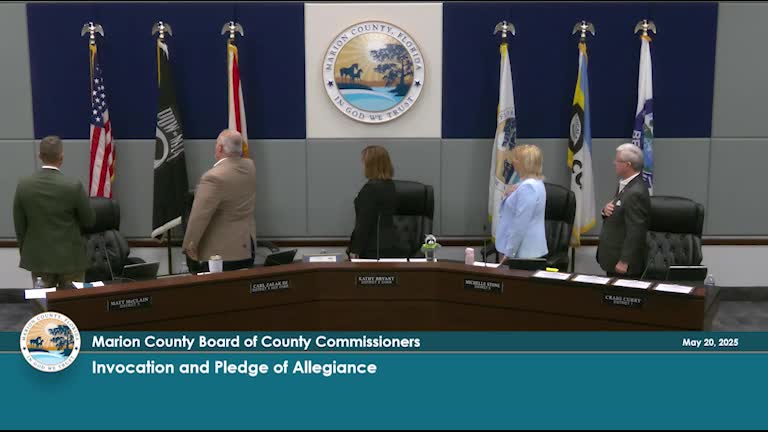
Commissioners unanimously approved a temporary waiver on May 20 allowing a proposed dental office on State Road 200 to proceed with an on‑site enhanced nutrient‑reducing septic system while staff explores whether a shared lift‑station and sewer connection can be provided.
The board’s action followed a presentation from Tony Cunningham, utilities director, who said the site lies within the county’s connection distance to an existing sewer force main on the north side of SR‑200 but connecting would require a lift station and several thousand feet of force main. Cunningham said the utility code requires connection where sewer is available, and staff denied an earlier design review waiver because the property is within the connection distance.
The dental office owner and their consultants told the board the cost estimate to construct a private lift station, force main and related work was about $250,000; their alternative estimate for an on‑site enhanced nitrogen‑reducing septic system was about $14,600. Attorney Austin Daley and project manager Jim Sanborn said the petitioner had contracted a builder and wanted to begin construction, and that the high lift‑station cost created an unfair burden for a single small commercial user.
Commissioner Jerri Stone moved to grant the waiver on condition that county utilities report back within 30 days on the feasibility — site, cost and schedule — for a shared lift‑station/master connection that would serve multiple parcels on the north side of SR‑200. Commissioner Zalick seconded the motion. The board specified that if utilities finds a viable plan to provide central sewer for the project during construction, the temporary waiver would not remain in effect and the project would be required to connect.
County staff agreed to begin a rapid study of potential lift‑station locations, easement needs and estimated shared costs so the board and applicant could determine whether a county‑facilitated connection is feasible. Project representatives told the board they would delay installing a permanent septic system until the utilities study concluded, to avoid installing infrastructure they might have to remove.
The motion passed unanimously.
Why it matters: the case illustrates how one small commercial project can either trigger public infrastructure (and associated cost‑sharing questions) or remain on private septic. The board’s conditional approval balances the applicant’s near‑term development timetable against a county planning objective to extend sewer services into growth corridors and avoid long‑term reliance on private septic for commercial parcels.
Votes at a glance: Motion to grant waiver with 30‑day utilities review — approved unanimously (5‑0).
The board’s action followed a presentation from Tony Cunningham, utilities director, who said the site lies within the county’s connection distance to an existing sewer force main on the north side of SR‑200 but connecting would require a lift station and several thousand feet of force main. Cunningham said the utility code requires connection where sewer is available, and staff denied an earlier design review waiver because the property is within the connection distance.
The dental office owner and their consultants told the board the cost estimate to construct a private lift station, force main and related work was about $250,000; their alternative estimate for an on‑site enhanced nitrogen‑reducing septic system was about $14,600. Attorney Austin Daley and project manager Jim Sanborn said the petitioner had contracted a builder and wanted to begin construction, and that the high lift‑station cost created an unfair burden for a single small commercial user.
Commissioner Jerri Stone moved to grant the waiver on condition that county utilities report back within 30 days on the feasibility — site, cost and schedule — for a shared lift‑station/master connection that would serve multiple parcels on the north side of SR‑200. Commissioner Zalick seconded the motion. The board specified that if utilities finds a viable plan to provide central sewer for the project during construction, the temporary waiver would not remain in effect and the project would be required to connect.
County staff agreed to begin a rapid study of potential lift‑station locations, easement needs and estimated shared costs so the board and applicant could determine whether a county‑facilitated connection is feasible. Project representatives told the board they would delay installing a permanent septic system until the utilities study concluded, to avoid installing infrastructure they might have to remove.
The motion passed unanimously.
Why it matters: the case illustrates how one small commercial project can either trigger public infrastructure (and associated cost‑sharing questions) or remain on private septic. The board’s conditional approval balances the applicant’s near‑term development timetable against a county planning objective to extend sewer services into growth corridors and avoid long‑term reliance on private septic for commercial parcels.
Votes at a glance: Motion to grant waiver with 30‑day utilities review — approved unanimously (5‑0).
View the Full Meeting & All Its Details
This article offers just a summary. Unlock complete video, transcripts, and insights as a Founder Member.
✓
Watch full, unedited meeting videos
✓
Search every word spoken in unlimited transcripts
✓
AI summaries & real-time alerts (all government levels)
✓
Permanent access to expanding government content
30-day money-back guarantee
