Peer recovery, quick-response teams and naloxone distribution emphasized as core uses for settlement funds
May 20, 2025 | 2025-2026 House Legislature MI, Michigan
This article was created by AI summarizing key points discussed. AI makes mistakes, so for full details and context, please refer to the video of the full meeting. Please report any errors so we can fix them. Report an error »
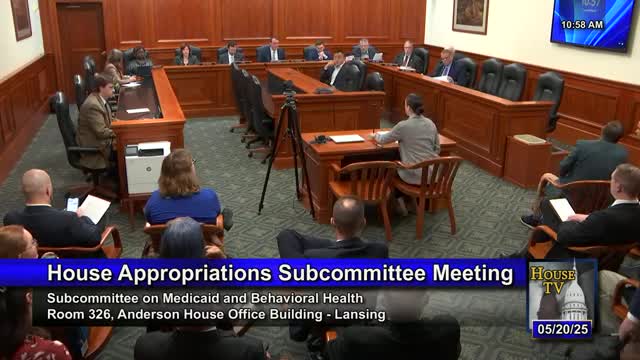
Speakers at the House Appropriations Subcommittee hearing urged lawmakers to fund peer recovery coaching, quick-response teams (QRTs), centralized referral lines and widespread naloxone distribution as proven, immediate interventions.
Dunia Colano, director of operations at Face Addiction Now (FAN), described FAN’s Hope Not Handcuffs program and a statewide Hope Line launched in 2023 that connects people to recovery services. “We have over 180 police department partnerships, with more than 20 hospital systems and 20 active quick response teams across the state,” Colano said, describing a model that offers low-barrier, trauma-informed outreach and follow-up recovery coaching for up to a year.
Greater Flint Health Coalition senior program director Kelly Ainsworth told the committee about Genesee County’s hospital-based Opioid Overdose Recovery Program (OORP), which places certified peer recovery coaches at bedside in emergency departments. Ainsworth said OORP serves about 1,200 people annually and that in 2024 the coalition distributed nearly 28,000 naloxone kits across the county. She described efforts to place naloxone-distribution boxes in hospital lobbies and highway rest areas.
Speakers argued these programs meet people “where they are” and help reduce overdose deaths, increase treatment entry and support families. Witnesses asked the committee to consider operating and expansion funds that would support staffing, distribution logistics and durable infrastructure (for example, sustained funding for QRTs and peer positions rather than one-time grants).
What was not decided: No specific funding amounts were approved. Presenters asked for the committee’s consideration and follow-up on proposals.
Next steps: Providers said they will submit more detailed budgets and implementation plans for the subcommittee’s review.
Dunia Colano, director of operations at Face Addiction Now (FAN), described FAN’s Hope Not Handcuffs program and a statewide Hope Line launched in 2023 that connects people to recovery services. “We have over 180 police department partnerships, with more than 20 hospital systems and 20 active quick response teams across the state,” Colano said, describing a model that offers low-barrier, trauma-informed outreach and follow-up recovery coaching for up to a year.
Greater Flint Health Coalition senior program director Kelly Ainsworth told the committee about Genesee County’s hospital-based Opioid Overdose Recovery Program (OORP), which places certified peer recovery coaches at bedside in emergency departments. Ainsworth said OORP serves about 1,200 people annually and that in 2024 the coalition distributed nearly 28,000 naloxone kits across the county. She described efforts to place naloxone-distribution boxes in hospital lobbies and highway rest areas.
Speakers argued these programs meet people “where they are” and help reduce overdose deaths, increase treatment entry and support families. Witnesses asked the committee to consider operating and expansion funds that would support staffing, distribution logistics and durable infrastructure (for example, sustained funding for QRTs and peer positions rather than one-time grants).
What was not decided: No specific funding amounts were approved. Presenters asked for the committee’s consideration and follow-up on proposals.
Next steps: Providers said they will submit more detailed budgets and implementation plans for the subcommittee’s review.
View the Full Meeting & All Its Details
This article offers just a summary. Unlock complete video, transcripts, and insights as a Founder Member.
✓
Watch full, unedited meeting videos
✓
Search every word spoken in unlimited transcripts
✓
AI summaries & real-time alerts (all government levels)
✓
Permanent access to expanding government content
30-day money-back guarantee
