Amarillo budget workshop weighs street-maintenance fee as public-safety costs rise
August 07, 2025 | Amarillo, Potter County, Texas
This article was created by AI summarizing key points discussed. AI makes mistakes, so for full details and context, please refer to the video of the full meeting. Please report any errors so we can fix them. Report an error »
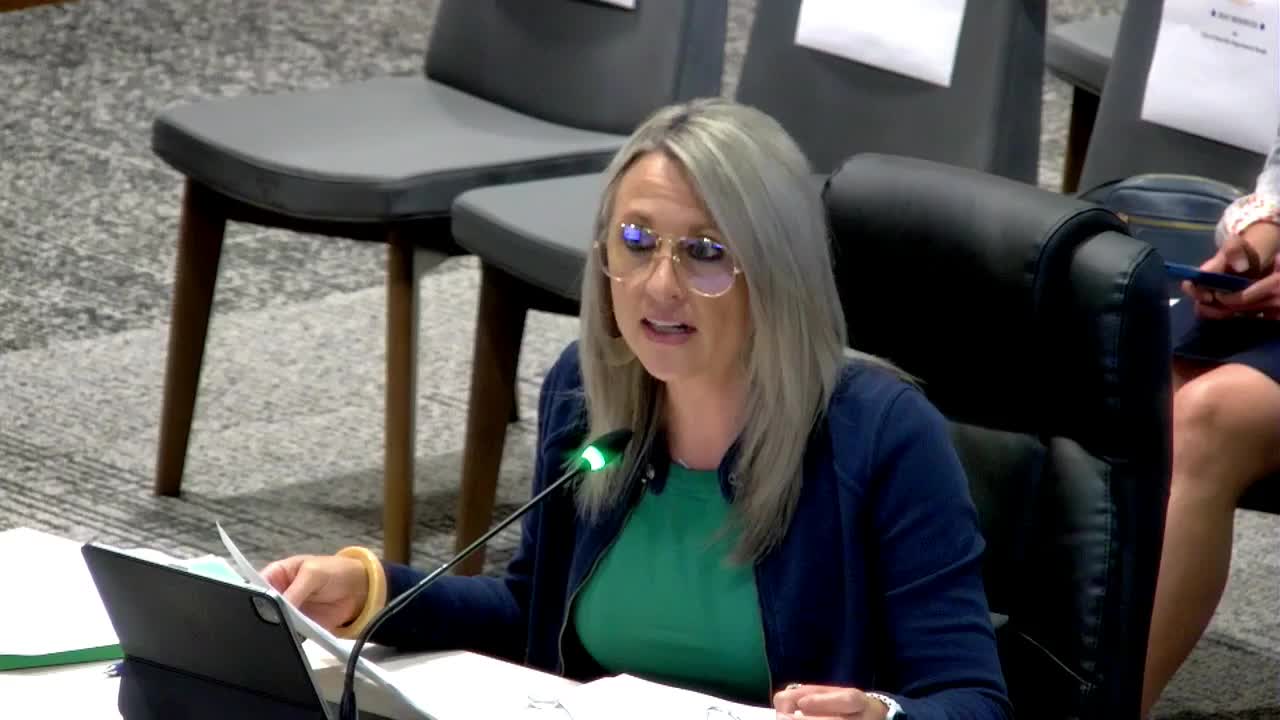
The Amarillo City Council and staff continued a multi‑day budget workshop where city leaders discussed moving street maintenance out of the general fund into a self‑supporting enterprise fund funded by a new monthly street‑maintenance fee. City staff said the change is intended to protect ongoing street operations from being cut as competing demands for limited general‑fund dollars grow.
Budget staff member Laura Storrs told the council that the proposed residential target for the new fee would be about $8 per month, with nonresidential rates set by a trip‑generation formula used by other Texas cities. "If we went with the $8 target rate for residential, we would have to see an average across nonresidential of about $75," Storrs said. She described a phased implementation option that would start a lower residential charge (for example $3 per month) and raise it as billing systems and trip calculations are finalized.
Why it matters: Council members and staff said rising public‑safety payroll costs, earlier pay increases and the city’s limited ability to raise taxes have squeezed general‑fund flexibility. City leaders said a dedicated revenue source for streets would keep patching, pothole response and routine street maintenance from being reallocated to other priorities such as police, fire and employee compensation.
Details and tradeoffs
• How the fee would be set: staff described using trip‑generation factors from the Institute of Transportation Engineers (ITE) to assign multipliers to nonresidential properties (grocery, restaurant, office, shopping center) and a flat monthly charge for single‑family homes. Storrs said several Texas cities use that method and gave examples including Abilene, Killeen and Austin.
• Expected revenue goal: Council staff said the target fee level in their modelling — roughly $8 per month residential and the nonresidential average noted above — would generate enough revenue to cover roughly $15 million a year of street operations costs that are now funded from the general fund. Staff emphasized the figure is preliminary and would require a feasibility study and legal review.
• Implementation steps: staff outlined work still required before billing could begin: a trip‑generation analysis, billing‑software changes, ordinance drafting, public outreach and a go‑live test window. Storrs estimated implementation would take 4–6 months after council direction.
Public‑safety and the budget context
Council and staff spent much of the workshop detailing public‑safety personnel and pay items that drive the budget. Storrs said the draft budget includes requests for pay adjustments and other compensation items the council will prioritize. Key items discussed at length:
• Police: Staff reported new positions tied to school liaison support for Canyon ISD, continued growth of civilian investigator positions, and an additional $700,000 proposed for the police overtime account. Storrs said police overtime has fallen from a high of about $4.2 million in 2023–24 to a current payroll figure of about $2.5–$3.0 million year‑to‑date, but she cautioned overtime is closely tied to vacancies and minimum staffing needs. "Police is one of those departments that, given it has minimum staffing requirements, there's a direct correlation between vacancies and overtime," she said.
• Fire: Staff described an added firefighter position tied to the department’s staffing model, plus a $300,000 increase proposed for fire overtime to reflect pay increases. Fire officials also noted the department receives significant state reimbursements for out‑of‑jurisdiction deployments (TIFMAS/state mutual‑aid), which can offset overtime in some years.
• Pay study and raises: Council members pressed staff for a clearer overlay tying the consultant pay study to the draft budget. Storrs said staff would return soon with detailed mapping to show how proposed raises and the study recommendations affect specific ranks and civilian positions.
Council reaction and next steps
Council members expressed concern about timing, visibility and public reaction. Multiple council members said they had not been briefed before the workshop that staff would include a street‑maintenance fee option in the draft budget and asked for more time to review supporting financial detail.
Several council members requested staff produce a clearer, audited reconciliation of city cash and reserves that underpins the budget. Mayor and council asked staff to return with more detail showing: how much of the city’s reported cash and investments are restricted by bond covenants, component units (for example AEDC or hospital district) or special‑revenue requirements; what portion is one‑time capital funding; and what is truly available to support ongoing operations.
"If there's a willingness for a phased approach, that helps make your options more doable," the city manager told council. The council set a follow‑up workshop for Friday, Oct. 15 to allow staff time to run additional scenarios and present options. Council members said they expect staff to show the tradeoffs of funding street maintenance via a fee versus returning the cost to the general fund (which would require offsetting cuts or reduced raises elsewhere).
What council members said
• "This is a difficult choice — we can either add a fee, cut services or go to the voters for new taxes," Councilman Simpson said. "I'd like staff to show specific tradeoffs so the council can decide what to prioritize."
• "I don't want us to reach a point where every new municipal function becomes a fee on the utility bill," another councilmember said. "We should test all other options and make sure the public understands this before we move forward."
Next steps and public outreach
Staff said they will run a feasibility analysis, draft ordinance language, and plan public outreach if council asks them to proceed. The outreach plan staff described would include neighborhood presentations, online information and clear examples of how residential and typical business customers would be billed under a phased approach.
Ending
Council members agreed to continue budget deliberations and asked staff to return with clarified reserve reconciliations, the compensation overlay tied to the pay study, more precise overtime and vacancy projections, and a breakdown of the steps and timeline required to implement a street‑maintenance fee. No formal vote was taken on the fee proposal during the workshop.
(Reporting note: direct quotes and attributions in this story come from participants at the Amarillo budget workshop; a full transcript of the session appears in the municipal record.)
Budget staff member Laura Storrs told the council that the proposed residential target for the new fee would be about $8 per month, with nonresidential rates set by a trip‑generation formula used by other Texas cities. "If we went with the $8 target rate for residential, we would have to see an average across nonresidential of about $75," Storrs said. She described a phased implementation option that would start a lower residential charge (for example $3 per month) and raise it as billing systems and trip calculations are finalized.
Why it matters: Council members and staff said rising public‑safety payroll costs, earlier pay increases and the city’s limited ability to raise taxes have squeezed general‑fund flexibility. City leaders said a dedicated revenue source for streets would keep patching, pothole response and routine street maintenance from being reallocated to other priorities such as police, fire and employee compensation.
Details and tradeoffs
• How the fee would be set: staff described using trip‑generation factors from the Institute of Transportation Engineers (ITE) to assign multipliers to nonresidential properties (grocery, restaurant, office, shopping center) and a flat monthly charge for single‑family homes. Storrs said several Texas cities use that method and gave examples including Abilene, Killeen and Austin.
• Expected revenue goal: Council staff said the target fee level in their modelling — roughly $8 per month residential and the nonresidential average noted above — would generate enough revenue to cover roughly $15 million a year of street operations costs that are now funded from the general fund. Staff emphasized the figure is preliminary and would require a feasibility study and legal review.
• Implementation steps: staff outlined work still required before billing could begin: a trip‑generation analysis, billing‑software changes, ordinance drafting, public outreach and a go‑live test window. Storrs estimated implementation would take 4–6 months after council direction.
Public‑safety and the budget context
Council and staff spent much of the workshop detailing public‑safety personnel and pay items that drive the budget. Storrs said the draft budget includes requests for pay adjustments and other compensation items the council will prioritize. Key items discussed at length:
• Police: Staff reported new positions tied to school liaison support for Canyon ISD, continued growth of civilian investigator positions, and an additional $700,000 proposed for the police overtime account. Storrs said police overtime has fallen from a high of about $4.2 million in 2023–24 to a current payroll figure of about $2.5–$3.0 million year‑to‑date, but she cautioned overtime is closely tied to vacancies and minimum staffing needs. "Police is one of those departments that, given it has minimum staffing requirements, there's a direct correlation between vacancies and overtime," she said.
• Fire: Staff described an added firefighter position tied to the department’s staffing model, plus a $300,000 increase proposed for fire overtime to reflect pay increases. Fire officials also noted the department receives significant state reimbursements for out‑of‑jurisdiction deployments (TIFMAS/state mutual‑aid), which can offset overtime in some years.
• Pay study and raises: Council members pressed staff for a clearer overlay tying the consultant pay study to the draft budget. Storrs said staff would return soon with detailed mapping to show how proposed raises and the study recommendations affect specific ranks and civilian positions.
Council reaction and next steps
Council members expressed concern about timing, visibility and public reaction. Multiple council members said they had not been briefed before the workshop that staff would include a street‑maintenance fee option in the draft budget and asked for more time to review supporting financial detail.
Several council members requested staff produce a clearer, audited reconciliation of city cash and reserves that underpins the budget. Mayor and council asked staff to return with more detail showing: how much of the city’s reported cash and investments are restricted by bond covenants, component units (for example AEDC or hospital district) or special‑revenue requirements; what portion is one‑time capital funding; and what is truly available to support ongoing operations.
"If there's a willingness for a phased approach, that helps make your options more doable," the city manager told council. The council set a follow‑up workshop for Friday, Oct. 15 to allow staff time to run additional scenarios and present options. Council members said they expect staff to show the tradeoffs of funding street maintenance via a fee versus returning the cost to the general fund (which would require offsetting cuts or reduced raises elsewhere).
What council members said
• "This is a difficult choice — we can either add a fee, cut services or go to the voters for new taxes," Councilman Simpson said. "I'd like staff to show specific tradeoffs so the council can decide what to prioritize."
• "I don't want us to reach a point where every new municipal function becomes a fee on the utility bill," another councilmember said. "We should test all other options and make sure the public understands this before we move forward."
Next steps and public outreach
Staff said they will run a feasibility analysis, draft ordinance language, and plan public outreach if council asks them to proceed. The outreach plan staff described would include neighborhood presentations, online information and clear examples of how residential and typical business customers would be billed under a phased approach.
Ending
Council members agreed to continue budget deliberations and asked staff to return with clarified reserve reconciliations, the compensation overlay tied to the pay study, more precise overtime and vacancy projections, and a breakdown of the steps and timeline required to implement a street‑maintenance fee. No formal vote was taken on the fee proposal during the workshop.
(Reporting note: direct quotes and attributions in this story come from participants at the Amarillo budget workshop; a full transcript of the session appears in the municipal record.)
Don't Miss a Word: See the Full Meeting!
Go beyond summaries. Unlock every video, transcript, and key insight with a Founder Membership.
✓
Get instant access to full meeting videos
✓
Search and clip any phrase from complete transcripts
✓
Receive AI-powered summaries & custom alerts
✓
Enjoy lifetime, unrestricted access to government data
30-day money-back guarantee
