Pulaski County hears request for 65% tax abatement, bond issuance for 300‑MW Downstream Solar project
August 07, 2025 | Pulaski County, Arkansas
This article was created by AI summarizing key points discussed. AI makes mistakes, so for full details and context, please refer to the video of the full meeting. Please report any errors so we can fix them. Report an error »
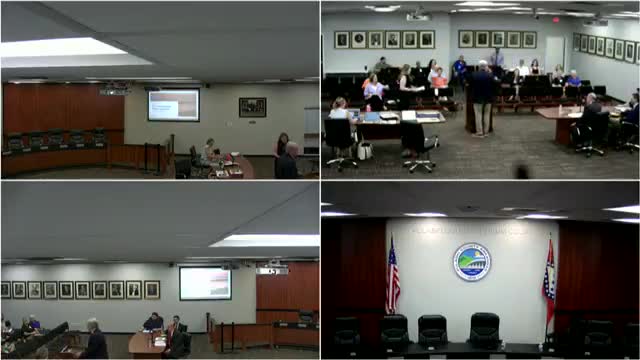
Pulaski County officials on Thursday heard a request from Invenergy and counsel for Downstream Solar Energy LLC for a 65% property tax abatement and county approval to issue bonds to finance a 300‑megawatt solar project that would span Lonoke and Pulaski counties.
The request was presented to the Pulaski County judge by Nicole Solsby of Rose Law Firm, who said Downstream Solar is seeking a 65% abatement — meaning the company would pay 35% of the personal property tax liability on the project — and a county court order authorizing the issuance of bonds and related documents. The project developer, identified in the hearing as a project developer for Invenergy, described the project as a roughly 300‑megawatt facility sited across about 6,000 acres of signed land agreements, about 10% of which are in Pulaski County.
The pilot and bond request would fund pilot payments to the county and school district rather than taxing the project at full assessed rates. Solsby said the project team estimates more than $200,000,000 in land payments and other local payments to the two counties over the life of the project, and presented an estimated project valuation of about $600,000,000 (with a conservative cap of $700,000,000 included in materials). The project team also estimated roughly 300 construction jobs at peak and about three permanent operations jobs.
Why it matters: the abatement and bond authorization would set the long‑term tax treatment of a major energy facility in the two counties, and would allocate pilot receipts to Pulaski County’s general fund and the Pulaski County Special School District in the amounts shown in the project materials. The county judge did not vote at the hearing; he said he would consider the materials and likely issue a decision within 30 days.
Discussion and clarifications at the hearing focused on how the tax payments would be assessed and distributed, who would pay the annual PILOT amounts, the length of the abatement and the protections for landowners and taxpayers. Solsby said Downstream Solar would pay 35% of the personal property tax that would otherwise be due on the project’s assessed value; she emphasized that landowners would not be responsible for the company’s PILOT payments.
Pulaski County Attorney Adam Fogelman explained that, in practice, assessors often list solar field improvements on a separate parcel tied to the land for tax purposes. Questions from residents and local officials addressed whether the PILOT would reduce state funding formulas to the school districts and how those state calculations operate. Solsby said the arrangement should not leave students worse off, while acknowledging the state’s school funding formula can reallocate dollars in ways that are “a little funky.”
Residents asked about potential offtakers for the project’s power; the project developer said contracting is ongoing and could include utilities or private companies, and cited prior Invenergy projects that had contracts with Entergy Arkansas, Meta and Verizon as examples. Residents also asked about ownership and foreign investment in Invenergy and whether the company would be responsible for decommissioning and cleanup; the developer said Invenergy is U.S.-based, has international investors, and that decommissioning bonds and 24‑hour monitoring would cover removal and cleanup costs if the project ends or is damaged.
Other specifics presented to the court included: an estimated $900,000 to Pulaski County’s general fund and roughly $20,000,000 to the Pulaski County Special School District over the project life (figures presented by project consultants and described as estimates), a 30‑year PILOT term that the presenters said would revert to full taxation after the term ends, and a construction timeline the developer said could begin in early 2026 if approvals and financing proceed.
No formal vote was taken. The Pulaski County judge closed the hearing saying he would take the materials under advisement and “probably make my decision within the next 30 days.”
The request was presented to the Pulaski County judge by Nicole Solsby of Rose Law Firm, who said Downstream Solar is seeking a 65% abatement — meaning the company would pay 35% of the personal property tax liability on the project — and a county court order authorizing the issuance of bonds and related documents. The project developer, identified in the hearing as a project developer for Invenergy, described the project as a roughly 300‑megawatt facility sited across about 6,000 acres of signed land agreements, about 10% of which are in Pulaski County.
The pilot and bond request would fund pilot payments to the county and school district rather than taxing the project at full assessed rates. Solsby said the project team estimates more than $200,000,000 in land payments and other local payments to the two counties over the life of the project, and presented an estimated project valuation of about $600,000,000 (with a conservative cap of $700,000,000 included in materials). The project team also estimated roughly 300 construction jobs at peak and about three permanent operations jobs.
Why it matters: the abatement and bond authorization would set the long‑term tax treatment of a major energy facility in the two counties, and would allocate pilot receipts to Pulaski County’s general fund and the Pulaski County Special School District in the amounts shown in the project materials. The county judge did not vote at the hearing; he said he would consider the materials and likely issue a decision within 30 days.
Discussion and clarifications at the hearing focused on how the tax payments would be assessed and distributed, who would pay the annual PILOT amounts, the length of the abatement and the protections for landowners and taxpayers. Solsby said Downstream Solar would pay 35% of the personal property tax that would otherwise be due on the project’s assessed value; she emphasized that landowners would not be responsible for the company’s PILOT payments.
Pulaski County Attorney Adam Fogelman explained that, in practice, assessors often list solar field improvements on a separate parcel tied to the land for tax purposes. Questions from residents and local officials addressed whether the PILOT would reduce state funding formulas to the school districts and how those state calculations operate. Solsby said the arrangement should not leave students worse off, while acknowledging the state’s school funding formula can reallocate dollars in ways that are “a little funky.”
Residents asked about potential offtakers for the project’s power; the project developer said contracting is ongoing and could include utilities or private companies, and cited prior Invenergy projects that had contracts with Entergy Arkansas, Meta and Verizon as examples. Residents also asked about ownership and foreign investment in Invenergy and whether the company would be responsible for decommissioning and cleanup; the developer said Invenergy is U.S.-based, has international investors, and that decommissioning bonds and 24‑hour monitoring would cover removal and cleanup costs if the project ends or is damaged.
Other specifics presented to the court included: an estimated $900,000 to Pulaski County’s general fund and roughly $20,000,000 to the Pulaski County Special School District over the project life (figures presented by project consultants and described as estimates), a 30‑year PILOT term that the presenters said would revert to full taxation after the term ends, and a construction timeline the developer said could begin in early 2026 if approvals and financing proceed.
No formal vote was taken. The Pulaski County judge closed the hearing saying he would take the materials under advisement and “probably make my decision within the next 30 days.”
View the Full Meeting & All Its Details
This article offers just a summary. Unlock complete video, transcripts, and insights as a Founder Member.
✓
Watch full, unedited meeting videos
✓
Search every word spoken in unlimited transcripts
✓
AI summaries & real-time alerts (all government levels)
✓
Permanent access to expanding government content
30-day money-back guarantee
