Riverside Community College District outlines $180 million Inland Empire Technical Trade Center plan for Jurupa Valley
August 07, 2025 | Jurupa Valley, Riverside County, California
This article was created by AI summarizing key points discussed. AI makes mistakes, so for full details and context, please refer to the video of the full meeting. Please report any errors so we can fix them. Report an error »
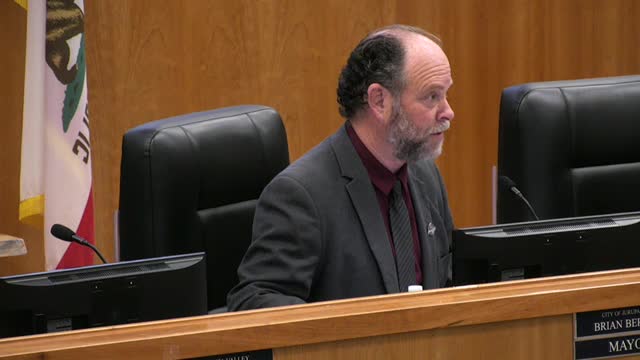
Riverside Community College District officials presented the Inland Empire Technical Trade Center plan to the Jurupa Valley City Council during a study session, describing a campus-sized program aimed at workforce development and pathways into higher-paid jobs.
Chancellor Dr. Esock told the council the district has prioritized Jurupa Valley for a technical trade campus and described the project’s guiding title as “Moving Revitcendants from Poverty to Prosperity.” He said the district has $954,000,000 in bond proceeds, of which about $180,000,000 is assigned for the initial IETTC construction and another $33,000,000 is set aside for land acquisition — a total of roughly $213,000,000 allocated to Jurupa Valley.
The presentation, led by the chancellor and district vice chancellors, described two initial career-technical buildings totaling roughly 93,000 gross square feet and an initial enrollment target of about 400 full‑time‑equivalent students (the district estimated that represents roughly 1,200–1,300 unduplicated students). Programs discussed at the meeting included health‑care pathways (certified nursing assistant and vocational nursing), welding, HVAC, software/IT, public safety and prototyping/innovation lab work. Vice Chancellor Goldware said every square foot is being designed for “high impact learning” and stressed equity and local job placement in logistics, health care and skilled trades.
Dean Tammy Vanholm, identified as the dean of nursing at Riverside City College, described existing nursing and certified nursing assistant (CNA) programs and recent grants her division received to expand capacity. She said a $1,400,000 grant allowed the CNA program to expand from 60 graduates twice per year to 240 twice per year, and that simulation, virtual‑reality and augmented‑reality training spaces are in increasing demand. Vanholm told the council the new IETTC site will allow the district to move several health programs — CNAs, home‑health and acute care nursing assistant training — to the local campus to increase throughput and reduce clinical placement pressure.
Vice Chancellor Eric Bishop described the district’s dual‑enrollment work with Jurupa Valley Unified and gave enrollment figures for district colleges; he said dual‑enrolled students at RCCD saw approximately an 80 percent success rate in 2024–25, about seven percentage points higher than the general student population. Bishop and other presenters said the IETTC will emphasize paid apprenticeships and “earning while learning”; Bishop said all the district’s apprenticeship programs are paid and that the IETTC model intends to remove tuition or fee barriers for students.
Council members asked about paid apprenticeships and direct placement partnerships; the district said apprenticeships will be paid and that the IETTC model is intended to be “earning while learning.” Council members also asked whether the planned campus would include backup power or other resiliency features given past power outages; staff replied that generators were not part of early conversations but that the city and district would explore whether the project should include emergency power requirements or other resiliency measures.
Presenters noted the Avalon site near Jurupa Valley as the intended location and said the district is coordinating with K–12 for dual enrollment, with UCR on a student housing partnership, and with local workforce partners. The district said the IETTC is intended to produce job‑ready graduates in fields where the region has strong demand and to help close gaps in local college‑going rates. No formal action or vote was taken by the council during the study session; presenters agreed to work with city staff on follow‑up, including details on site improvements, undergrounding utilities and possible resiliency features.
Why it matters: the district says the IETTC is funded from existing bond proceeds and land‑acquisition money already assigned to Jurupa Valley and intends to create local pathways to higher‑paying jobs in health care, trades and technology. District leaders said their model emphasizes paid pre‑apprenticeships, apprenticeship placement and reduced student fees to accelerate entry into living‑wage work.
Council members said they supported the project overall but asked for more specifics around site design, utility undergrounding and emergency power. City and district staff agreed to return with more detailed information on those items and on program timelines.
Sources: Presentation to the Jurupa Valley City Council by Riverside Community College District (Chancellor Dr. Esock; Vice Chancellor Eric Bishop; Vice Chancellor Goldware; Dean Tammy Vanholm); Jurupa Valley City Council study session transcript.
Chancellor Dr. Esock told the council the district has prioritized Jurupa Valley for a technical trade campus and described the project’s guiding title as “Moving Revitcendants from Poverty to Prosperity.” He said the district has $954,000,000 in bond proceeds, of which about $180,000,000 is assigned for the initial IETTC construction and another $33,000,000 is set aside for land acquisition — a total of roughly $213,000,000 allocated to Jurupa Valley.
The presentation, led by the chancellor and district vice chancellors, described two initial career-technical buildings totaling roughly 93,000 gross square feet and an initial enrollment target of about 400 full‑time‑equivalent students (the district estimated that represents roughly 1,200–1,300 unduplicated students). Programs discussed at the meeting included health‑care pathways (certified nursing assistant and vocational nursing), welding, HVAC, software/IT, public safety and prototyping/innovation lab work. Vice Chancellor Goldware said every square foot is being designed for “high impact learning” and stressed equity and local job placement in logistics, health care and skilled trades.
Dean Tammy Vanholm, identified as the dean of nursing at Riverside City College, described existing nursing and certified nursing assistant (CNA) programs and recent grants her division received to expand capacity. She said a $1,400,000 grant allowed the CNA program to expand from 60 graduates twice per year to 240 twice per year, and that simulation, virtual‑reality and augmented‑reality training spaces are in increasing demand. Vanholm told the council the new IETTC site will allow the district to move several health programs — CNAs, home‑health and acute care nursing assistant training — to the local campus to increase throughput and reduce clinical placement pressure.
Vice Chancellor Eric Bishop described the district’s dual‑enrollment work with Jurupa Valley Unified and gave enrollment figures for district colleges; he said dual‑enrolled students at RCCD saw approximately an 80 percent success rate in 2024–25, about seven percentage points higher than the general student population. Bishop and other presenters said the IETTC will emphasize paid apprenticeships and “earning while learning”; Bishop said all the district’s apprenticeship programs are paid and that the IETTC model intends to remove tuition or fee barriers for students.
Council members asked about paid apprenticeships and direct placement partnerships; the district said apprenticeships will be paid and that the IETTC model is intended to be “earning while learning.” Council members also asked whether the planned campus would include backup power or other resiliency features given past power outages; staff replied that generators were not part of early conversations but that the city and district would explore whether the project should include emergency power requirements or other resiliency measures.
Presenters noted the Avalon site near Jurupa Valley as the intended location and said the district is coordinating with K–12 for dual enrollment, with UCR on a student housing partnership, and with local workforce partners. The district said the IETTC is intended to produce job‑ready graduates in fields where the region has strong demand and to help close gaps in local college‑going rates. No formal action or vote was taken by the council during the study session; presenters agreed to work with city staff on follow‑up, including details on site improvements, undergrounding utilities and possible resiliency features.
Why it matters: the district says the IETTC is funded from existing bond proceeds and land‑acquisition money already assigned to Jurupa Valley and intends to create local pathways to higher‑paying jobs in health care, trades and technology. District leaders said their model emphasizes paid pre‑apprenticeships, apprenticeship placement and reduced student fees to accelerate entry into living‑wage work.
Council members said they supported the project overall but asked for more specifics around site design, utility undergrounding and emergency power. City and district staff agreed to return with more detailed information on those items and on program timelines.
Sources: Presentation to the Jurupa Valley City Council by Riverside Community College District (Chancellor Dr. Esock; Vice Chancellor Eric Bishop; Vice Chancellor Goldware; Dean Tammy Vanholm); Jurupa Valley City Council study session transcript.
View the Full Meeting & All Its Details
This article offers just a summary. Unlock complete video, transcripts, and insights as a Founder Member.
✓
Watch full, unedited meeting videos
✓
Search every word spoken in unlimited transcripts
✓
AI summaries & real-time alerts (all government levels)
✓
Permanent access to expanding government content
30-day money-back guarantee
