Board reviews early ACAP reading results; department flags textbook delays, COVID learning disruption and summer interventions
August 07, 2025 | Alabama State Department of Education, State Agencies, Executive, Alabama
This article was created by AI summarizing key points discussed. AI makes mistakes, so for full details and context, please refer to the video of the full meeting. Please report any errors so we can fix them. Report an error »
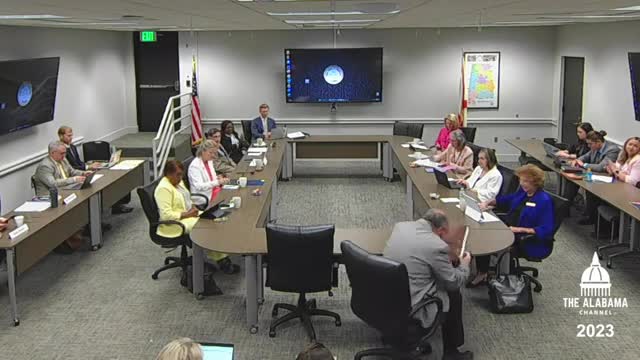
The State Board of Education on June 8 reviewed statewide second‑ and third‑grade results from the ACAP reading subtest and heard department staff describe factors the department is investigating that likely affected scores.
Maggie Hicks, who leads the department’s assessment work, told the board the presentation covers the reading subtest only; math and broader ELA results will be released later this summer. Hicks said the 2023 reading subtest was aligned to the 2021 ELA course of study: “this assessment this year does reflect our updated '21 ELA course of study standards.” Districts received data earlier than in past years, Hicks said, with district reports expected in early July and public posting to follow.
Superintendent‑level staff and assessment leaders identified several reasons for changes in outcomes: the 2021 standards changed test items and emphases, some districts transitioned unevenly to the new standards, and many districts received new reading materials late in the year. As State Superintendent noted at the meeting, “it took time. So a lot of districts did not order books until May, and they didn't arrive until November.”
Hicks said roughly 53,000 students were tested in the two grades and described score movement: the percentage of third graders below grade level rose from 22% (2022) to 24% (2023); second‑grade below‑grade percentages were reported near 21%. Department staff cautioned that the reading subtest is a subset of ELA and that final ELA and math results will follow later.
Presenters and board members identified three operational contributors to the results:
- Transition to the 2021 course of study and associated new test items and emphases (for example, increased measurement of phonological awareness and other elements of the “science of reading”);
- Late ordering and delivery of reading instructional materials in some districts, which shortened classroom time with resources aligned to the new standards; and
- Pandemic‑era disruption: cohorts that lost kindergarten or had chaotic first grade remote experiences continue to show impacts when tested in third grade.
Department staff discussed interventions already in place. The Alabama Reading Initiative (ARI) has regional specialists and coaches supporting districts; department leaders said they are digging into school‑level data to identify schools that need targeted help. Staff also described summer reading camps: historically about half of eligible students attend, and of those who participate a sizeable share make measurable gains. At the meeting department staff estimated summer interventions historically reduce the share of students below grade level by several percentage points when participation is high.
Board members pressed for detailed follow‑up. Questions included which districts showed growth and what instructional materials and professional learning (including LETRS and other science‑of‑reading training) those districts used. Assessment staff said early analyses point to professional learning and coaching as common features in improving districts and that further breakdown by district and school will be supplied to the board.
No formal vote was taken; staff said they will continue to analyze ACAP data, produce district‑level reports for board members and follow up on textbook timing, summer program participation and professional development.
Maggie Hicks, who leads the department’s assessment work, told the board the presentation covers the reading subtest only; math and broader ELA results will be released later this summer. Hicks said the 2023 reading subtest was aligned to the 2021 ELA course of study: “this assessment this year does reflect our updated '21 ELA course of study standards.” Districts received data earlier than in past years, Hicks said, with district reports expected in early July and public posting to follow.
Superintendent‑level staff and assessment leaders identified several reasons for changes in outcomes: the 2021 standards changed test items and emphases, some districts transitioned unevenly to the new standards, and many districts received new reading materials late in the year. As State Superintendent noted at the meeting, “it took time. So a lot of districts did not order books until May, and they didn't arrive until November.”
Hicks said roughly 53,000 students were tested in the two grades and described score movement: the percentage of third graders below grade level rose from 22% (2022) to 24% (2023); second‑grade below‑grade percentages were reported near 21%. Department staff cautioned that the reading subtest is a subset of ELA and that final ELA and math results will follow later.
Presenters and board members identified three operational contributors to the results:
- Transition to the 2021 course of study and associated new test items and emphases (for example, increased measurement of phonological awareness and other elements of the “science of reading”);
- Late ordering and delivery of reading instructional materials in some districts, which shortened classroom time with resources aligned to the new standards; and
- Pandemic‑era disruption: cohorts that lost kindergarten or had chaotic first grade remote experiences continue to show impacts when tested in third grade.
Department staff discussed interventions already in place. The Alabama Reading Initiative (ARI) has regional specialists and coaches supporting districts; department leaders said they are digging into school‑level data to identify schools that need targeted help. Staff also described summer reading camps: historically about half of eligible students attend, and of those who participate a sizeable share make measurable gains. At the meeting department staff estimated summer interventions historically reduce the share of students below grade level by several percentage points when participation is high.
Board members pressed for detailed follow‑up. Questions included which districts showed growth and what instructional materials and professional learning (including LETRS and other science‑of‑reading training) those districts used. Assessment staff said early analyses point to professional learning and coaching as common features in improving districts and that further breakdown by district and school will be supplied to the board.
No formal vote was taken; staff said they will continue to analyze ACAP data, produce district‑level reports for board members and follow up on textbook timing, summer program participation and professional development.
Don't Miss a Word: See the Full Meeting!
Go beyond summaries. Unlock every video, transcript, and key insight with a Founder Membership.
✓
Get instant access to full meeting videos
✓
Search and clip any phrase from complete transcripts
✓
Receive AI-powered summaries & custom alerts
✓
Enjoy lifetime, unrestricted access to government data
30-day money-back guarantee
