WAPA tells senators FY2026 shortfall about $9.6M; urges legislative fixes and new fuel contracts
August 11, 2025 | Committees , Legislative, Virgin Islands, International
This article was created by AI summarizing key points discussed. AI makes mistakes, so for full details and context, please refer to the video of the full meeting. Please report any errors so we can fix them. Report an error »
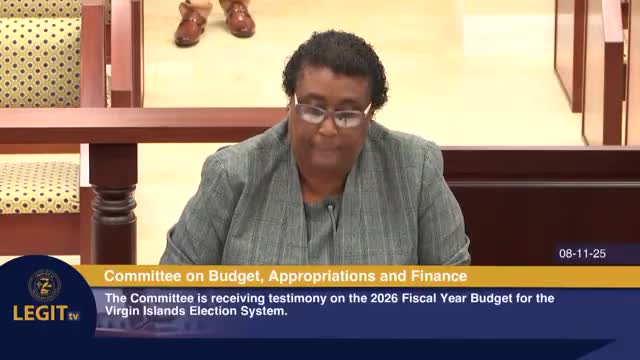
The Virgin Islands Water and Power Authority (WAPA) told the Senate Committee on Budget, Appropriations and Finance on Aug. 11 that its proposed FY2026 operating plan projects an approximate $9.6 million shortfall under current rate recoveries and fuel accounting practices.
Chief Executive Officer Carl Knight testified the authority’s FY2026 budget anticipates roughly $320.8M in revenue requirements, with fuel projected at about $141M (43% of expected revenues) and operating expenses (excluding personnel and fuel) at about $104M. WAPA reported it reduced total fuel costs from more than $165M in FY2025 to an expected $141M for FY2026 because of increased solar and storage production and a lower spot fuel price environment.
Why it matters: WAPA said the shortfall is largely the result of its LIAC (fuel adjustment) collections not fully matching actual fuel costs and transportation fees. The public‑utility regulator has allowed WAPA to include only $0.33/gallon for LPG transportation inside the LIAC while WAPA’s actual LPG transport costs have been closer to $0.59/gallon. Over several fiscal years those mismatches have produced a cumulative fuel shortfall WAPA puts at roughly $147M for 2021–2025.
What WAPA presented and requested
- FY2026 shortfall: CEO Carl Knight said the authority projects a remaining gap of about $9.6M for FY2026 (under current assumptions and excluding possible rate changes). Knight said the authority has reduced a prior structural deficit by more than 75% over the last year through solar, storage and improved fuel procurement.
- Fuel, personnel, debt: Fuel remains the largest single expense (~43% of revenues). Personnel expenses are projected at $61.3M (17.7% of expenses) with 522 full‑time employees on the books as of June 2025. Debt service is projected at about $30.8M.
- Initiatives completed and under way: WAPA credited 18 MWh of battery storage at Randolph Holly, new fuel‑efficient generation at Randolph Holly, multiple solar farms (Petronella and Hugginsburg) and an expected new LPG supply contract tied to Empire Gas Company as measures that sharply reduce the previous gap.
- Legislative and policy asks the authority urged the legislature to consider: funding the street‑lighting shortfall (WAPA billed the central government $7.4M for street lighting in FY25 but received only $2.7M), amending Title 30 V.I.C. to permit a 35‑day meter reading cycle, modifying limits on backbilling to allow correction of underbilling for multiple billing cycles (while preserving consumer protections), authorizing a modest monthly water customer charge (up to $5/month), and placing a statutory cap on the authority’s tort liability (with exceptions for gross negligence).
Financial position and vendor payments
- Cash flow and payables: Knight said WAPA ran monthly cash deficits as large as $8M in FY2024 but had reduced those to between $3M and $3.5M per month in FY2025; the fiscal year closed with a cumulative shortfall estimated at $36–$42M. As of the FY2026 presentation WAPA reported roughly $104.1M in outstanding operating accounts payable (including $7.4M to about 185 local vendors).
- FEMA and federal reimbursements: WAPA expects to draw at least $2.5M in additional FEMA administrative reimbursements for disaster recovery projects and said there are multi‑million‑dollar federal infrastructure projects in procurement (e.g., Richmond rebuild; Randolph‑Holly upgrades) that will affect later fiscal years.
Operational details and priorities
- Street lighting: WAPA tallied 16,427 streetlights territory‑wide and requested a permanent appropriation to fund street‑lighting operations and temporary requests for special events. CEO Knight said WAPA loses money on street lighting under current appropriations and cannot sustain full replacement/upgrades without proper funding.
- Meter reading and billing rules: WAPA asked the legislature to amend meter‑reading statutes from 30 to 35 days to reduce overtime and estimation burdens and to lengthen permitted backbilling windows for correcting underbilling in a manner that distinguishes residential from large commercial accounts.
- Liability and disconnection fees: WAPA proposed a capped tort liability (with exceptions for gross negligence) to reduce exposure and insurance costs. The authority also asked to raise a statutory cap for pole disconnections performed by line crews (for theft/criminal activity) so fees better reflect actual costs for bucket‑truck dispatches.
Ending
Knight told senators the authority has cut structural losses dramatically over the past 12 months and outlined several further actions (FEMA reimbursements, continued renewables and storage deployment, billing improvements, scrap‑metal sales and legislative fixes) that could close the remaining FY2026 funding gap. He asked the legislature to consider the statutory, funding and procurement changes needed to stabilize WAPA’s finances and protect service reliability.
Speakers quoted include Carl Knight, Chief Executive Officer, Virgin Islands Water and Power Authority, who said the authority has "reduced its structural deficit by more than 75% in the last year alone" and urged legislative action to resolve the remaining gap.
Chief Executive Officer Carl Knight testified the authority’s FY2026 budget anticipates roughly $320.8M in revenue requirements, with fuel projected at about $141M (43% of expected revenues) and operating expenses (excluding personnel and fuel) at about $104M. WAPA reported it reduced total fuel costs from more than $165M in FY2025 to an expected $141M for FY2026 because of increased solar and storage production and a lower spot fuel price environment.
Why it matters: WAPA said the shortfall is largely the result of its LIAC (fuel adjustment) collections not fully matching actual fuel costs and transportation fees. The public‑utility regulator has allowed WAPA to include only $0.33/gallon for LPG transportation inside the LIAC while WAPA’s actual LPG transport costs have been closer to $0.59/gallon. Over several fiscal years those mismatches have produced a cumulative fuel shortfall WAPA puts at roughly $147M for 2021–2025.
What WAPA presented and requested
- FY2026 shortfall: CEO Carl Knight said the authority projects a remaining gap of about $9.6M for FY2026 (under current assumptions and excluding possible rate changes). Knight said the authority has reduced a prior structural deficit by more than 75% over the last year through solar, storage and improved fuel procurement.
- Fuel, personnel, debt: Fuel remains the largest single expense (~43% of revenues). Personnel expenses are projected at $61.3M (17.7% of expenses) with 522 full‑time employees on the books as of June 2025. Debt service is projected at about $30.8M.
- Initiatives completed and under way: WAPA credited 18 MWh of battery storage at Randolph Holly, new fuel‑efficient generation at Randolph Holly, multiple solar farms (Petronella and Hugginsburg) and an expected new LPG supply contract tied to Empire Gas Company as measures that sharply reduce the previous gap.
- Legislative and policy asks the authority urged the legislature to consider: funding the street‑lighting shortfall (WAPA billed the central government $7.4M for street lighting in FY25 but received only $2.7M), amending Title 30 V.I.C. to permit a 35‑day meter reading cycle, modifying limits on backbilling to allow correction of underbilling for multiple billing cycles (while preserving consumer protections), authorizing a modest monthly water customer charge (up to $5/month), and placing a statutory cap on the authority’s tort liability (with exceptions for gross negligence).
Financial position and vendor payments
- Cash flow and payables: Knight said WAPA ran monthly cash deficits as large as $8M in FY2024 but had reduced those to between $3M and $3.5M per month in FY2025; the fiscal year closed with a cumulative shortfall estimated at $36–$42M. As of the FY2026 presentation WAPA reported roughly $104.1M in outstanding operating accounts payable (including $7.4M to about 185 local vendors).
- FEMA and federal reimbursements: WAPA expects to draw at least $2.5M in additional FEMA administrative reimbursements for disaster recovery projects and said there are multi‑million‑dollar federal infrastructure projects in procurement (e.g., Richmond rebuild; Randolph‑Holly upgrades) that will affect later fiscal years.
Operational details and priorities
- Street lighting: WAPA tallied 16,427 streetlights territory‑wide and requested a permanent appropriation to fund street‑lighting operations and temporary requests for special events. CEO Knight said WAPA loses money on street lighting under current appropriations and cannot sustain full replacement/upgrades without proper funding.
- Meter reading and billing rules: WAPA asked the legislature to amend meter‑reading statutes from 30 to 35 days to reduce overtime and estimation burdens and to lengthen permitted backbilling windows for correcting underbilling in a manner that distinguishes residential from large commercial accounts.
- Liability and disconnection fees: WAPA proposed a capped tort liability (with exceptions for gross negligence) to reduce exposure and insurance costs. The authority also asked to raise a statutory cap for pole disconnections performed by line crews (for theft/criminal activity) so fees better reflect actual costs for bucket‑truck dispatches.
Ending
Knight told senators the authority has cut structural losses dramatically over the past 12 months and outlined several further actions (FEMA reimbursements, continued renewables and storage deployment, billing improvements, scrap‑metal sales and legislative fixes) that could close the remaining FY2026 funding gap. He asked the legislature to consider the statutory, funding and procurement changes needed to stabilize WAPA’s finances and protect service reliability.
Speakers quoted include Carl Knight, Chief Executive Officer, Virgin Islands Water and Power Authority, who said the authority has "reduced its structural deficit by more than 75% in the last year alone" and urged legislative action to resolve the remaining gap.
View the Full Meeting & All Its Details
This article offers just a summary. Unlock complete video, transcripts, and insights as a Founder Member.
✓
Watch full, unedited meeting videos
✓
Search every word spoken in unlimited transcripts
✓
AI summaries & real-time alerts (all government levels)
✓
Permanent access to expanding government content
30-day money-back guarantee
