Marathon County reviews youth-justice intake, diversion and restorative programs after Goodwill contract ends
August 07, 2025 | Marathon County, Wisconsin
This article was created by AI summarizing key points discussed. AI makes mistakes, so for full details and context, please refer to the video of the full meeting. Please report any errors so we can fix them. Report an error »
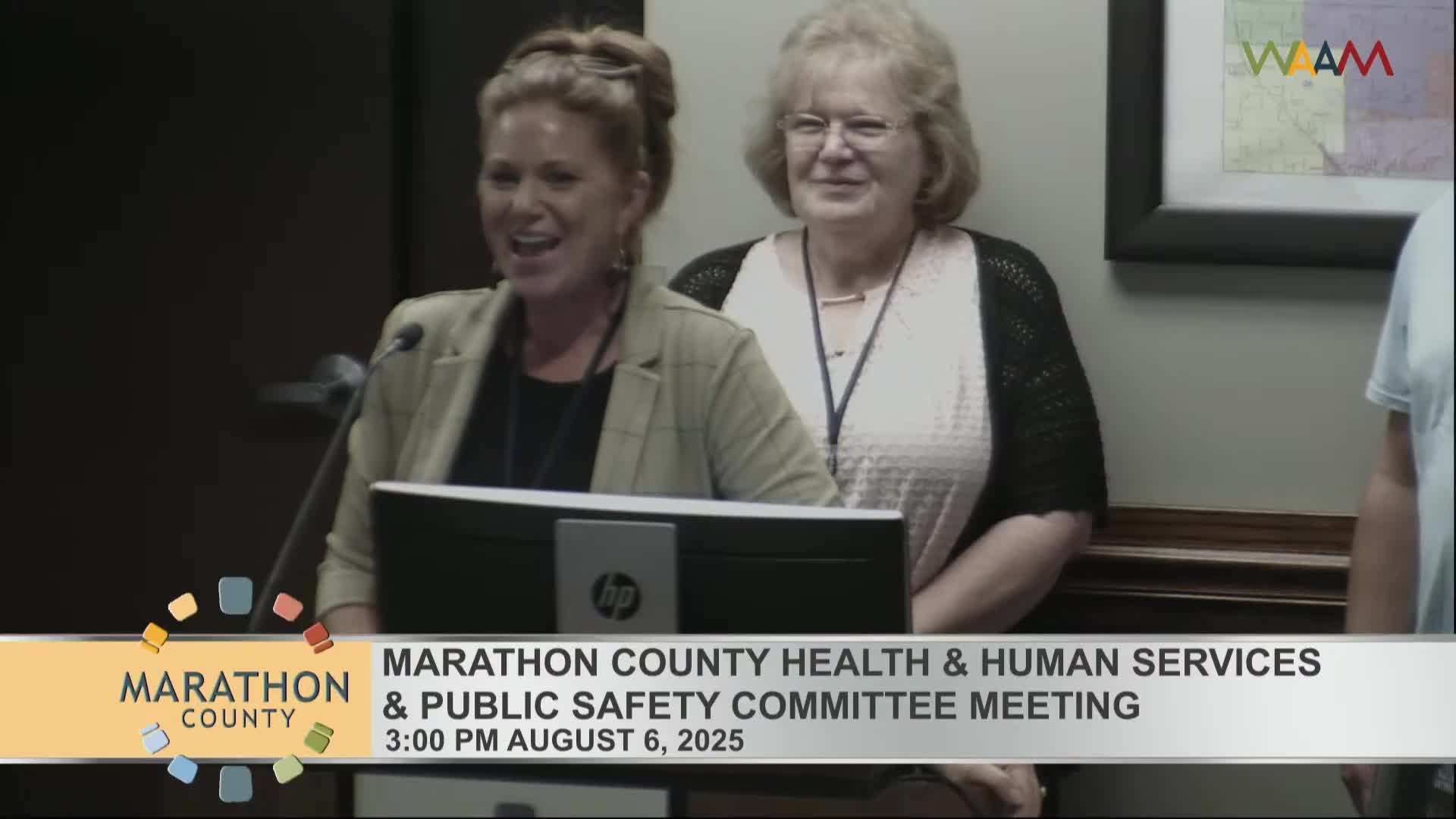
Marathon County social services, juvenile-intake staff and sheriff’s detention staff briefed Health and Human Services and Public Safety committee members on youth-justice intake, diversion options and secure detention operations during a joint session.
Krista Jensen, Marathon County director, introduced the presentation and said county staff wanted committee members to learn “what Marathon County is currently doing” on youth justice and prevention. Becky Bogan, youth justice supervisor, and intake worker Greg Jen described the county’s intake process, diversion tools and the Youth Opportunity Center (YOC).
Bogan said Marathon County has used the Youth Assessment and Screening Instrument (YASI) since February 2019 to measure a youth’s risk to reoffend and assess protective factors, and that the assessment is one input among social-worker judgment and school and family information. “If a youth is low risk, we should really take a hands off approach with those kids,” Bogan said, summarizing the state guidance to avoid widening the net for low-risk youth.
Staff presented referral statistics: 385 total referrals in 2023; a 14% reduction in 2024; and a 9% increase to date in 2025. Disorderly conduct was the most common referral in all years; possession of THC grew in 2024 and remains a frequent charge in 2025. Bogan and Jen said, of the youth who completed a disorderly-conduct diversion cohort they tracked, about 97% had either a mental-health diagnosis or prior Child Protective Services involvement.
Presenters described diversion tools: counsel-and-release intakes, deferred prosecution agreements (DPAs) that set conditions and may be dismissed if complied with, online education, THC- and sexting-diversion programs, and school-based referrals such as truancy diversion. Greg Jen said DPAs are often used for first- or second-time, lower-level referrals; the district attorney’s office reviews county recommendations and can override them.
Jensen and Bogan explained the county’s restorative justice contract with Goodwill ended late in 2024 because Goodwill determined the program “no longer fit with their philosophy.” The Wausau Police Department has implemented a restorative justice program for many first-time, nonviolent offenses; the program includes a four-hour Saturday course, court-ordered community service and monthly check-ins with a school resource officer.
Staff highlighted the Youth Opportunity Center, which marked its one-year anniversary in June. The YOC is funded in part by a Wisconsin Department of Children and Families (DCF) grant that will expire at the end of the year; staff said there is money in the county budget to continue operations in the short term but the grant expiration will require planning.
Committee members and administrators raised questions about whether diversion programs are reducing longer-term involvement in the justice system. County Administrator Leonard said the county is building data capacity and has a data officer working across programs to define key performance indicators — measuring activity, performance and impact — but that social services and criminal justice data sources are still being integrated.
Representatives from the sheriff’s secure-detention unit described intake procedures for youth placed in secure attention and said any new resident not adjudicated would meet with social services and appear before the court the next day. Committee members asked about alcohol versus THC trends, peer-to-peer supports and school-based interventions; staff pointed to the school-based counseling consortium and Mirror Image truancy program as preventive resources.
No formal committee action was taken on policy changes during the presentation; committee members requested follow-up information on program outcomes and metrics.
Krista Jensen, Marathon County director, introduced the presentation and said county staff wanted committee members to learn “what Marathon County is currently doing” on youth justice and prevention. Becky Bogan, youth justice supervisor, and intake worker Greg Jen described the county’s intake process, diversion tools and the Youth Opportunity Center (YOC).
Bogan said Marathon County has used the Youth Assessment and Screening Instrument (YASI) since February 2019 to measure a youth’s risk to reoffend and assess protective factors, and that the assessment is one input among social-worker judgment and school and family information. “If a youth is low risk, we should really take a hands off approach with those kids,” Bogan said, summarizing the state guidance to avoid widening the net for low-risk youth.
Staff presented referral statistics: 385 total referrals in 2023; a 14% reduction in 2024; and a 9% increase to date in 2025. Disorderly conduct was the most common referral in all years; possession of THC grew in 2024 and remains a frequent charge in 2025. Bogan and Jen said, of the youth who completed a disorderly-conduct diversion cohort they tracked, about 97% had either a mental-health diagnosis or prior Child Protective Services involvement.
Presenters described diversion tools: counsel-and-release intakes, deferred prosecution agreements (DPAs) that set conditions and may be dismissed if complied with, online education, THC- and sexting-diversion programs, and school-based referrals such as truancy diversion. Greg Jen said DPAs are often used for first- or second-time, lower-level referrals; the district attorney’s office reviews county recommendations and can override them.
Jensen and Bogan explained the county’s restorative justice contract with Goodwill ended late in 2024 because Goodwill determined the program “no longer fit with their philosophy.” The Wausau Police Department has implemented a restorative justice program for many first-time, nonviolent offenses; the program includes a four-hour Saturday course, court-ordered community service and monthly check-ins with a school resource officer.
Staff highlighted the Youth Opportunity Center, which marked its one-year anniversary in June. The YOC is funded in part by a Wisconsin Department of Children and Families (DCF) grant that will expire at the end of the year; staff said there is money in the county budget to continue operations in the short term but the grant expiration will require planning.
Committee members and administrators raised questions about whether diversion programs are reducing longer-term involvement in the justice system. County Administrator Leonard said the county is building data capacity and has a data officer working across programs to define key performance indicators — measuring activity, performance and impact — but that social services and criminal justice data sources are still being integrated.
Representatives from the sheriff’s secure-detention unit described intake procedures for youth placed in secure attention and said any new resident not adjudicated would meet with social services and appear before the court the next day. Committee members asked about alcohol versus THC trends, peer-to-peer supports and school-based interventions; staff pointed to the school-based counseling consortium and Mirror Image truancy program as preventive resources.
No formal committee action was taken on policy changes during the presentation; committee members requested follow-up information on program outcomes and metrics.
View the Full Meeting & All Its Details
This article offers just a summary. Unlock complete video, transcripts, and insights as a Founder Member.
✓
Watch full, unedited meeting videos
✓
Search every word spoken in unlimited transcripts
✓
AI summaries & real-time alerts (all government levels)
✓
Permanent access to expanding government content
30-day money-back guarantee
