Cape Coral council backs path to higher mobility fees, prioritizes roadway projects amid public concern
August 07, 2025 | Cape Coral City, Lee County, Florida
This article was created by AI summarizing key points discussed. AI makes mistakes, so for full details and context, please refer to the video of the full meeting. Please report any errors so we can fix them. Report an error »
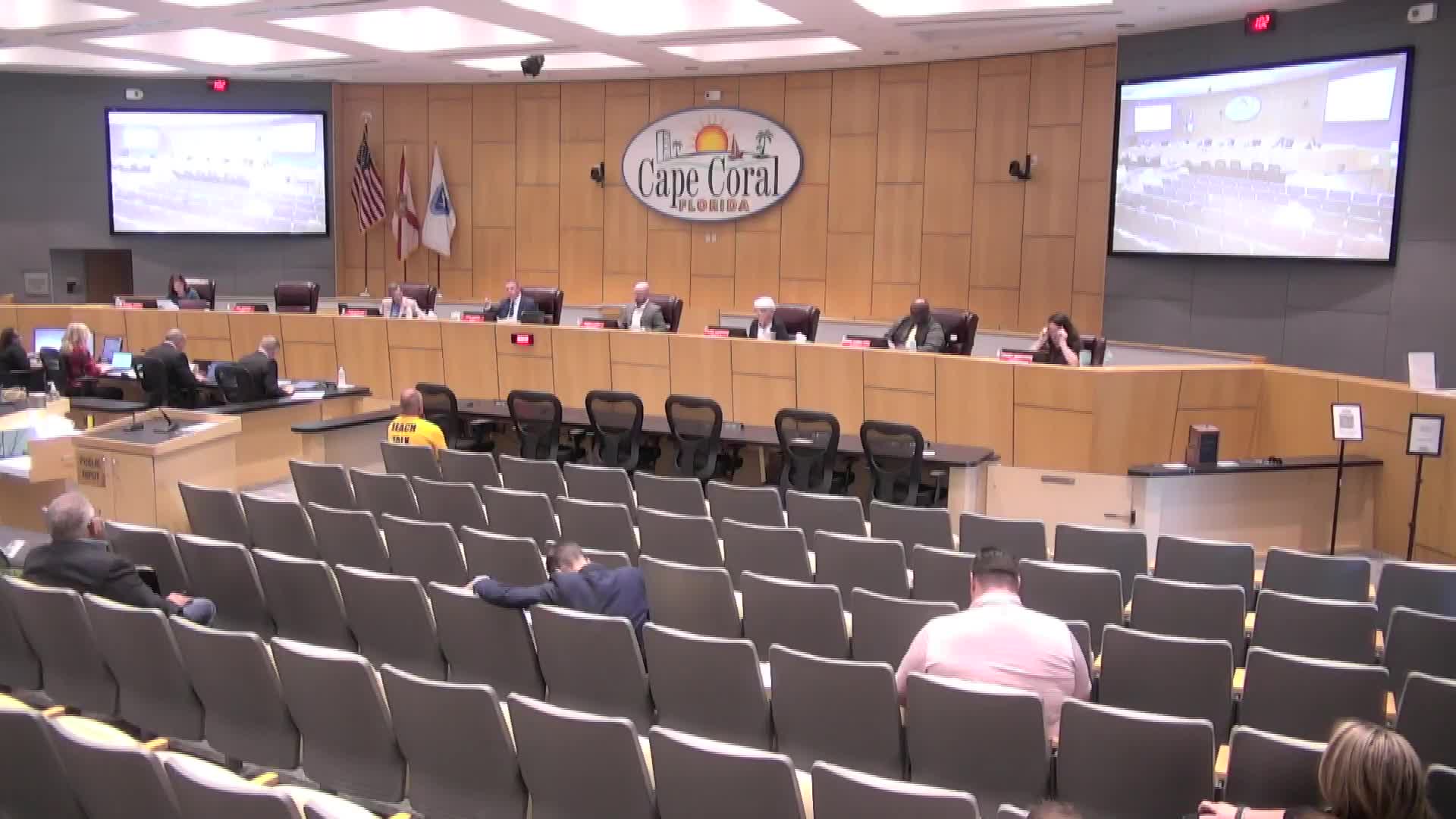
The Cape Coral City Council on Aug. 6 directed staff to draft an ordinance that would raise mobility fees over a multi‑year glide path, with the council signaling it wants single‑family residential fees to reach just under $10,000 by the fourth year and commercial fees anchored near market averages (close to Lee County levels) while preserving phased discounts to limit immediate "sticker shock." The council also identified roadways and intersections as the top priority for fee revenues.
City Manager (title only) told the council the objective for the meeting "is to have a consensus or some form of consensus building amongst the council on where we want the future of the city's transportation" and to provide predictability to the building industry about future fees. He and staff told the council the mobility plan divides projects into four categories—roadways and intersections, mobility programs, transit and multimodal—and stressed that the plan would not be fully funded by development fees alone.
The council's stated priorities followed extensive debate over how to measure residential fees (per dwelling unit versus per 1,000 square feet), how quickly to phase in increases, and what to charge commercial builders. Council member Kilroy proposed a glide path that phases increases over four years with early discounts (for example 50% in year one, then progressively higher) to avoid sudden cost shocks for builders and buyers. Jonathan Paul of New Urban Concepts explained that current Cape Coral road impact fees are assessed per dwelling unit for both single‑family and multifamily construction and summarized alternative methods (per dwelling, tiered square‑foot caps, or per‑square‑foot approaches used elsewhere).
Staff provided background numbers: the mobility fee plan covers intersections and roadways, mobility programs, transit and multimodal projects; if the plan’s highest fees were applied citywide and all 40,000 remaining lots developed immediately, the city would generate roughly $600 million but the plan lists about $1.1 billion in projects, meaning other funding sources (grants, general fund taxes, negotiated developer contributions and MPO/state matches) will be required. Staff and the consultant also told the council that some project types—especially transit hubs—are costly and may not materially change totals in the near term and that the roadway/intersection projects represent the largest share of identified costs.
Dozens of speakers spoke during the public comment period. Several development and business groups said they support updating fees but urged a legally defensible, phased and predictable approach: Wade Cunningham of the Cape Coral Construction Industry Association said his group "must respectfully oppose the mobility fee as it's currently proposed" and asked for corrections to legal and unit‑of‑measure issues; Donna Germaine, president and CEO of the Chamber of Commerce of Cape Coral, said the chamber supports improved infrastructure but found the study's structure "inequitable, overly burdensome, and potentially damaging to housing affordability and business growth." Jay Higgins (District 6) urged the council to require newcomers to the market to "pay the fee." Kevin Besser of the Royal Palm Coast Realtor Association and other speakers warned of housing‑affordability impacts and recommended adhering to state limits on annual increases (12.5% per year, maximum 50% over four years) if the council does not meet the extraordinary‑circumstances standard.
Council members repeatedly returned to two implementation questions: whether residential fees should be charged per dwelling unit or per square foot and how to distribute revenue geographically. Several council members indicated they would accept per‑dwelling units for ease of administration and to limit immediate dislocation, while others favored tiered square‑foot caps to better reflect trip generation. Council members also emphasized they expect staff to continue negotiating developer contributions and pursuing grants to cover multimodal and sidewalk projects.
City Manager said he believed there was sufficient council consensus to move forward with drafting an ordinance that places single‑family residential fees on a glide path to just under $10,000 by Year 4, and to set commercial fees at or above market average but near comparables such as Lee County, with phased discounts for early years. He said staff will return with proposed ordinance language and financial schedules and noted additional policy items remain for later meetings, including possible geographic assessment or benefit districts.
The meeting closed with routine procedural business; council set upcoming meeting time/place and adjourned. No final ordinance or fee schedule was adopted at the session; the council directed staff to draft ordinance language and return for public hearings and additional council deliberations.
Looking ahead, the city manager said the mobility‑fee proposal will proceed to a future ordinance hearing process that will include formal public notice, and council indicated follow‑up discussion at an upcoming Committee of the Whole meeting.
City Manager (title only) told the council the objective for the meeting "is to have a consensus or some form of consensus building amongst the council on where we want the future of the city's transportation" and to provide predictability to the building industry about future fees. He and staff told the council the mobility plan divides projects into four categories—roadways and intersections, mobility programs, transit and multimodal—and stressed that the plan would not be fully funded by development fees alone.
The council's stated priorities followed extensive debate over how to measure residential fees (per dwelling unit versus per 1,000 square feet), how quickly to phase in increases, and what to charge commercial builders. Council member Kilroy proposed a glide path that phases increases over four years with early discounts (for example 50% in year one, then progressively higher) to avoid sudden cost shocks for builders and buyers. Jonathan Paul of New Urban Concepts explained that current Cape Coral road impact fees are assessed per dwelling unit for both single‑family and multifamily construction and summarized alternative methods (per dwelling, tiered square‑foot caps, or per‑square‑foot approaches used elsewhere).
Staff provided background numbers: the mobility fee plan covers intersections and roadways, mobility programs, transit and multimodal projects; if the plan’s highest fees were applied citywide and all 40,000 remaining lots developed immediately, the city would generate roughly $600 million but the plan lists about $1.1 billion in projects, meaning other funding sources (grants, general fund taxes, negotiated developer contributions and MPO/state matches) will be required. Staff and the consultant also told the council that some project types—especially transit hubs—are costly and may not materially change totals in the near term and that the roadway/intersection projects represent the largest share of identified costs.
Dozens of speakers spoke during the public comment period. Several development and business groups said they support updating fees but urged a legally defensible, phased and predictable approach: Wade Cunningham of the Cape Coral Construction Industry Association said his group "must respectfully oppose the mobility fee as it's currently proposed" and asked for corrections to legal and unit‑of‑measure issues; Donna Germaine, president and CEO of the Chamber of Commerce of Cape Coral, said the chamber supports improved infrastructure but found the study's structure "inequitable, overly burdensome, and potentially damaging to housing affordability and business growth." Jay Higgins (District 6) urged the council to require newcomers to the market to "pay the fee." Kevin Besser of the Royal Palm Coast Realtor Association and other speakers warned of housing‑affordability impacts and recommended adhering to state limits on annual increases (12.5% per year, maximum 50% over four years) if the council does not meet the extraordinary‑circumstances standard.
Council members repeatedly returned to two implementation questions: whether residential fees should be charged per dwelling unit or per square foot and how to distribute revenue geographically. Several council members indicated they would accept per‑dwelling units for ease of administration and to limit immediate dislocation, while others favored tiered square‑foot caps to better reflect trip generation. Council members also emphasized they expect staff to continue negotiating developer contributions and pursuing grants to cover multimodal and sidewalk projects.
City Manager said he believed there was sufficient council consensus to move forward with drafting an ordinance that places single‑family residential fees on a glide path to just under $10,000 by Year 4, and to set commercial fees at or above market average but near comparables such as Lee County, with phased discounts for early years. He said staff will return with proposed ordinance language and financial schedules and noted additional policy items remain for later meetings, including possible geographic assessment or benefit districts.
The meeting closed with routine procedural business; council set upcoming meeting time/place and adjourned. No final ordinance or fee schedule was adopted at the session; the council directed staff to draft ordinance language and return for public hearings and additional council deliberations.
Looking ahead, the city manager said the mobility‑fee proposal will proceed to a future ordinance hearing process that will include formal public notice, and council indicated follow‑up discussion at an upcoming Committee of the Whole meeting.
View the Full Meeting & All Its Details
This article offers just a summary. Unlock complete video, transcripts, and insights as a Founder Member.
✓
Watch full, unedited meeting videos
✓
Search every word spoken in unlimited transcripts
✓
AI summaries & real-time alerts (all government levels)
✓
Permanent access to expanding government content
30-day money-back guarantee
