Orange County School Board declares Hungerford property surplus, approves MOU with Dr. Phillips Charities after heated public comment
October 01, 2025 | Orange, School Districts, Florida
This article was created by AI summarizing key points discussed. AI makes mistakes, so for full details and context, please refer to the video of the full meeting. Please report any errors so we can fix them. Report an error »
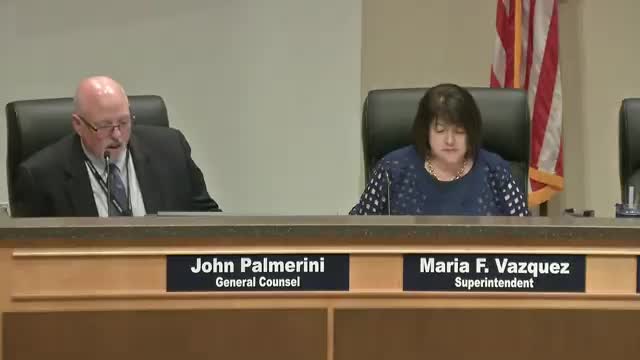
The Orange County School Board voted unanimously Tuesday to declare the Hungerford property in Eatonville surplus and to approve a memorandum of understanding (MOU) with Dr. Phillips Charities to begin development planning for the site.
The action followed nearly two hours of public comment during which dozens of Eatonville residents, town officials and community leaders spoke both in favor of and opposed to the proposed partnership. Supporters said the plan would bring early childhood services, jobs and infrastructure investment to a community with high poverty rates; opponents criticized the process as nontransparent and questioned whether the town council and the Community Redevelopment Agency (CRA) had been properly involved.
Board Chair Jacobs moved the meeting of the board to take the item out of order so it could be discussed immediately. After the public comment period, school board counsel explained that the board is using Florida Statute 1013.28 and State Board of Education rules governing educational plant surveys and disposal of property as the statutory basis for declaring land surplus. Counsel explained that proceeds from any sale would be credited back to the district’s capital fund as required under the State Requirements for Educational Facilities. The MOU approved by the board is nonbinding and begins a process for a purchase and sale contract that would include performance milestones tied to infrastructure and program delivery.
Residents who opposed the MOU said they had not been given enough notice or meaningful opportunity to shape the master plan. “I don't support this tonight,” Eatonville Vice Mayor Theo Washington told the board, arguing that the CRA and town council were not properly included in earlier stakeholder meetings. Several other speakers echoed concerns about transparency and the potential for loss of control over the historically important site. John Beauchamp said, “This land is sacred,” and urged preservation of burial grounds and other historic resources.
Other speakers urged the board to approve the MOU. Gerald Smith of Macedonia Missionary Baptist Church said the vote should begin a process that preserves Eatonville’s history while ensuring residents benefit. Jean Jones Alexander, president of the Eatonville Community Cemetery Association, said she supported the land deal and described it as “a bigger deal, bigger than big.” Several local nonprofits and community partners — including the YMCA of Central Florida, Boys & Girls Clubs of Central Florida and others — spoke in favor of the partnership and described long-standing ties to Dr. Phillips Charities.
Representatives of Dr. Phillips Charities addressed the board and the public. A charity representative said the organization’s “North Star” is to protect Eatonville’s legacy while attempting to prevent displacement; he told the board, “We have no desire to profit off of anything out of the town of Eatonville. That is not our goal.” The charity said its proposed scope would include an early learning center (no-cost access for OCPS students under the MOU), a history museum, health services and infrastructure improvements, with portions of any purchase price to be forgiven as project milestones are achieved.
School board counsel summarized past attempts to reuse the property, noting the district removed a restrictive covenant on the land in 2009 at significant cost and has previously received proposals that failed for lack of town approvals or other obstacles. Counsel said the proposed MOU and eventual purchase-and-sale contract contain forgiveness provisions tied to construction of the proposed facilities.
After discussion, Member Vannoz (motion) and Member Ferrant (second) moved to declare the property surplus and accept the MOU. The board vote passed with all members present voting in the affirmative.
The MOU is a first step and is not a binding sale. Board members, the charity and town officials said additional steps — including design work, community engagement, regulatory approvals and a purchase contract with enforceable milestones — remain before any transfer or major construction would occur. Several speakers and board members urged continued, robust local input going forward.
The board recorded no additional legal conditions in the MOU itself; counsel said the statutory framework requires that proceeds be directed to capital funds and that the MOU’s milestones be enforced in a later purchase agreement. The board scheduled further engagement and workshops but did not set a binding timeline for final sale or construction.
Ending: The MOU begins a formal process rather than completes a sale. Supporters and opponents told the board they intend to remain engaged. The board’s approval authorizes staff to continue negotiations under the MOU and move toward a purchase contract if milestones and conditions can be met.
The action followed nearly two hours of public comment during which dozens of Eatonville residents, town officials and community leaders spoke both in favor of and opposed to the proposed partnership. Supporters said the plan would bring early childhood services, jobs and infrastructure investment to a community with high poverty rates; opponents criticized the process as nontransparent and questioned whether the town council and the Community Redevelopment Agency (CRA) had been properly involved.
Board Chair Jacobs moved the meeting of the board to take the item out of order so it could be discussed immediately. After the public comment period, school board counsel explained that the board is using Florida Statute 1013.28 and State Board of Education rules governing educational plant surveys and disposal of property as the statutory basis for declaring land surplus. Counsel explained that proceeds from any sale would be credited back to the district’s capital fund as required under the State Requirements for Educational Facilities. The MOU approved by the board is nonbinding and begins a process for a purchase and sale contract that would include performance milestones tied to infrastructure and program delivery.
Residents who opposed the MOU said they had not been given enough notice or meaningful opportunity to shape the master plan. “I don't support this tonight,” Eatonville Vice Mayor Theo Washington told the board, arguing that the CRA and town council were not properly included in earlier stakeholder meetings. Several other speakers echoed concerns about transparency and the potential for loss of control over the historically important site. John Beauchamp said, “This land is sacred,” and urged preservation of burial grounds and other historic resources.
Other speakers urged the board to approve the MOU. Gerald Smith of Macedonia Missionary Baptist Church said the vote should begin a process that preserves Eatonville’s history while ensuring residents benefit. Jean Jones Alexander, president of the Eatonville Community Cemetery Association, said she supported the land deal and described it as “a bigger deal, bigger than big.” Several local nonprofits and community partners — including the YMCA of Central Florida, Boys & Girls Clubs of Central Florida and others — spoke in favor of the partnership and described long-standing ties to Dr. Phillips Charities.
Representatives of Dr. Phillips Charities addressed the board and the public. A charity representative said the organization’s “North Star” is to protect Eatonville’s legacy while attempting to prevent displacement; he told the board, “We have no desire to profit off of anything out of the town of Eatonville. That is not our goal.” The charity said its proposed scope would include an early learning center (no-cost access for OCPS students under the MOU), a history museum, health services and infrastructure improvements, with portions of any purchase price to be forgiven as project milestones are achieved.
School board counsel summarized past attempts to reuse the property, noting the district removed a restrictive covenant on the land in 2009 at significant cost and has previously received proposals that failed for lack of town approvals or other obstacles. Counsel said the proposed MOU and eventual purchase-and-sale contract contain forgiveness provisions tied to construction of the proposed facilities.
After discussion, Member Vannoz (motion) and Member Ferrant (second) moved to declare the property surplus and accept the MOU. The board vote passed with all members present voting in the affirmative.
The MOU is a first step and is not a binding sale. Board members, the charity and town officials said additional steps — including design work, community engagement, regulatory approvals and a purchase contract with enforceable milestones — remain before any transfer or major construction would occur. Several speakers and board members urged continued, robust local input going forward.
The board recorded no additional legal conditions in the MOU itself; counsel said the statutory framework requires that proceeds be directed to capital funds and that the MOU’s milestones be enforced in a later purchase agreement. The board scheduled further engagement and workshops but did not set a binding timeline for final sale or construction.
Ending: The MOU begins a formal process rather than completes a sale. Supporters and opponents told the board they intend to remain engaged. The board’s approval authorizes staff to continue negotiations under the MOU and move toward a purchase contract if milestones and conditions can be met.
View the Full Meeting & All Its Details
This article offers just a summary. Unlock complete video, transcripts, and insights as a Founder Member.
✓
Watch full, unedited meeting videos
✓
Search every word spoken in unlimited transcripts
✓
AI summaries & real-time alerts (all government levels)
✓
Permanent access to expanding government content
30-day money-back guarantee
