Liberty Lake council narrows draft governance rules on legislative priorities, removes 'avoid controversial' language
October 01, 2025 | Liberty Lake, Spokane County, Washington
This article was created by AI summarizing key points discussed. AI makes mistakes, so for full details and context, please refer to the video of the full meeting. Please report any errors so we can fix them. Report an error »
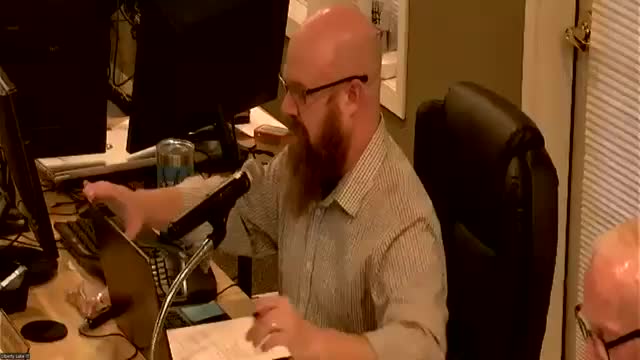
At a special Liberty Lake City Council meeting on Sept. 30, council members discussed Chapter 17 of a proposed governance manual, a section titled "legislative priorities and taxes," and agreed to remove a draft criterion that would have told the council to "avoid controversial or adversarial topics." The draft remains under revision and the body postponed a final decision about what voting threshold should be required to adopt legislative priorities.
The change was discussed after Mark McEvoy, the city administrator, introduced the chapter and described the committee process that produced the draft. "This among all of the proposed chapters constitutes, maybe the most significant change from the current rules of procedure," McEvoy said as council prepared to deliberate chapter text. Council members debated whether adopting a legislative-priority statement should require a simple majority, a supermajority, or unanimous consent.
Council member Spencer said he opposed the draft language that would bar "controversial or adversarial topics," calling it "subjective" and unnecessary. "What might be controversial on one side of the state may not be on the other," Spencer said. Council member Dunn argued for a higher threshold for council statements that take a position on external legislative matters, saying such actions "should take considerable initiative on the part of this council to enact." Several members proposed a compromise requiring a supermajority ("majority plus one") for priority votes; others said a simple majority aligns with how the council typically decides city business.
After extended discussion, the council reached consensus to remove the bullet that would have directed the body to avoid "controversial or adversarial topics." The meeting record shows the item was struck from the draft during the workshop exchange. Council members did not finalize whether a simple majority, supermajority or unanimity should be required to adopt legislative priorities; they agreed to return to that question at a later meeting.
On ballot measures, council members and city staff reviewed two alternative approaches in the draft: (1) a default neutrality approach — similar to language Spokane Valley uses — where the city would not take positions on ballot measures; or (2) a more permissive process with defined procedural steps for the council to follow if it elects to take a position. Council members expressed concern that previous local positions (including a county sales-tax measure and statewide measures) led to a Public Disclosure Commission inquiry, and some said the governance manual should lay out clearer steps so the city does not repeat past procedural problems.
City Attorney Sean Bouts joined the conversation by phone and summarized the statutory constraints: "The statute talks about public facilities and use of public facilities for campaigning," he said, noting the council can debate and adopt a resolution supporting or opposing a ballot proposition during a regular, noticed public meeting but must be careful about using city facilities as campaign venues. Several council members asked staff to redraft the ballot-measure section so it protects the city from PDC compliance risk while preserving council ability to address measures that materially affect the city.
McEvoy said staff will not leave the decision process solely in the hands of the city administrator: "Putting the sole responsibility in the hands of a staff member is not the way we want to go. So what we do bring back for you is not going to include that." Council members asked staff to return a revised draft that removes the "avoid controversial" language, clarifies who may propose a council position on a ballot measure, and defines procedural steps and impact criteria for measures the council might consider.
The workshop discussion did not create an ordinance or final policy. Council members voted later in the meeting to schedule a special session on Oct. 14 to continue work on the governance manual.
The change was discussed after Mark McEvoy, the city administrator, introduced the chapter and described the committee process that produced the draft. "This among all of the proposed chapters constitutes, maybe the most significant change from the current rules of procedure," McEvoy said as council prepared to deliberate chapter text. Council members debated whether adopting a legislative-priority statement should require a simple majority, a supermajority, or unanimous consent.
Council member Spencer said he opposed the draft language that would bar "controversial or adversarial topics," calling it "subjective" and unnecessary. "What might be controversial on one side of the state may not be on the other," Spencer said. Council member Dunn argued for a higher threshold for council statements that take a position on external legislative matters, saying such actions "should take considerable initiative on the part of this council to enact." Several members proposed a compromise requiring a supermajority ("majority plus one") for priority votes; others said a simple majority aligns with how the council typically decides city business.
After extended discussion, the council reached consensus to remove the bullet that would have directed the body to avoid "controversial or adversarial topics." The meeting record shows the item was struck from the draft during the workshop exchange. Council members did not finalize whether a simple majority, supermajority or unanimity should be required to adopt legislative priorities; they agreed to return to that question at a later meeting.
On ballot measures, council members and city staff reviewed two alternative approaches in the draft: (1) a default neutrality approach — similar to language Spokane Valley uses — where the city would not take positions on ballot measures; or (2) a more permissive process with defined procedural steps for the council to follow if it elects to take a position. Council members expressed concern that previous local positions (including a county sales-tax measure and statewide measures) led to a Public Disclosure Commission inquiry, and some said the governance manual should lay out clearer steps so the city does not repeat past procedural problems.
City Attorney Sean Bouts joined the conversation by phone and summarized the statutory constraints: "The statute talks about public facilities and use of public facilities for campaigning," he said, noting the council can debate and adopt a resolution supporting or opposing a ballot proposition during a regular, noticed public meeting but must be careful about using city facilities as campaign venues. Several council members asked staff to redraft the ballot-measure section so it protects the city from PDC compliance risk while preserving council ability to address measures that materially affect the city.
McEvoy said staff will not leave the decision process solely in the hands of the city administrator: "Putting the sole responsibility in the hands of a staff member is not the way we want to go. So what we do bring back for you is not going to include that." Council members asked staff to return a revised draft that removes the "avoid controversial" language, clarifies who may propose a council position on a ballot measure, and defines procedural steps and impact criteria for measures the council might consider.
The workshop discussion did not create an ordinance or final policy. Council members voted later in the meeting to schedule a special session on Oct. 14 to continue work on the governance manual.
View the Full Meeting & All Its Details
This article offers just a summary. Unlock complete video, transcripts, and insights as a Founder Member.
✓
Watch full, unedited meeting videos
✓
Search every word spoken in unlimited transcripts
✓
AI summaries & real-time alerts (all government levels)
✓
Permanent access to expanding government content
30-day money-back guarantee
