Lawmakers hear DHS child-welfare overview; authorize audit negotiation under Act 145
August 11, 2025 | 2025 Legislative Meetings, Arkansas
This article was created by AI summarizing key points discussed. AI makes mistakes, so for full details and context, please refer to the video of the full meeting. Please report any errors so we can fix them. Report an error »
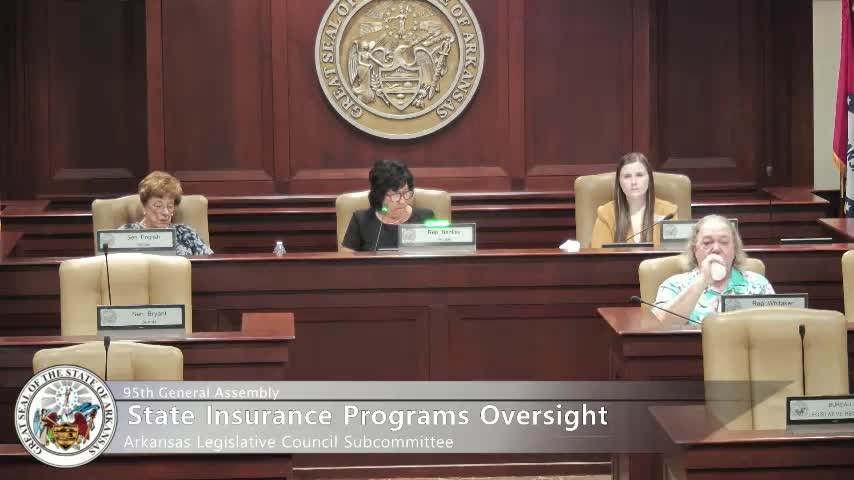
Members of a legislative subcommittee received a detailed briefing from the Department of Human Services and the Division of Children and Family Services on child-welfare activity, prevention programs and finances, and then authorized staff to pursue an outside audit of workforce and social services.
Janet Mann, representing DHS, and Tiffany Wright, director of the Division of Children and Family Services (DCFS), presented the division’s data and program overview. Wright said DCFS had about 59,000 calls to the child-abuse hotline in the most recent fiscal year, of which roughly 32,000 were accepted and about 26,000 were assigned to DCFS. “Our vision at DCFS is that every child deserves a safe, stable family every day,” Wright said.
Wright described the division’s casework buckets: differential response for lower-risk families and child-maltreatment investigations for higher-priority reports. She said the division typically substantiates about 20% of maltreatment reports; priority 1 and priority 2 investigations must be completed within 45 days and differential responses within 60 days. She said DCFS ended the fiscal year with about 1,500 open in‑home cases that had findings and involved roughly 8,000 children and youth.
On foster care, Wright said the state had 3,390 children and youth in foster care at the end of the fiscal year. The top three reasons for entry were neglect, substance abuse and parental incarceration; children can have multiple reasons listed. When children enter care the agency seeks placement with a safe relative first; Wright said relatives provided 42.4% of placements. She said 43% of children in foster care reunified with a parent or caregiver, and about 30% exited to permanency through adoption, relative placement or other recruitment options. Wright said the state remains below the national average for reentry into foster care within 12 months.
Mann and Wright detailed prevention programs and community partners. Wright described Care Portal, operated by Arkansas Family Alliance, which connects churches and community volunteers to concrete needs (beds, refrigerators, bicycles) and has operated in Sebastian, White, Crawford, Washington and Pulaski counties while expanding to additional counties. She said DCFS used remaining ARPA funds for a one-time subgrant to expand Care Portal; otherwise Arkansas Family Alliance funds the model through fundraising. Wright also described a “WIC Baby and Me” program run with the Department of Health that provides a prevention curriculum through health departments and does not require child-welfare involvement. Committee members said they want to arrange presentations from partners such as Restore Hope and 100 Families in future meetings.
Members asked several operational questions: how hotline intake decisions are made (hotline operators and supervisors use a structured decision-making tool; Arkansas State Police operates the hotline), how board payments for foster placement (room and board) are allocated, and workforce pressures. Wright said average investigative workloads decreased to 17 cases in June and that frontline turnover has improved by 19 percentage points from earlier high levels. The division’s operating budget was described as roughly 48% federal funds, 47% state general revenue and 5% other, with large contract spending for substance-abuse treatment, placements and other services.
Janet Mann also presented an ALF (assisted living facility) cost-reporting update and said the contractor is completing a second year of cost reporting; she noted one non‑Medicaid facility had closed without notice in the West Memphis area. Mann said the team is working through providers’ questions on short-term and long-term rate requests.
After the DHS briefing, the subcommittee’s chair, Senator English, moved to authorize the Bureau of Legislative Research (BLR) to begin negotiating a contract with the Georgia Center for Opportunities to provide audit services related to the study assigned under Act 145 concerning workforce and social services reform. English described the intended audit as a third‑party review of programs including TANF and SNAP to measure outcomes and expenditures. “I would like to make a motion ... authorize the Bureau of Legislative Research to begin negotiating a contract with the Georgia Center for Opportunities to provide audit services related to the study assigned to the subcommittee by Act 145 concerning workforce and social services reform,” English said.
Committee members asked procedural questions about the vendor selection and cost. Members were told BLR will develop scope and cost estimates and return to the committee; the motion authorized BLR to negotiate, not to finalize a contract that day. The committee recorded the motion as approved after the chair called for “ayes” and the motion passed by voice vote; no roll-call tally was recorded on the transcript. Some members expressed concern about sole-source selection and the lack of a public RFP; others said timeline constraints informed the approach.
What the subcommittee asked for next: BLR will return with estimated costs and a firm scope for the audit and the committee scheduled follow-up work on workforce and social‑service reform. Committee members also requested additional DCFS data for future meetings — including breakdowns of board (room-and-board) payments, reentry and adoption statistics, supervised independent-living program counts, and information on the success of community partners such as Restore Hope and 100 Families.
The subcommittee did not adopt policy changes on the floor; it accepted the DCFS briefing, heard clarifying questions, and directed BLR to pursue a negotiated audit scope and cost for review at a subsequent meeting.
Janet Mann, representing DHS, and Tiffany Wright, director of the Division of Children and Family Services (DCFS), presented the division’s data and program overview. Wright said DCFS had about 59,000 calls to the child-abuse hotline in the most recent fiscal year, of which roughly 32,000 were accepted and about 26,000 were assigned to DCFS. “Our vision at DCFS is that every child deserves a safe, stable family every day,” Wright said.
Wright described the division’s casework buckets: differential response for lower-risk families and child-maltreatment investigations for higher-priority reports. She said the division typically substantiates about 20% of maltreatment reports; priority 1 and priority 2 investigations must be completed within 45 days and differential responses within 60 days. She said DCFS ended the fiscal year with about 1,500 open in‑home cases that had findings and involved roughly 8,000 children and youth.
On foster care, Wright said the state had 3,390 children and youth in foster care at the end of the fiscal year. The top three reasons for entry were neglect, substance abuse and parental incarceration; children can have multiple reasons listed. When children enter care the agency seeks placement with a safe relative first; Wright said relatives provided 42.4% of placements. She said 43% of children in foster care reunified with a parent or caregiver, and about 30% exited to permanency through adoption, relative placement or other recruitment options. Wright said the state remains below the national average for reentry into foster care within 12 months.
Mann and Wright detailed prevention programs and community partners. Wright described Care Portal, operated by Arkansas Family Alliance, which connects churches and community volunteers to concrete needs (beds, refrigerators, bicycles) and has operated in Sebastian, White, Crawford, Washington and Pulaski counties while expanding to additional counties. She said DCFS used remaining ARPA funds for a one-time subgrant to expand Care Portal; otherwise Arkansas Family Alliance funds the model through fundraising. Wright also described a “WIC Baby and Me” program run with the Department of Health that provides a prevention curriculum through health departments and does not require child-welfare involvement. Committee members said they want to arrange presentations from partners such as Restore Hope and 100 Families in future meetings.
Members asked several operational questions: how hotline intake decisions are made (hotline operators and supervisors use a structured decision-making tool; Arkansas State Police operates the hotline), how board payments for foster placement (room and board) are allocated, and workforce pressures. Wright said average investigative workloads decreased to 17 cases in June and that frontline turnover has improved by 19 percentage points from earlier high levels. The division’s operating budget was described as roughly 48% federal funds, 47% state general revenue and 5% other, with large contract spending for substance-abuse treatment, placements and other services.
Janet Mann also presented an ALF (assisted living facility) cost-reporting update and said the contractor is completing a second year of cost reporting; she noted one non‑Medicaid facility had closed without notice in the West Memphis area. Mann said the team is working through providers’ questions on short-term and long-term rate requests.
After the DHS briefing, the subcommittee’s chair, Senator English, moved to authorize the Bureau of Legislative Research (BLR) to begin negotiating a contract with the Georgia Center for Opportunities to provide audit services related to the study assigned under Act 145 concerning workforce and social services reform. English described the intended audit as a third‑party review of programs including TANF and SNAP to measure outcomes and expenditures. “I would like to make a motion ... authorize the Bureau of Legislative Research to begin negotiating a contract with the Georgia Center for Opportunities to provide audit services related to the study assigned to the subcommittee by Act 145 concerning workforce and social services reform,” English said.
Committee members asked procedural questions about the vendor selection and cost. Members were told BLR will develop scope and cost estimates and return to the committee; the motion authorized BLR to negotiate, not to finalize a contract that day. The committee recorded the motion as approved after the chair called for “ayes” and the motion passed by voice vote; no roll-call tally was recorded on the transcript. Some members expressed concern about sole-source selection and the lack of a public RFP; others said timeline constraints informed the approach.
What the subcommittee asked for next: BLR will return with estimated costs and a firm scope for the audit and the committee scheduled follow-up work on workforce and social‑service reform. Committee members also requested additional DCFS data for future meetings — including breakdowns of board (room-and-board) payments, reentry and adoption statistics, supervised independent-living program counts, and information on the success of community partners such as Restore Hope and 100 Families.
The subcommittee did not adopt policy changes on the floor; it accepted the DCFS briefing, heard clarifying questions, and directed BLR to pursue a negotiated audit scope and cost for review at a subsequent meeting.
Don't Miss a Word: See the Full Meeting!
Go beyond summaries. Unlock every video, transcript, and key insight with a Founder Membership.
✓
Get instant access to full meeting videos
✓
Search and clip any phrase from complete transcripts
✓
Receive AI-powered summaries & custom alerts
✓
Enjoy lifetime, unrestricted access to government data
30-day money-back guarantee
