DOC reports dozens of inmate deaths this year; officials point to drug overdoses and chronic illness
August 11, 2025 | 2025 Legislative Meetings, Arkansas
This article was created by AI summarizing key points discussed. AI makes mistakes, so for full details and context, please refer to the video of the full meeting. Please report any errors so we can fix them. Report an error »
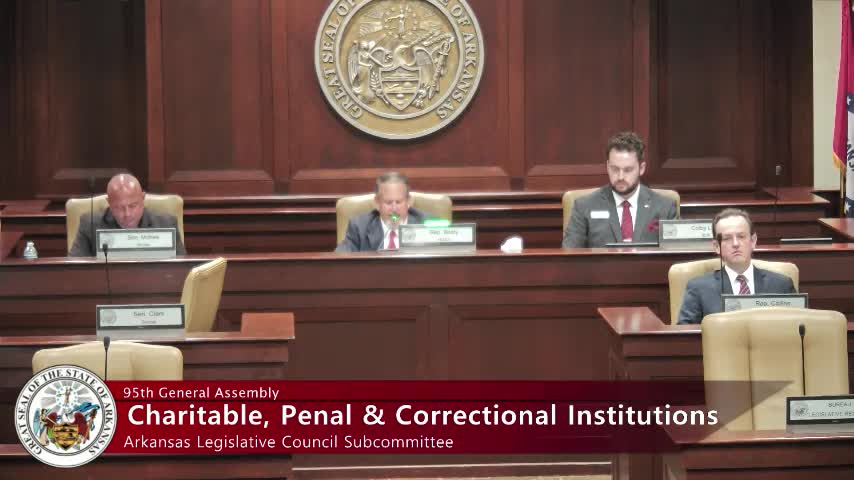
The Arkansas Division of Correction reported dozens of inmate deaths so far this year, and lawmakers pressed the agency for context and actions to reduce preventable deaths.
Director Dexter Payne told the legislative committee the department had recorded 82 inmate deaths, and later in the hearing said the total was 84; he attributed fatalities to causes including cancer, heart disease, pneumonia and illicit drug use. Payne provided a breakdown: 18 drug-related deaths, two homicides, 42 natural deaths, 16 cases pending Arkansas State Crime Lab review, five suicides and one death listed as undetermined.
"We call state police on any death no matter what it is," Payne said when asked about investigative procedure, adding that the division notifies state police in every death and allows them to decide whether to respond.
Committee members asked how this year's totals compare with previous years. Payne said total deaths were 94 in 2024 and 92 in 2023, and later said the division's count for the current year was 84. Lawmakers requested a multiyear breakdown to evaluate trends in homicides, suicides and drug-related fatalities.
Payne described steps to reduce suicides and drug deaths. He credited a contract with Wellpath, the department's medical provider, and expanded mental-health staffing for a decline in suicides — the division recorded five suicides this year compared with previous annual averages of about 11 or 12. The department also has updated substance-abuse programming, moving toward evidence-based curricula such as "Thinking for a Change," Payne said.
Lawmakers pressed the department on how contraband drugs are entering facilities. Payne said the division stopped allowing paper mail to reach inmates years ago and now scans and copies letters; most recent contraband is entering via books ordered through third-party vendors on marketplace platforms. "We stopped the mail process," Payne said; "what we do now...we copy the letters and give the inmates the copies and we destroy the originals." He described efforts to require books to come from certified vendors and said the department is exploring delivery of digital mail and ebooks to inmate tablets.
Representatives and senators also asked about compassionate release and post-prison transfer processes. Payne described the state's compassionate-release pathway: two doctors must certify a likely six-to-12-month life expectancy and the case is forwarded to the post-prison transfer board for review. Committee members asked the department to provide historic numbers of compassionate releases and the department agreed to supply those statistics.
Lawmakers also asked for data on non-natural deaths and suspicions of foul play; Payne reiterated that state police are notified in every death and invited to investigate when appropriate.
Why it matters: Deaths inside correctional facilities prompt public-safety, medical, and oversight questions. Lawmakers asked for a data-driven account of trends, an explanation of how drugs enter facilities and confirmation that medical and investigative procedures are consistent and documented.
What comes next: The committee requested multi-year breakdowns for inmate deaths, statistics on compassionate-release decisions and additional details about contraband interdiction and vendor vetting for books and packages.
Director Dexter Payne told the legislative committee the department had recorded 82 inmate deaths, and later in the hearing said the total was 84; he attributed fatalities to causes including cancer, heart disease, pneumonia and illicit drug use. Payne provided a breakdown: 18 drug-related deaths, two homicides, 42 natural deaths, 16 cases pending Arkansas State Crime Lab review, five suicides and one death listed as undetermined.
"We call state police on any death no matter what it is," Payne said when asked about investigative procedure, adding that the division notifies state police in every death and allows them to decide whether to respond.
Committee members asked how this year's totals compare with previous years. Payne said total deaths were 94 in 2024 and 92 in 2023, and later said the division's count for the current year was 84. Lawmakers requested a multiyear breakdown to evaluate trends in homicides, suicides and drug-related fatalities.
Payne described steps to reduce suicides and drug deaths. He credited a contract with Wellpath, the department's medical provider, and expanded mental-health staffing for a decline in suicides — the division recorded five suicides this year compared with previous annual averages of about 11 or 12. The department also has updated substance-abuse programming, moving toward evidence-based curricula such as "Thinking for a Change," Payne said.
Lawmakers pressed the department on how contraband drugs are entering facilities. Payne said the division stopped allowing paper mail to reach inmates years ago and now scans and copies letters; most recent contraband is entering via books ordered through third-party vendors on marketplace platforms. "We stopped the mail process," Payne said; "what we do now...we copy the letters and give the inmates the copies and we destroy the originals." He described efforts to require books to come from certified vendors and said the department is exploring delivery of digital mail and ebooks to inmate tablets.
Representatives and senators also asked about compassionate release and post-prison transfer processes. Payne described the state's compassionate-release pathway: two doctors must certify a likely six-to-12-month life expectancy and the case is forwarded to the post-prison transfer board for review. Committee members asked the department to provide historic numbers of compassionate releases and the department agreed to supply those statistics.
Lawmakers also asked for data on non-natural deaths and suspicions of foul play; Payne reiterated that state police are notified in every death and invited to investigate when appropriate.
Why it matters: Deaths inside correctional facilities prompt public-safety, medical, and oversight questions. Lawmakers asked for a data-driven account of trends, an explanation of how drugs enter facilities and confirmation that medical and investigative procedures are consistent and documented.
What comes next: The committee requested multi-year breakdowns for inmate deaths, statistics on compassionate-release decisions and additional details about contraband interdiction and vendor vetting for books and packages.
Don't Miss a Word: See the Full Meeting!
Go beyond summaries. Unlock every video, transcript, and key insight with a Founder Membership.
✓
Get instant access to full meeting videos
✓
Search and clip any phrase from complete transcripts
✓
Receive AI-powered summaries & custom alerts
✓
Enjoy lifetime, unrestricted access to government data
30-day money-back guarantee
