Researchers report mixed academic effects of Granville County’s phone‑use policy; board adopts resolution to reduce classroom screen time
August 07, 2025 | Granville County Schools, School Districts, North Carolina
This article was created by AI summarizing key points discussed. AI makes mistakes, so for full details and context, please refer to the video of the full meeting. Please report any errors so we can fix them. Report an error »
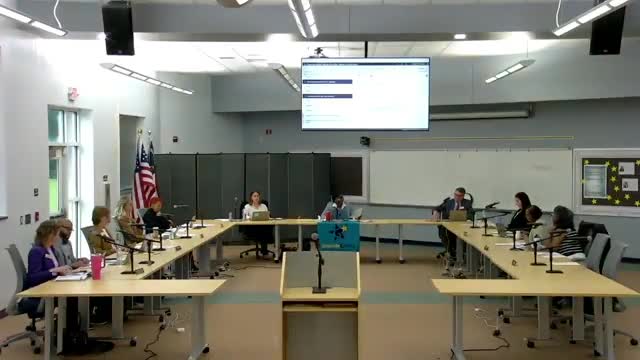
Researchers from the Gillings School of Global Public Health presented a mixed evaluation of Granville County Schools’ district‑wide “off and away all day” cellphone policy at the Granville County Board of Education meeting, and the board voted to adopt a resolution supporting reduced classroom screen use and “No Tech Tuesdays and Thursdays.”
The presentation, led by Dr. Carl Johnson and graduate researchers Bex Orton and AJ Ekechi, summarized a year‑and‑a‑half evaluation that combined administrative test and discipline data, surveys of principals and teachers, and focus groups with teachers, parents and school resource officers. The researchers said their analysis used pre‑policy years (through 2022–23) and post‑enforcement data (2023–24), excluding the uncertified 2024–25 statewide test results from some analyses.
The researchers said the study found statistically significant changes in some grade‑level test averages after enforcement, but not uniform gains across grades. In some middle‑school measures (notably in parts of grade 6), average reading and math scores increased in schools where the policy was implemented and actively enforced; in contrast, Orton said, eighth‑grade scores in reading, math and science showed small declines in the available data. The research team emphasized that the statistical tests do not prove causation and that results varied by grade and by enforcement level.
"We built a model that looks at the interaction between enforcement level and outcomes," Dr. Johnson said, summarizing the team’s approach. "That indicates that simply having a policy on the books is not enough — stronger, consistent enforcement at the school level was associated with some of the observed score changes."
The team reported that phone‑related disciplinary incidents rose after the policy’s enforcement, which the researchers said is an expected outcome of recording a newly enforceable violation. Administrative data showed that before the policy roughly 3 percent of disciplinary incidents were linked to cell phones; that share increased with enforcement, the presenters said.
Survey results from roughly 230 teachers and principals indicated teachers reported spending less time policing phone use after the policy and that teacher perceptions about classroom focus and reduced cheating became more consistent across school levels. Focus groups, the team said, found strong support for the policy among teachers, parents and school resource officers, though participants reported inconsistent enforcement from classroom to classroom and opportunities for students to circumvent restrictions (for example, second phones or school devices used improperly).
Quoting participants from their focus groups, the researchers read observations collected during interviews. "A school resource officer told us that 90 to 95 percent of the problems they deal with come from these devices," a researcher said, attributing the remark to a focus‑group participant. Teachers described enforcement as a "game of whack‑a‑mole" when students attempted to use devices during class, the presenters said.
Board members asked questions about enforcement, parent outreach, and how long cultural change might take. Board Member Russell asked about resources for parents to set expectations and manage communications; the researchers recommended outreach and gradual behavior‑change steps (for example, silencing notifications, limiting apps, and providing parents alternatives for urgent contact).
After the presentation, Board Member Hayes read and the board considered a resolution titled "Supporting balanced instruction through reduced screen use and a return to foundational skills," which explicitly referenced the district’s off‑and‑away policy (Policy 43‑18) and the new No Tech Tuesdays and Thursdays. The resolution called for prioritizing non‑digital materials where developmentally appropriate — with a particular emphasis on kindergarten through second grade — and for professional development for teachers on traditional instructional methods.
Board Member Russell moved to adopt the resolution and Board Member Baker seconded the motion. The chair called for the ayes and declared the resolution adopted (vote tally not recorded in the meeting transcript).
Researchers told the board they will provide a fuller written report for public distribution with more detailed analyses, including 2024–25 testing data once final scores are certified. Board members asked staff to follow up on consistent enforcement guidance and to prepare parent‑facing resources.
The board’s adoption of the resolution signals a district‑level policy priority to reduce routine classroom screen time and strengthen enforcement and parent engagement around the cellphone policy.
The presentation, led by Dr. Carl Johnson and graduate researchers Bex Orton and AJ Ekechi, summarized a year‑and‑a‑half evaluation that combined administrative test and discipline data, surveys of principals and teachers, and focus groups with teachers, parents and school resource officers. The researchers said their analysis used pre‑policy years (through 2022–23) and post‑enforcement data (2023–24), excluding the uncertified 2024–25 statewide test results from some analyses.
The researchers said the study found statistically significant changes in some grade‑level test averages after enforcement, but not uniform gains across grades. In some middle‑school measures (notably in parts of grade 6), average reading and math scores increased in schools where the policy was implemented and actively enforced; in contrast, Orton said, eighth‑grade scores in reading, math and science showed small declines in the available data. The research team emphasized that the statistical tests do not prove causation and that results varied by grade and by enforcement level.
"We built a model that looks at the interaction between enforcement level and outcomes," Dr. Johnson said, summarizing the team’s approach. "That indicates that simply having a policy on the books is not enough — stronger, consistent enforcement at the school level was associated with some of the observed score changes."
The team reported that phone‑related disciplinary incidents rose after the policy’s enforcement, which the researchers said is an expected outcome of recording a newly enforceable violation. Administrative data showed that before the policy roughly 3 percent of disciplinary incidents were linked to cell phones; that share increased with enforcement, the presenters said.
Survey results from roughly 230 teachers and principals indicated teachers reported spending less time policing phone use after the policy and that teacher perceptions about classroom focus and reduced cheating became more consistent across school levels. Focus groups, the team said, found strong support for the policy among teachers, parents and school resource officers, though participants reported inconsistent enforcement from classroom to classroom and opportunities for students to circumvent restrictions (for example, second phones or school devices used improperly).
Quoting participants from their focus groups, the researchers read observations collected during interviews. "A school resource officer told us that 90 to 95 percent of the problems they deal with come from these devices," a researcher said, attributing the remark to a focus‑group participant. Teachers described enforcement as a "game of whack‑a‑mole" when students attempted to use devices during class, the presenters said.
Board members asked questions about enforcement, parent outreach, and how long cultural change might take. Board Member Russell asked about resources for parents to set expectations and manage communications; the researchers recommended outreach and gradual behavior‑change steps (for example, silencing notifications, limiting apps, and providing parents alternatives for urgent contact).
After the presentation, Board Member Hayes read and the board considered a resolution titled "Supporting balanced instruction through reduced screen use and a return to foundational skills," which explicitly referenced the district’s off‑and‑away policy (Policy 43‑18) and the new No Tech Tuesdays and Thursdays. The resolution called for prioritizing non‑digital materials where developmentally appropriate — with a particular emphasis on kindergarten through second grade — and for professional development for teachers on traditional instructional methods.
Board Member Russell moved to adopt the resolution and Board Member Baker seconded the motion. The chair called for the ayes and declared the resolution adopted (vote tally not recorded in the meeting transcript).
Researchers told the board they will provide a fuller written report for public distribution with more detailed analyses, including 2024–25 testing data once final scores are certified. Board members asked staff to follow up on consistent enforcement guidance and to prepare parent‑facing resources.
The board’s adoption of the resolution signals a district‑level policy priority to reduce routine classroom screen time and strengthen enforcement and parent engagement around the cellphone policy.
View the Full Meeting & All Its Details
This article offers just a summary. Unlock complete video, transcripts, and insights as a Founder Member.
✓
Watch full, unedited meeting videos
✓
Search every word spoken in unlimited transcripts
✓
AI summaries & real-time alerts (all government levels)
✓
Permanent access to expanding government content
30-day money-back guarantee
