Morgantown council approves amendments to vacant-structure code after public concerns about due process
October 22, 2025 | Morgantown, Monongalia County, West Virginia
This article was created by AI summarizing key points discussed. AI makes mistakes, so for full details and context, please refer to the video of the full meeting. Please report any errors so we can fix them. Report an error »
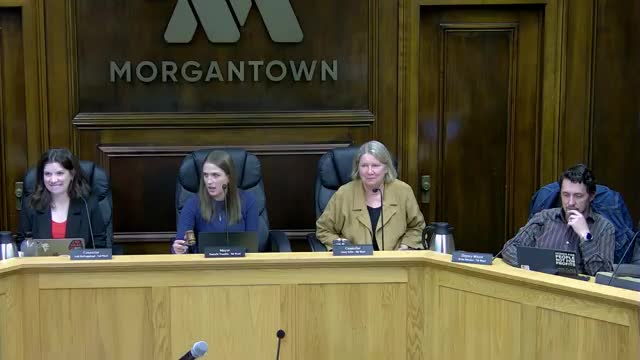
MORGANTOWN, W.Va. — The Morgantown City Council voted 6-0 on Oct. 21 to approve changes to article 17-18 of the city code, known as the Vacant Structure Code, clarifying how property owners may appeal or seek exemptions and changing some hearing procedures.
The amendment, approved on second reading, requires a staff report on all exemption and appeal requests, removes a prior automatic step that required scheduling a council hearing at the next meeting, and lets applicants and city counsel review the staff report and decide whether an in-person quasi‑adjudicatory hearing should be held.
Councilor discussion and public comment underscored concern about property owners’ constitutional due‑process rights and about transparency for neighbors. At the public hearing, resident Martie Schamberger said the draft ordinance contained “a lack of due process” and asked the city to preserve public input opportunities. Annie Cronin York, a neighborhood resident, urged the council not to grant fee waivers too freely and asked what recourse the city retains if owners let properties remain vacant and later redevelop them.
City Attorney Simonton told council members that exemption requests are made to the governing body “by state statute,” and that the code revisions aim to distinguish appeals (challenges that a structure is not vacant) from exemptions (acknowledging a structure is vacant but seeking permission to remain so for a stated reason). Simonton said, “These hearings are quasi‑adjudicatory proceedings. They're not public meetings within the definition of the Open Governmental Proceedings Act,” and framed the changes as measures to provide due process for property owners without automatically requiring a full council hearing for every request.
Council members discussed whether the vacant‑structure registry should be proactively published. Staff and councilors said the registry is a public record but noted past concerns about publicizing vacant properties for safety reasons; council retained the ability to request a hearing in cases where it disagreed with staff recommendations.
The ordinance was removed from the consent agenda earlier in the meeting for fuller discussion. A motion to approve the second reading was made and adopted on the roll call vote: Jody Hollingshead, Wheezy Michael, Jenny Celine, Mark Downs, Deputy Mayor Debbie Mary Butcher and Mayor Trumbull all voted yes; the motion passed 6-0. The transcript does not record a named mover or seconder for the motion to approve.
The approved revisions formalize a staff‑report requirement and give staff and applicants flexibility to avoid scheduling a hearing unless necessary. They do not change the council’s power to require a hearing or to act on exemptions; councilors said those options remain. The changes also clarified administrative procedures that officials said had repeatedly resulted in small timing conflicts for property owners seeking short‑term exemptions.
The new language also reaffirms that exemptions are governed in part by state statute and by constitutional due‑process principles; council and staff indicated the changes were intended to speed routine administrative processing while preserving legal protections for owners. Council members suggested staff could explore whether to publish the registry proactively, noting cities such as Philadelphia do publish similar lists but that security concerns have been raised locally.
The ordinance’s passage marks the next step in updating the city’s vacant‑property process; City Attorney Simonton said staff would provide any additional materials requested by council and that the constitutional due‑process considerations would continue to guide implementation.
The amendment, approved on second reading, requires a staff report on all exemption and appeal requests, removes a prior automatic step that required scheduling a council hearing at the next meeting, and lets applicants and city counsel review the staff report and decide whether an in-person quasi‑adjudicatory hearing should be held.
Councilor discussion and public comment underscored concern about property owners’ constitutional due‑process rights and about transparency for neighbors. At the public hearing, resident Martie Schamberger said the draft ordinance contained “a lack of due process” and asked the city to preserve public input opportunities. Annie Cronin York, a neighborhood resident, urged the council not to grant fee waivers too freely and asked what recourse the city retains if owners let properties remain vacant and later redevelop them.
City Attorney Simonton told council members that exemption requests are made to the governing body “by state statute,” and that the code revisions aim to distinguish appeals (challenges that a structure is not vacant) from exemptions (acknowledging a structure is vacant but seeking permission to remain so for a stated reason). Simonton said, “These hearings are quasi‑adjudicatory proceedings. They're not public meetings within the definition of the Open Governmental Proceedings Act,” and framed the changes as measures to provide due process for property owners without automatically requiring a full council hearing for every request.
Council members discussed whether the vacant‑structure registry should be proactively published. Staff and councilors said the registry is a public record but noted past concerns about publicizing vacant properties for safety reasons; council retained the ability to request a hearing in cases where it disagreed with staff recommendations.
The ordinance was removed from the consent agenda earlier in the meeting for fuller discussion. A motion to approve the second reading was made and adopted on the roll call vote: Jody Hollingshead, Wheezy Michael, Jenny Celine, Mark Downs, Deputy Mayor Debbie Mary Butcher and Mayor Trumbull all voted yes; the motion passed 6-0. The transcript does not record a named mover or seconder for the motion to approve.
The approved revisions formalize a staff‑report requirement and give staff and applicants flexibility to avoid scheduling a hearing unless necessary. They do not change the council’s power to require a hearing or to act on exemptions; councilors said those options remain. The changes also clarified administrative procedures that officials said had repeatedly resulted in small timing conflicts for property owners seeking short‑term exemptions.
The new language also reaffirms that exemptions are governed in part by state statute and by constitutional due‑process principles; council and staff indicated the changes were intended to speed routine administrative processing while preserving legal protections for owners. Council members suggested staff could explore whether to publish the registry proactively, noting cities such as Philadelphia do publish similar lists but that security concerns have been raised locally.
The ordinance’s passage marks the next step in updating the city’s vacant‑property process; City Attorney Simonton said staff would provide any additional materials requested by council and that the constitutional due‑process considerations would continue to guide implementation.
Don't Miss a Word: See the Full Meeting!
Go beyond summaries. Unlock every video, transcript, and key insight with a Founder Membership.
✓
Get instant access to full meeting videos
✓
Search and clip any phrase from complete transcripts
✓
Receive AI-powered summaries & custom alerts
✓
Enjoy lifetime, unrestricted access to government data
30-day money-back guarantee
