Sarasota leaders explain budget changes: ESSER expiration, 182 federally funded positions and district reductions
September 04, 2025 | Sarasota, School Districts, Florida
This article was created by AI summarizing key points discussed. AI makes mistakes, so for full details and context, please refer to the video of the full meeting. Please report any errors so we can fix them. Report an error »
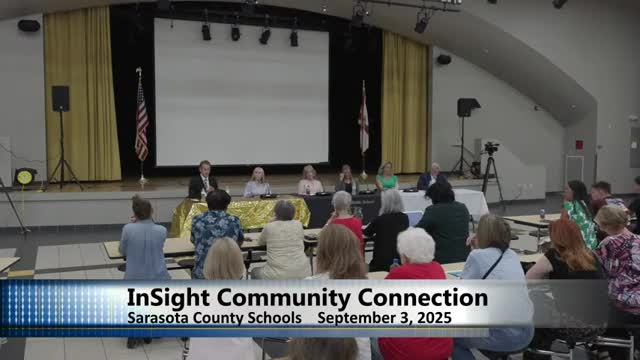
Superintendent Connor and board members described how federal funds ending and enrollment shifts produced a multi‑stage budgeting process that reduced or restructured non‑classroom positions while aiming to protect classroom staffing and class sizes.
Superintendent Connor said the analysis began when ESSER (federal) funding expired and the district identified 182 positions previously funded by federal dollars that were not sustainable: “There were 182 positions across whether it be district level, but mainly at the school level. That was the first thing that had to be looked at because there wasn't a sustainable funding source for that.”
Connor said district leaders then reviewed non‑rostered roles such as schoolwide behavior coaches and literacy coaches and used data to prioritize where limited resources would remain. He said eliminating some positions allowed the district to avoid layoffs and to place affected staff in “suitable” roles where possible.
Board members and staff described the proportional approach the district took: district administrative positions funded from the general fund took a 10 percent reduction while school‑based classifications saw approximately a 4 percent reduction. The superintendent also highlighted capital and operational commitments that continue to affect budgeting, including opening a new K–8 school and an upcoming high school (Welland Park) expense in the multi‑million dollar range.
Teachers and staff concerns: several teachers who spoke said the loss of ESE, ESOL and literacy coaches and the reassignment of TSPs (teacher support personnel) to regional or cluster models has increased workload at schools. A teacher said TSPs are “the lifeblood of a school” and urged the district to return more supports to individual campuses.
Board response and oversight: board members said they plan to monitor implementation and outcomes using data and staff reports. One board member noted the district will track IT ticket response rates and other operational metrics to evaluate whether the reorganization negatively affects service levels.
What was not decided: no new revenue source was announced; board members emphasized advocacy for increased state funding and said parents and community groups will be needed in legislative advocacy efforts.
Superintendent Connor said the analysis began when ESSER (federal) funding expired and the district identified 182 positions previously funded by federal dollars that were not sustainable: “There were 182 positions across whether it be district level, but mainly at the school level. That was the first thing that had to be looked at because there wasn't a sustainable funding source for that.”
Connor said district leaders then reviewed non‑rostered roles such as schoolwide behavior coaches and literacy coaches and used data to prioritize where limited resources would remain. He said eliminating some positions allowed the district to avoid layoffs and to place affected staff in “suitable” roles where possible.
Board members and staff described the proportional approach the district took: district administrative positions funded from the general fund took a 10 percent reduction while school‑based classifications saw approximately a 4 percent reduction. The superintendent also highlighted capital and operational commitments that continue to affect budgeting, including opening a new K–8 school and an upcoming high school (Welland Park) expense in the multi‑million dollar range.
Teachers and staff concerns: several teachers who spoke said the loss of ESE, ESOL and literacy coaches and the reassignment of TSPs (teacher support personnel) to regional or cluster models has increased workload at schools. A teacher said TSPs are “the lifeblood of a school” and urged the district to return more supports to individual campuses.
Board response and oversight: board members said they plan to monitor implementation and outcomes using data and staff reports. One board member noted the district will track IT ticket response rates and other operational metrics to evaluate whether the reorganization negatively affects service levels.
What was not decided: no new revenue source was announced; board members emphasized advocacy for increased state funding and said parents and community groups will be needed in legislative advocacy efforts.
Don't Miss a Word: See the Full Meeting!
Go beyond summaries. Unlock every video, transcript, and key insight with a Founder Membership.
✓
Get instant access to full meeting videos
✓
Search and clip any phrase from complete transcripts
✓
Receive AI-powered summaries & custom alerts
✓
Enjoy lifetime, unrestricted access to government data
30-day money-back guarantee
