District outlines Year 3 strategic-plan alignment; literacy remains central
October 01, 2025 | Stillwater Area Public Schools, School Boards, Minnesota
This article was created by AI summarizing key points discussed. AI makes mistakes, so for full details and context, please refer to the video of the full meeting. Please report any errors so we can fix them. Report an error »
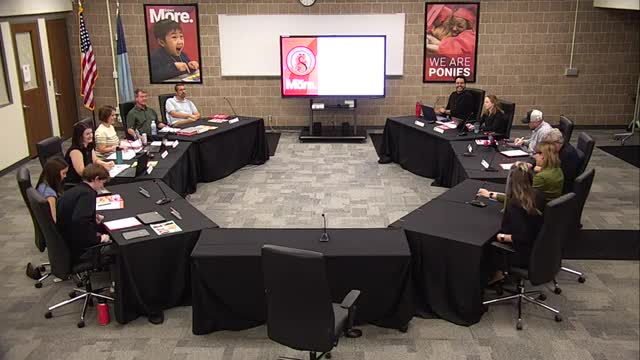
District staff presented an update on the district strategic plan (referred to in the meeting as the ONI plan), emphasizing that Year 3 work centers on aligning systems to deliver high-quality Tier 1 instruction and ongoing literacy improvement.
Carissa and Caitlin explained that the three-year strategic plan aims to provide stable, consistent goals rather than shifting priorities each year. For 2025–26 the district’s bull’s-eye is “high quality instruction,” with literacy the primary instructional focus, continued implementation of a multi‑tiered system of supports (MTSS), and an emphasis on equity, culturally responsive instruction and social‑emotional supports.
Staff described “action cards” at district and school levels that identify goals, specific steps, responsibilities and timelines; schools use FastBridge as a K–12 screener to progress monitor literacy and hold quarterly data conversations. Staff said the district’s end target for Tier 1 instruction is that 80% of students access grade-level content proficiently or beyond, while acknowledging each school’s starting point differs and so school-level growth targets vary.
Other operational initiatives include a district welcome center to streamline new-family and new-staff onboarding, exploration of responsible uses of AI to support staff work, and plans to evaluate the district’s human-resources and finance platforms (Skyward replacement). Staff also noted intentional strategies to grow enrollment as a core financial priority.
Board members and staff discussed measurement approaches; staff explained that FastBridge is used for formative progress monitoring multiple times a year because the MCA is an annual, summative measure and cannot support the frequent instructional adjustments the district seeks. Staff said FastBridge scores correlate with MCA outcomes and that building-level action cards contain measurable, locally calibrated goals for growth.
Board members praised the multi-year alignment and the increased availability of data to teachers for real‑time instruction adjustments. Staff said the work will continue with school-level action cards and quarterly monitoring.
Carissa and Caitlin explained that the three-year strategic plan aims to provide stable, consistent goals rather than shifting priorities each year. For 2025–26 the district’s bull’s-eye is “high quality instruction,” with literacy the primary instructional focus, continued implementation of a multi‑tiered system of supports (MTSS), and an emphasis on equity, culturally responsive instruction and social‑emotional supports.
Staff described “action cards” at district and school levels that identify goals, specific steps, responsibilities and timelines; schools use FastBridge as a K–12 screener to progress monitor literacy and hold quarterly data conversations. Staff said the district’s end target for Tier 1 instruction is that 80% of students access grade-level content proficiently or beyond, while acknowledging each school’s starting point differs and so school-level growth targets vary.
Other operational initiatives include a district welcome center to streamline new-family and new-staff onboarding, exploration of responsible uses of AI to support staff work, and plans to evaluate the district’s human-resources and finance platforms (Skyward replacement). Staff also noted intentional strategies to grow enrollment as a core financial priority.
Board members and staff discussed measurement approaches; staff explained that FastBridge is used for formative progress monitoring multiple times a year because the MCA is an annual, summative measure and cannot support the frequent instructional adjustments the district seeks. Staff said FastBridge scores correlate with MCA outcomes and that building-level action cards contain measurable, locally calibrated goals for growth.
Board members praised the multi-year alignment and the increased availability of data to teachers for real‑time instruction adjustments. Staff said the work will continue with school-level action cards and quarterly monitoring.
View the Full Meeting & All Its Details
This article offers just a summary. Unlock complete video, transcripts, and insights as a Founder Member.
✓
Watch full, unedited meeting videos
✓
Search every word spoken in unlimited transcripts
✓
AI summaries & real-time alerts (all government levels)
✓
Permanent access to expanding government content
30-day money-back guarantee
