County feasibility study outlines two surface‑water transfer options to help Vina Subbasin; recommends phased pilots
October 01, 2025 | Butte County, California
This article was created by AI summarizing key points discussed. AI makes mistakes, so for full details and context, please refer to the video of the full meeting. Please report any errors so we can fix them. Report an error »
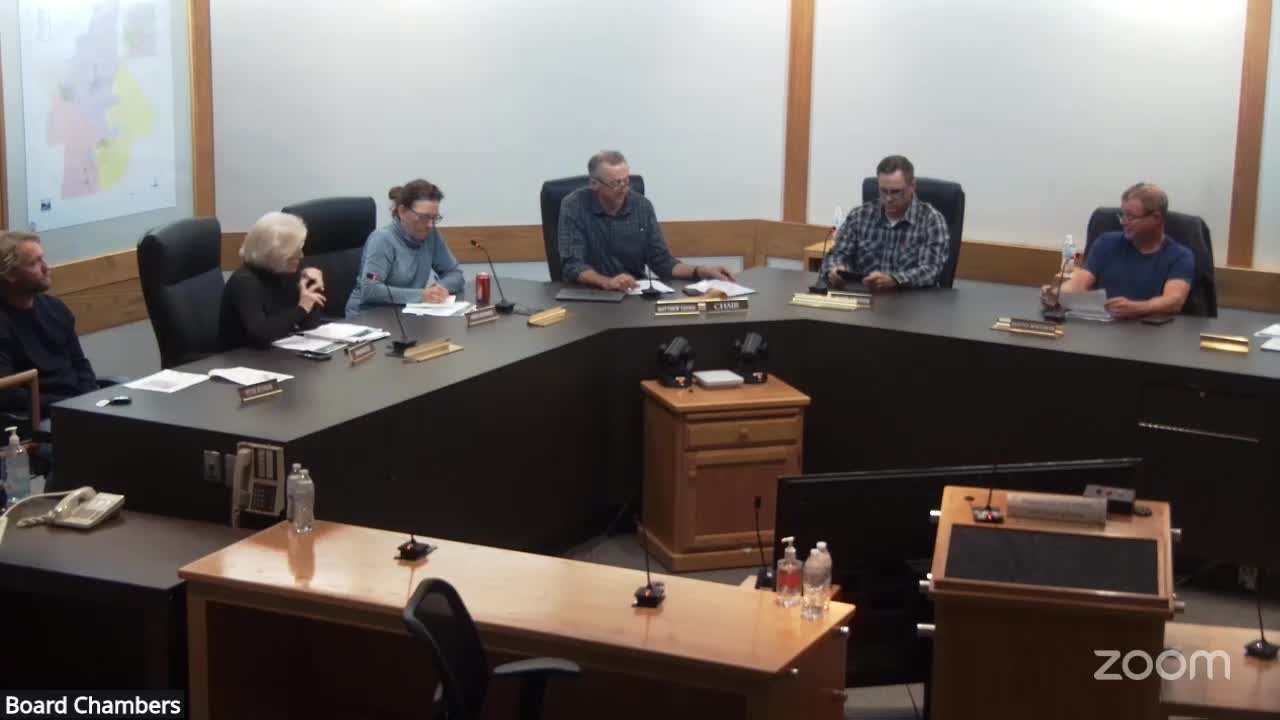
Butte County Water Commission members heard the results Oct. 1 of a surface‑water supply feasibility analysis that examined two transfer options intended to provide managed surface water to the Vina Subbasin and reduce groundwater pumping.
The study, prepared by Water and Land Solutions with engineering support, examined (1) a transfer of underused Paradise Irrigation District (PID) water through Butte Creek to agricultural lands in the Vina Subbasin (the “Ridge‑to‑Valley” option) and (2) deliveries using Western Canal Water District supplies to three properties north of Highway 99 (the “Western Canal / South Finite” option). Maddie Munson of Water and Land Solutions led the presentation, with Jenny Shear (now general manager, Western Canal Water District) summarizing the Western Canal option.
The consultants said the Ridge‑to‑Valley option could start with a three‑year pilot of roughly 1,500 acre‑feet per year and potentially scale to about 3,500 acre‑feet once PID storage is increased by the Magalia Dam retrofit. Paradise Irrigation District told the study team it may have between 1,500 and 3,500 acre‑feet available for transfer. The Western Canal option could serve up to about 7,752 acre‑feet across three mapped properties, the presenters said; together the two efforts would cover a portion of the county’s multi‑year target for increased supplies to the subbasin.
Why it matters: Vina Subbasin managers aim to reduce a multi‑year groundwater deficit the presenters described as roughly on the order of 20,000 acre‑feet (average target discussed in the study). The county and the Vina Groundwater Sustainability Agency (Vina GSA) are evaluating multiple tools — including recharge, demand reduction and transfers — to stabilize groundwater levels under SGMA.
Legal and permitting considerations: The consultants reviewed two standard State Water Resources Control Board transfer paths: temporary (less than one year) and longer‑term transfers. They noted temporary transfers are exempt from CEQA under typical State Water Board procedures while longer‑term transfers usually trigger CEQA and may require additional environmental review. Because the water involved is subject to the Butte Creek adjudication, court approval would also be required for transfers. The study team recommended a phased approach using successive one‑year temporary transfers for the first three years to avoid immediate CEQA work while testing operations and water accounting; that approach would still require annual court filings, the presenters said.
Hydrologic and environmental effects: The Ridge‑to‑Valley option would convey water using existing diversions and canals (Parrot Phelan Diversion and Parrot Phelan Canal were cited). Presenters said the projects would use existing water rights held by PID and that, based on their review, they did not identify new significant environmental impacts from conveyance because the transfer would move existing water within the watershed rather than withdraw new supplies. The study noted potential, but uncertain, benefits for spring‑run Chinook salmon in Butte Creek during July–September due to modest increases (on the order of 4–5 cubic feet per second) in streamflow in some years; State and federal fisheries agencies would need to be consulted in project implementation.
Infrastructure: The Ridge‑to‑Valley options use existing canals and diversions; option A (walnut orchards) would require on‑farm improvements including pumps, filtration and dual‑source systems (three pump stations estimated for that property). Option B (rice ground) requires no on‑farm upgrades because the fields are flood‑irrigated. The Western Canal option would require nine lift pumps, 12 new meters and a new or upsized culvert through the Cottonwood Creek federal flood control levee; the culvert work will require U.S. Army Corps of Engineers and Central Valley Flood Protection Board permits and both CEQA and NEPA (the consultant estimated about $200,000 for that permitting effort and 18–24 months for completion).
Costs and economics: Because the cost of purchased surface water is the largest project expense, the study developed illustrative price ranges rather than negotiated prices. For the PID transfer the team used a median comparison price of about $300 per acre‑foot (based on recent transfer comparables); PID or its board had not set a final price. The Parrot Phelan Canal owners indicated a wheeling fee around $25/acre‑foot. Using these assumptions, the consultants estimated the all‑in cost per acre‑foot recharged at about $430/af for option A (walnuts, including on‑farm improvements amortized over a 10‑year payback) and about $300/af for option B (rice). The study used a comparator pumping cost of about $165/af to represent typical groundwater pumping costs for the agricultural users modeled; presenters warned that at the prices modeled, purchased surface water would be more expensive than pumping for many growers and likely require incentives or grants to be taken up by landowners.
Recommendations from the consultants: (a) pursue a phased pilot (start with ~1,500 af/year to option B for three years using annual temporary transfers to avoid immediate CEQA; (b) focus initially on the lower‑cost delivery to rice ground (option B) because modeling showed greater groundwater‑level benefit near that property and lower on‑farm costs; and (c) seek grant funding or local cost‑share (Vina GSA, water districts, or other local sources) to reduce costs to growers because federal/state bond funds cannot be used to purchase water and on‑farm capital costs are likely needed to incentivize adoption.
Commissioner and public reactions: Commissioner Giesen Tanner pressed presenters on whether buyer/seller relationships (for example PID → Vina GSA versus direct transfers to landowners or districts) were premature to include in a feasibility study; presenters said legal analysis and stakeholder conversations informed the feasibility discussion but final contracting steps would be negotiated later. Commissioner Raymond and others asked about how large a local subsidy would be and whether growers could be ‘‘priced out’’ if surface water costs exceed pumping. In public comment, Jim Graden (Vina GSA Stakeholder Advisory Committee) asked for explicit water accounting to demonstrate that in‑lieu recharge corresponds to reduced pumping. A separate public commenter supported keeping Butte County water in the county where feasible.
Next steps: The feasibility report will be finalized and provided to the county in the coming weeks. Presenters recommended follow‑up negotiations with PID, Western Canal Water District and Vina GSA, pursuit of grant funding for infrastructure, and additional technical work to refine cost and permitting schedules. Commissioners received the presentation as information and thanked the consulting team.
Sources and attribution: Presentation and figures summarized from the Butte County staff briefing and the surface‑water supply feasibility analysis delivered Oct. 1 by Maddie Munson (Water and Land Solutions) and Jenny Shear (Western Canal Water District). Legal and regulatory descriptions reference comments made during the presentation about the State Water Resources Control Board transfer pathways, Butte Creek adjudication and CEQA.
The study, prepared by Water and Land Solutions with engineering support, examined (1) a transfer of underused Paradise Irrigation District (PID) water through Butte Creek to agricultural lands in the Vina Subbasin (the “Ridge‑to‑Valley” option) and (2) deliveries using Western Canal Water District supplies to three properties north of Highway 99 (the “Western Canal / South Finite” option). Maddie Munson of Water and Land Solutions led the presentation, with Jenny Shear (now general manager, Western Canal Water District) summarizing the Western Canal option.
The consultants said the Ridge‑to‑Valley option could start with a three‑year pilot of roughly 1,500 acre‑feet per year and potentially scale to about 3,500 acre‑feet once PID storage is increased by the Magalia Dam retrofit. Paradise Irrigation District told the study team it may have between 1,500 and 3,500 acre‑feet available for transfer. The Western Canal option could serve up to about 7,752 acre‑feet across three mapped properties, the presenters said; together the two efforts would cover a portion of the county’s multi‑year target for increased supplies to the subbasin.
Why it matters: Vina Subbasin managers aim to reduce a multi‑year groundwater deficit the presenters described as roughly on the order of 20,000 acre‑feet (average target discussed in the study). The county and the Vina Groundwater Sustainability Agency (Vina GSA) are evaluating multiple tools — including recharge, demand reduction and transfers — to stabilize groundwater levels under SGMA.
Legal and permitting considerations: The consultants reviewed two standard State Water Resources Control Board transfer paths: temporary (less than one year) and longer‑term transfers. They noted temporary transfers are exempt from CEQA under typical State Water Board procedures while longer‑term transfers usually trigger CEQA and may require additional environmental review. Because the water involved is subject to the Butte Creek adjudication, court approval would also be required for transfers. The study team recommended a phased approach using successive one‑year temporary transfers for the first three years to avoid immediate CEQA work while testing operations and water accounting; that approach would still require annual court filings, the presenters said.
Hydrologic and environmental effects: The Ridge‑to‑Valley option would convey water using existing diversions and canals (Parrot Phelan Diversion and Parrot Phelan Canal were cited). Presenters said the projects would use existing water rights held by PID and that, based on their review, they did not identify new significant environmental impacts from conveyance because the transfer would move existing water within the watershed rather than withdraw new supplies. The study noted potential, but uncertain, benefits for spring‑run Chinook salmon in Butte Creek during July–September due to modest increases (on the order of 4–5 cubic feet per second) in streamflow in some years; State and federal fisheries agencies would need to be consulted in project implementation.
Infrastructure: The Ridge‑to‑Valley options use existing canals and diversions; option A (walnut orchards) would require on‑farm improvements including pumps, filtration and dual‑source systems (three pump stations estimated for that property). Option B (rice ground) requires no on‑farm upgrades because the fields are flood‑irrigated. The Western Canal option would require nine lift pumps, 12 new meters and a new or upsized culvert through the Cottonwood Creek federal flood control levee; the culvert work will require U.S. Army Corps of Engineers and Central Valley Flood Protection Board permits and both CEQA and NEPA (the consultant estimated about $200,000 for that permitting effort and 18–24 months for completion).
Costs and economics: Because the cost of purchased surface water is the largest project expense, the study developed illustrative price ranges rather than negotiated prices. For the PID transfer the team used a median comparison price of about $300 per acre‑foot (based on recent transfer comparables); PID or its board had not set a final price. The Parrot Phelan Canal owners indicated a wheeling fee around $25/acre‑foot. Using these assumptions, the consultants estimated the all‑in cost per acre‑foot recharged at about $430/af for option A (walnuts, including on‑farm improvements amortized over a 10‑year payback) and about $300/af for option B (rice). The study used a comparator pumping cost of about $165/af to represent typical groundwater pumping costs for the agricultural users modeled; presenters warned that at the prices modeled, purchased surface water would be more expensive than pumping for many growers and likely require incentives or grants to be taken up by landowners.
Recommendations from the consultants: (a) pursue a phased pilot (start with ~1,500 af/year to option B for three years using annual temporary transfers to avoid immediate CEQA; (b) focus initially on the lower‑cost delivery to rice ground (option B) because modeling showed greater groundwater‑level benefit near that property and lower on‑farm costs; and (c) seek grant funding or local cost‑share (Vina GSA, water districts, or other local sources) to reduce costs to growers because federal/state bond funds cannot be used to purchase water and on‑farm capital costs are likely needed to incentivize adoption.
Commissioner and public reactions: Commissioner Giesen Tanner pressed presenters on whether buyer/seller relationships (for example PID → Vina GSA versus direct transfers to landowners or districts) were premature to include in a feasibility study; presenters said legal analysis and stakeholder conversations informed the feasibility discussion but final contracting steps would be negotiated later. Commissioner Raymond and others asked about how large a local subsidy would be and whether growers could be ‘‘priced out’’ if surface water costs exceed pumping. In public comment, Jim Graden (Vina GSA Stakeholder Advisory Committee) asked for explicit water accounting to demonstrate that in‑lieu recharge corresponds to reduced pumping. A separate public commenter supported keeping Butte County water in the county where feasible.
Next steps: The feasibility report will be finalized and provided to the county in the coming weeks. Presenters recommended follow‑up negotiations with PID, Western Canal Water District and Vina GSA, pursuit of grant funding for infrastructure, and additional technical work to refine cost and permitting schedules. Commissioners received the presentation as information and thanked the consulting team.
Sources and attribution: Presentation and figures summarized from the Butte County staff briefing and the surface‑water supply feasibility analysis delivered Oct. 1 by Maddie Munson (Water and Land Solutions) and Jenny Shear (Western Canal Water District). Legal and regulatory descriptions reference comments made during the presentation about the State Water Resources Control Board transfer pathways, Butte Creek adjudication and CEQA.
View the Full Meeting & All Its Details
This article offers just a summary. Unlock complete video, transcripts, and insights as a Founder Member.
✓
Watch full, unedited meeting videos
✓
Search every word spoken in unlimited transcripts
✓
AI summaries & real-time alerts (all government levels)
✓
Permanent access to expanding government content
30-day money-back guarantee
