Butte County reports above‑average precipitation, ongoing groundwater quality monitoring and multiple SGMA‑funded projects
October 01, 2025 | Butte County, California
This article was created by AI summarizing key points discussed. AI makes mistakes, so for full details and context, please refer to the video of the full meeting. Please report any errors so we can fix them. Report an error »
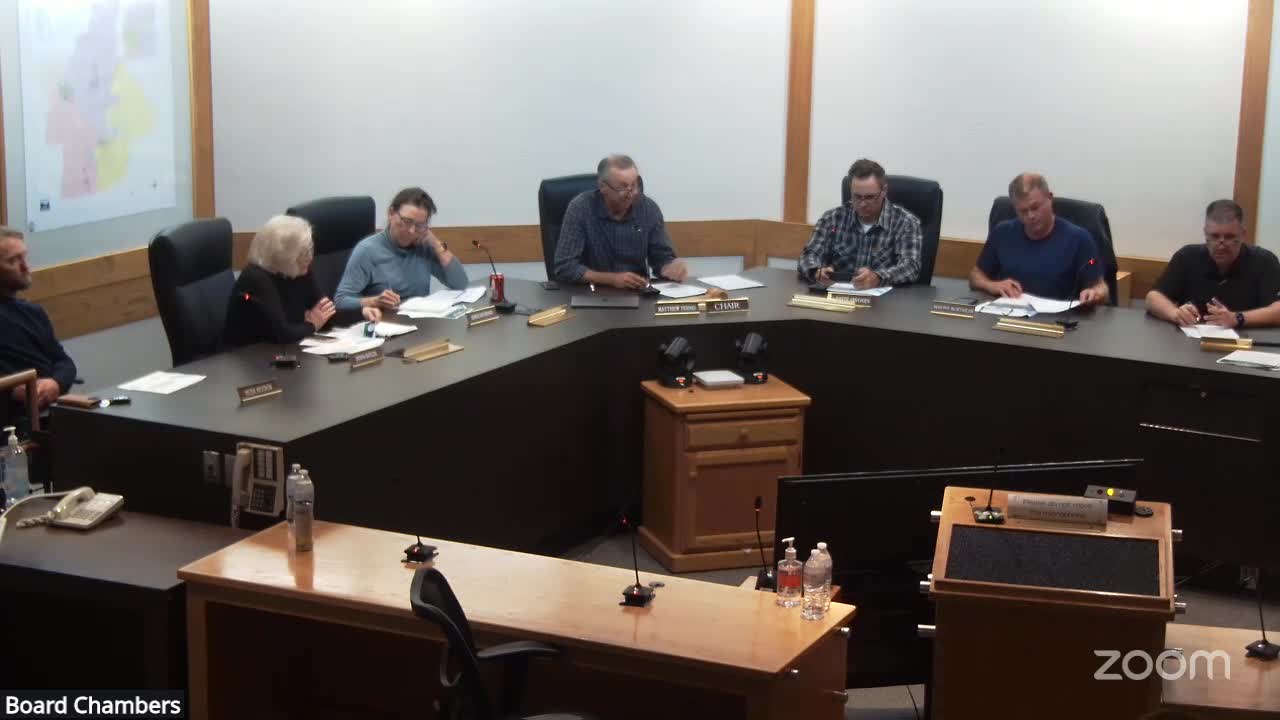
Butte County staff delivered updates Oct. 1 on hydrologic conditions, groundwater quality monitoring and county‑funded SGMA projects intended to support groundwater sustainability and drought resilience.
Kelly Peterson, the county’s research scientist, walked commissioners through water‑year conditions, noting above‑average northern Sierra precipitation and an April 1 snow water equivalent slightly above normal. Lake Oroville storage and Sacramento‑region runoff were reported at or above historical averages for the date, and county precipitation gauges in Durham and Biggs recorded above‑average totals for the water year. Peterson said the county will continue local precipitation monitoring and is seeking a new long‑term station location to replace an irrigation‑pasture gauge that is becoming inactive.
Groundwater quality monitoring: Peterson summarized the county’s groundwater salinity monitoring program, which targets deep portions of the aquifer to identify baseline and long‑term changes in electrical conductivity (EC) relevant to irrigation. The county has a 19‑site network that includes multi‑completion wells and deep sampling (some wells approach 1,000 feet). Most monitoring locations remain below the measurable objectives set in local GSPs, Peterson said, but one multi‑completion well near Palermo showed historically elevated EC in deeper intervals. To investigate, the county will deploy continuous EC loggers and continue data collection to determine whether the elevated values reflect natural deep‑aquifer conditions or are influenced by pumping or other processes.
Why it matters: The monitoring program focuses on salinity as an irrigation‑quality metric rather than primarily on potable contaminants. County staff said the program is designed to complement GSA monitoring networks and to detect potential upward migration of higher‑salinity deep waters that could affect agricultural uses if pumping patterns change.
SGMA project updates and outreach: County staff described several ongoing and planned projects funded through SGMA‑related grants or subrecipient agreements:
- Vina GSA projects: monitoring‑well installation, a community monitoring program to equip selected domestic wells (24 respondents, funding for eight installations identified), a domestic well inventory and work on interconnected surface‑water data gaps. Consultants are preparing a periodic evaluation of the Vina Groundwater Sustainability Plan (GSP) as required every five years; that work will include public meetings and may result in GSP amendments.
- Wyandotte Creek: similar data‑gap and monitoring work, plus a scheduled GSP periodic evaluation due earlier than Vina’s because Wyandotte did not receive an extension. Consultants are also evaluating conjunctive‑use opportunities with South Feather water and Palermo recharge pilot concepts.
- County projects: the surface‑water supply feasibility study presented earlier (county as subrecipient), TTEM/site investigations for recharge suitability on candidate properties and outreach to landowners about potential recharge or dual‑source irrigation pilots.
Palermo and related community projects: County staff reported progress on the Palermo drainage master plan and the Palermo dry‑well consolidation project, which will extend potable mains and tie households into South Feather Water and Power service. Construction for a dry‑well consolidation phase is underway and expected to finish in the coming weeks; additional phases depend on funding and permitting. The county also reported work on a Feather Ridge Estates water system to restore potable service for properties impacted by wildfire.
Public and commissioner discussion: Commissioners asked for more detailed timing of monitoring and for improved public communications about when surface water is available and how it affects groundwater demand. Commissioner Giesen Tanner and several public commenters urged the county to clarify water accounting for in‑lieu recharge projects (i.e., demonstrate reduced pumping equals the volume of delivered surface water) and to continue outreach to domestic well owners about impacts and drought resilience options.
Next steps: County staff will continue groundwater monitoring and deploy EC loggers at sites of concern, finalize the Vina GSP periodic evaluation work and continue outreach on Palermo projects and domestic well inventory efforts. Additional public meetings and TAC (technical advisory committee) briefings are planned as projects progress.
Sources and attribution: Update and monitoring figures summarized from remarks and slides presented Oct. 1 by Kelly Peterson, Research Scientist, Butte County Department of Water and Resource Conservation, and related staff remarks during the meeting.
Kelly Peterson, the county’s research scientist, walked commissioners through water‑year conditions, noting above‑average northern Sierra precipitation and an April 1 snow water equivalent slightly above normal. Lake Oroville storage and Sacramento‑region runoff were reported at or above historical averages for the date, and county precipitation gauges in Durham and Biggs recorded above‑average totals for the water year. Peterson said the county will continue local precipitation monitoring and is seeking a new long‑term station location to replace an irrigation‑pasture gauge that is becoming inactive.
Groundwater quality monitoring: Peterson summarized the county’s groundwater salinity monitoring program, which targets deep portions of the aquifer to identify baseline and long‑term changes in electrical conductivity (EC) relevant to irrigation. The county has a 19‑site network that includes multi‑completion wells and deep sampling (some wells approach 1,000 feet). Most monitoring locations remain below the measurable objectives set in local GSPs, Peterson said, but one multi‑completion well near Palermo showed historically elevated EC in deeper intervals. To investigate, the county will deploy continuous EC loggers and continue data collection to determine whether the elevated values reflect natural deep‑aquifer conditions or are influenced by pumping or other processes.
Why it matters: The monitoring program focuses on salinity as an irrigation‑quality metric rather than primarily on potable contaminants. County staff said the program is designed to complement GSA monitoring networks and to detect potential upward migration of higher‑salinity deep waters that could affect agricultural uses if pumping patterns change.
SGMA project updates and outreach: County staff described several ongoing and planned projects funded through SGMA‑related grants or subrecipient agreements:
- Vina GSA projects: monitoring‑well installation, a community monitoring program to equip selected domestic wells (24 respondents, funding for eight installations identified), a domestic well inventory and work on interconnected surface‑water data gaps. Consultants are preparing a periodic evaluation of the Vina Groundwater Sustainability Plan (GSP) as required every five years; that work will include public meetings and may result in GSP amendments.
- Wyandotte Creek: similar data‑gap and monitoring work, plus a scheduled GSP periodic evaluation due earlier than Vina’s because Wyandotte did not receive an extension. Consultants are also evaluating conjunctive‑use opportunities with South Feather water and Palermo recharge pilot concepts.
- County projects: the surface‑water supply feasibility study presented earlier (county as subrecipient), TTEM/site investigations for recharge suitability on candidate properties and outreach to landowners about potential recharge or dual‑source irrigation pilots.
Palermo and related community projects: County staff reported progress on the Palermo drainage master plan and the Palermo dry‑well consolidation project, which will extend potable mains and tie households into South Feather Water and Power service. Construction for a dry‑well consolidation phase is underway and expected to finish in the coming weeks; additional phases depend on funding and permitting. The county also reported work on a Feather Ridge Estates water system to restore potable service for properties impacted by wildfire.
Public and commissioner discussion: Commissioners asked for more detailed timing of monitoring and for improved public communications about when surface water is available and how it affects groundwater demand. Commissioner Giesen Tanner and several public commenters urged the county to clarify water accounting for in‑lieu recharge projects (i.e., demonstrate reduced pumping equals the volume of delivered surface water) and to continue outreach to domestic well owners about impacts and drought resilience options.
Next steps: County staff will continue groundwater monitoring and deploy EC loggers at sites of concern, finalize the Vina GSP periodic evaluation work and continue outreach on Palermo projects and domestic well inventory efforts. Additional public meetings and TAC (technical advisory committee) briefings are planned as projects progress.
Sources and attribution: Update and monitoring figures summarized from remarks and slides presented Oct. 1 by Kelly Peterson, Research Scientist, Butte County Department of Water and Resource Conservation, and related staff remarks during the meeting.
Don't Miss a Word: See the Full Meeting!
Go beyond summaries. Unlock every video, transcript, and key insight with a Founder Membership.
✓
Get instant access to full meeting videos
✓
Search and clip any phrase from complete transcripts
✓
Receive AI-powered summaries & custom alerts
✓
Enjoy lifetime, unrestricted access to government data
30-day money-back guarantee
