Davenport staff propose buying, demolishing and rebuilding on abandoned lots to expand 'Dream' housing program
October 15, 2025 | Davenport City, Scott County, Iowa
This article was created by AI summarizing key points discussed. AI makes mistakes, so for full details and context, please refer to the video of the full meeting. Please report any errors so we can fix them. Report an error »
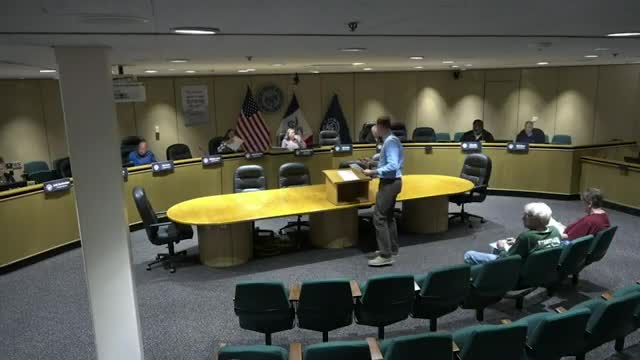
Davenport City staff proposed expanding the city’s Dream housing program to allow the city to acquire severely deteriorated abandoned properties, demolish them and build new owner-occupied houses, staff member Bruce said during a council management update.
The proposal would keep the existing forgivable-match approach while adding a second path for properties that are "too far gone" to be rehabilitated, Bruce said. "It's a dollar for dollar match with a 100,000 per house," he said, describing the current match structure and the idea of shifting some resources to full new construction on the worst properties.
City staff told aldermen the Dream program launched about 2½ years ago and was designed as a dollar-for-dollar forgivable match (forgiveness tied to owner-occupancy for five years). The city used $2,100,000 in heritage funds to target roughly 20 homes in the Gaines Street corridor; about 30 houses were initially identified in that area. To date staff said six projects have been committed, some completed and others underway, leaving roughly 70% of the program funding unobligated.
Nut graf: The proposed change responds to the city’s finding that many vacant structures are too deteriorated for a $100,000 rehab match to make projects financially viable. Staff recommended broadening the eligible geography beyond the Gaines Street corridor to the larger central-city Dream area and adding an option for the city to acquire, demolish and build new houses on sites where rehab is not feasible. The stated goal is still owner occupancy and no household income restriction for buyers.
Supporting details: Bruce said the city could expand the universe of eligible properties to the whole central city to increase the number of achievable rehabs. For properties judged beyond repair, the city could acquire, demolish and construct new single-family homes and then sell them to homebuyers. "Perhaps if the properties are too far gone, do we acquire the property, demolish it, and build a new house right on that same site?" Bruce said, framing the idea as one tool in a broader toolbox for combating long-term vacancy and blight.
Officials noted the tradeoffs. Alderman Joaquin called the idea favorable and said a cyclical model could be created, observing the city would be acting in a role closer to a developer/landlord for a period. Bruce acknowledged the program would likely not be revenue-neutral in the short term: "You're gonna be losing money... you'd have to continue to add to it," he said, but added that newly built homes in previous urban homestead rounds had appraised at levels that could help recoup costs and reduce future subsidy needs.
Alderman Kelly asked for ward-specific information on vacant structures and whether the five-year forgivable period should be longer. Bruce said the program allows ownership change to count toward the occupancy requirement (forgiveness can still occur if the first owner occupies the home for two years and a subsequent owner occupies it three years), which makes a longer forgiveness term more feasible. Kelly asked: "If I left and didn't honor whatever it was, then I would have to compensate the city for that amount. Correct?" Bruce replied, "Right," and said repaid amounts would go back to program funds.
Staff identified roughly 100 abandoned houses in the expanded central-city Dream area, and noted two city-owned properties in the Gaines Street corridor (823 Warren and 1006 Warren) that could serve as pilot sites for new construction. Bruce said the city currently has roughly $1,400,000 available to test an expanded approach.
Ending: Staff said next steps would include exploring program details (forgiveness period length, acquisition strategy and pilot sites) and returning with more specifics. Aldermen asked for ward-level maps of vacant properties to inform local outreach and potential site selection.
The proposal would keep the existing forgivable-match approach while adding a second path for properties that are "too far gone" to be rehabilitated, Bruce said. "It's a dollar for dollar match with a 100,000 per house," he said, describing the current match structure and the idea of shifting some resources to full new construction on the worst properties.
City staff told aldermen the Dream program launched about 2½ years ago and was designed as a dollar-for-dollar forgivable match (forgiveness tied to owner-occupancy for five years). The city used $2,100,000 in heritage funds to target roughly 20 homes in the Gaines Street corridor; about 30 houses were initially identified in that area. To date staff said six projects have been committed, some completed and others underway, leaving roughly 70% of the program funding unobligated.
Nut graf: The proposed change responds to the city’s finding that many vacant structures are too deteriorated for a $100,000 rehab match to make projects financially viable. Staff recommended broadening the eligible geography beyond the Gaines Street corridor to the larger central-city Dream area and adding an option for the city to acquire, demolish and build new houses on sites where rehab is not feasible. The stated goal is still owner occupancy and no household income restriction for buyers.
Supporting details: Bruce said the city could expand the universe of eligible properties to the whole central city to increase the number of achievable rehabs. For properties judged beyond repair, the city could acquire, demolish and construct new single-family homes and then sell them to homebuyers. "Perhaps if the properties are too far gone, do we acquire the property, demolish it, and build a new house right on that same site?" Bruce said, framing the idea as one tool in a broader toolbox for combating long-term vacancy and blight.
Officials noted the tradeoffs. Alderman Joaquin called the idea favorable and said a cyclical model could be created, observing the city would be acting in a role closer to a developer/landlord for a period. Bruce acknowledged the program would likely not be revenue-neutral in the short term: "You're gonna be losing money... you'd have to continue to add to it," he said, but added that newly built homes in previous urban homestead rounds had appraised at levels that could help recoup costs and reduce future subsidy needs.
Alderman Kelly asked for ward-specific information on vacant structures and whether the five-year forgivable period should be longer. Bruce said the program allows ownership change to count toward the occupancy requirement (forgiveness can still occur if the first owner occupies the home for two years and a subsequent owner occupies it three years), which makes a longer forgiveness term more feasible. Kelly asked: "If I left and didn't honor whatever it was, then I would have to compensate the city for that amount. Correct?" Bruce replied, "Right," and said repaid amounts would go back to program funds.
Staff identified roughly 100 abandoned houses in the expanded central-city Dream area, and noted two city-owned properties in the Gaines Street corridor (823 Warren and 1006 Warren) that could serve as pilot sites for new construction. Bruce said the city currently has roughly $1,400,000 available to test an expanded approach.
Ending: Staff said next steps would include exploring program details (forgiveness period length, acquisition strategy and pilot sites) and returning with more specifics. Aldermen asked for ward-level maps of vacant properties to inform local outreach and potential site selection.
View the Full Meeting & All Its Details
This article offers just a summary. Unlock complete video, transcripts, and insights as a Founder Member.
✓
Watch full, unedited meeting videos
✓
Search every word spoken in unlimited transcripts
✓
AI summaries & real-time alerts (all government levels)
✓
Permanent access to expanding government content
30-day money-back guarantee
