Virginia HHR secretary outlines maternal, behavioral health, foster care, long-term care priorities and budget requests
January 14, 2025 | 2025 Legislature VA, Virginia
This article was created by AI summarizing key points discussed. AI makes mistakes, so for full details and context, please refer to the video of the full meeting. Please report any errors so we can fix them. Report an error »
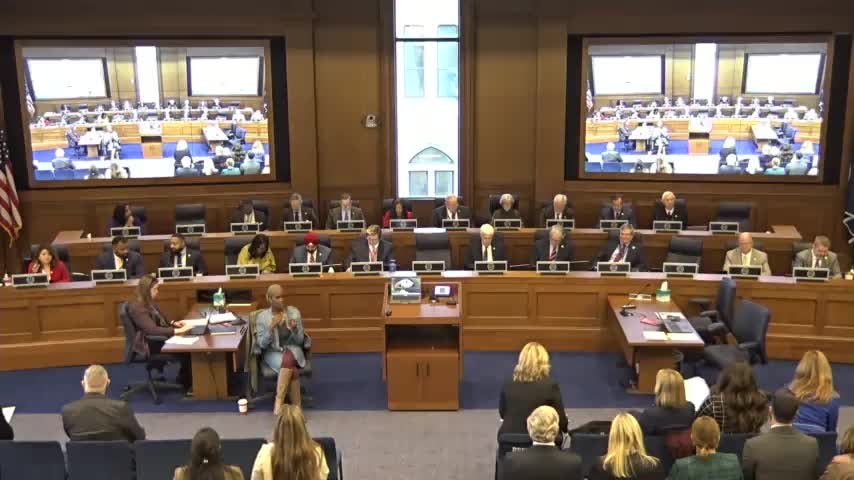
Secretary Janet Kelly, Virginia’s secretary of Health and Human Resources, told the committee she will focus the secretariat’s work this session on five bipartisan priorities: maternal health; behavioral health including fentanyl prevention and children’s mental health; child welfare; long-term care; and infrastructure.
Kelly said the secretariat accounts for roughly 35% of the state operating budget and outlined several current programs, service expansions and budget requests tied to those priorities.
On maternal health, Kelly said Virginia recorded 64 pregnancy-associated deaths in 2021 (down from 82 in 2020) and that the state’s task force on maternal health and data has identified cardiovascular issues and mental health as leading causes. She described an “Ask About Aspirin” campaign aimed at prompting patients to consult providers about aspirin use for certain high-risk pregnancies, and said the administration has directed a $1,000,000 investment through the Office of Transformation to support the task force and implementation. Kelly said the administration has allocated “almost $500,000,000” to maternal health services and asked for an additional $4,000,000 this year to expand perinatal hubs, increase payments for OB training/residencies and grow the maternal health workforce.
On behavioral health, Kelly updated the committee on the Right Help Right Now initiative and said the General Assembly previously allocated about $1,400,000,000 to Virginia’s behavioral health system. She said mobile crisis teams have grown from 32 to 102 teams with 24/7/365 coverage and an average response time of about 50 minutes. The administration has invested $165,000,000 in crisis receiving centers and stabilization units, yielding 287 operational chairs/beds and another 320 in development, Kelly said. She also said the state restored 254 closed state mental health hospital beds and that 988 call volume reached more than 14,000 calls a month in mid-2023. The administration has requested an additional $70,000,000 this year for Right Help Right Now, with $35,000,000 proposed to expand special conservators of the peace and $3,500,000 for alternative transportation; Kelly described those items as bridge funding while the full crisis system is built.
Kelly said the administration has requested $4,000,000 to support readiness and implementation of an SMI waiver, $1,400,000 to expand the adult psychiatric access line (APOW) and $17,800,000 to address children’s mental health through literacy, school-based services and workforce growth. She also described a proposal to reallocate management of unused waiver slots from community services boards (CSBs) to the Department of Behavioral Health and Developmental Services (DBHDS) to improve efficiency in assigning slots.
On fentanyl prevention and overdose response, Kelly said the Commonwealth has seen a 24.4% drop in overdoses and fentanyl-related deaths since 2022 and reported distribution of 313,786 naloxone kits and training for more than 441,000 individuals since 2023. The first lady’s public awareness work and the Virginia Foundation for Healthy Youth were cited as partners; Kelly said the administration has submitted a budget amendment to ensure naloxone general fund appropriations are allocated to the correct service area.
On child welfare and kinship care, Kelly described the Virginia Adopts campaign (which she helped lead under a previous administration) and said kinship placements have increased: she reported serving “over a 1,000 kids” since July and raising the share of kinship placements from 18% to 28.5% during the Youngkin administration. Kelly asked support for $9,200,000 to fund cost-of-living adjustments for new foster and adoptive families.
On long-term care, Kelly said complaints rose 64% from 2019 to 2023 and urged support for proposed licensing fee increases to sustain VDH inspection and licensing staff; she said Virginia ranked 38th in a recent nursing home study.
Delegates pressed Kelly with follow-up questions. Delegate Jeff Herring asked about clinical follow-up beyond the aspirin campaign; Dr. Shelton (the health agency physician appearing with the secretary) said the “Ask About Aspirin” campaign is meant to prompt patients to ask providers and that decisions about aspirin use should be made between patients and clinicians. Delegate Tran and Delegate Hodges asked about dementia and health literacy; Kelly highlighted concern about social media’s effect on youth mental health and described a November summit on “reclaiming childhood.”
Kelly closed by urging members to work with agency leadership and noting the secretariat’s large span of services and staff.
Kelly said the secretariat accounts for roughly 35% of the state operating budget and outlined several current programs, service expansions and budget requests tied to those priorities.
On maternal health, Kelly said Virginia recorded 64 pregnancy-associated deaths in 2021 (down from 82 in 2020) and that the state’s task force on maternal health and data has identified cardiovascular issues and mental health as leading causes. She described an “Ask About Aspirin” campaign aimed at prompting patients to consult providers about aspirin use for certain high-risk pregnancies, and said the administration has directed a $1,000,000 investment through the Office of Transformation to support the task force and implementation. Kelly said the administration has allocated “almost $500,000,000” to maternal health services and asked for an additional $4,000,000 this year to expand perinatal hubs, increase payments for OB training/residencies and grow the maternal health workforce.
On behavioral health, Kelly updated the committee on the Right Help Right Now initiative and said the General Assembly previously allocated about $1,400,000,000 to Virginia’s behavioral health system. She said mobile crisis teams have grown from 32 to 102 teams with 24/7/365 coverage and an average response time of about 50 minutes. The administration has invested $165,000,000 in crisis receiving centers and stabilization units, yielding 287 operational chairs/beds and another 320 in development, Kelly said. She also said the state restored 254 closed state mental health hospital beds and that 988 call volume reached more than 14,000 calls a month in mid-2023. The administration has requested an additional $70,000,000 this year for Right Help Right Now, with $35,000,000 proposed to expand special conservators of the peace and $3,500,000 for alternative transportation; Kelly described those items as bridge funding while the full crisis system is built.
Kelly said the administration has requested $4,000,000 to support readiness and implementation of an SMI waiver, $1,400,000 to expand the adult psychiatric access line (APOW) and $17,800,000 to address children’s mental health through literacy, school-based services and workforce growth. She also described a proposal to reallocate management of unused waiver slots from community services boards (CSBs) to the Department of Behavioral Health and Developmental Services (DBHDS) to improve efficiency in assigning slots.
On fentanyl prevention and overdose response, Kelly said the Commonwealth has seen a 24.4% drop in overdoses and fentanyl-related deaths since 2022 and reported distribution of 313,786 naloxone kits and training for more than 441,000 individuals since 2023. The first lady’s public awareness work and the Virginia Foundation for Healthy Youth were cited as partners; Kelly said the administration has submitted a budget amendment to ensure naloxone general fund appropriations are allocated to the correct service area.
On child welfare and kinship care, Kelly described the Virginia Adopts campaign (which she helped lead under a previous administration) and said kinship placements have increased: she reported serving “over a 1,000 kids” since July and raising the share of kinship placements from 18% to 28.5% during the Youngkin administration. Kelly asked support for $9,200,000 to fund cost-of-living adjustments for new foster and adoptive families.
On long-term care, Kelly said complaints rose 64% from 2019 to 2023 and urged support for proposed licensing fee increases to sustain VDH inspection and licensing staff; she said Virginia ranked 38th in a recent nursing home study.
Delegates pressed Kelly with follow-up questions. Delegate Jeff Herring asked about clinical follow-up beyond the aspirin campaign; Dr. Shelton (the health agency physician appearing with the secretary) said the “Ask About Aspirin” campaign is meant to prompt patients to ask providers and that decisions about aspirin use should be made between patients and clinicians. Delegate Tran and Delegate Hodges asked about dementia and health literacy; Kelly highlighted concern about social media’s effect on youth mental health and described a November summit on “reclaiming childhood.”
Kelly closed by urging members to work with agency leadership and noting the secretariat’s large span of services and staff.
Don't Miss a Word: See the Full Meeting!
Go beyond summaries. Unlock every video, transcript, and key insight with a Founder Membership.
✓
Get instant access to full meeting videos
✓
Search and clip any phrase from complete transcripts
✓
Receive AI-powered summaries & custom alerts
✓
Enjoy lifetime, unrestricted access to government data
30-day money-back guarantee
