Virginia Finance Subcommittee 2 advances five bills on taxation, tables trade‑in tax change and delays cigar tax decision
January 14, 2025 | 2025 Legislature VA, Virginia
This article was created by AI summarizing key points discussed. AI makes mistakes, so for full details and context, please refer to the video of the full meeting. Please report any errors so we can fix them. Report an error »
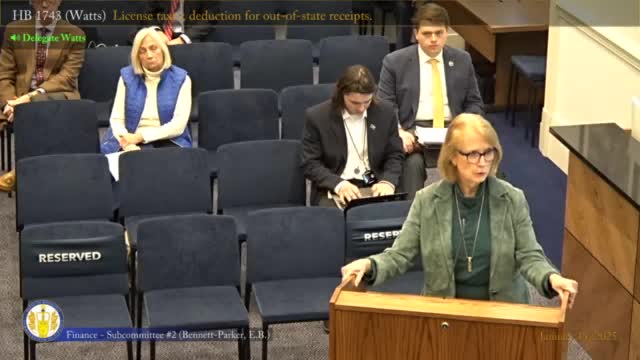
The House Finance Subcommittee 2 on an appointed date in 2025 considered five bills related to state taxation, advancing several measures to the full Finance Committee while tabling or postponing others after stakeholder discussion.
The committee, chaired by Delegate Delia Watts, unanimously reported or otherwise moved forward four items, including a narrowly targeted tax exemption for the Virginia Railway Express (VRE) and an administrative clarification for the Department of Motor Vehicles (DMV). Lawmakers also voted 8–0 to send a corporate tax–related bill to full committee with direction to continue working with stakeholders; the panel gently laid a vehicle trade‑in tax measure on the table and agreed to take more time on a proposed cap to the tax on premium cigars.
Why it matters: the bills would change how the Commonwealth and localities collect and administer certain taxes. Some changes could reduce state or local revenue (one fiscal estimate for a vehicle trade‑in bill was discussed in the hundreds of millions of dollars), while other items are technical fixes intended to close perceived gaps in administration or to avoid double taxation.
Key outcomes
• HB 17‑43 (Watts) — Clarifies how gross‑receipts deductions for out‑of‑state taxes apply when other states use gross‑receipts or commercial activity taxes; reported to full committee 8–0 after discussion and a committee amendment and with direction that the patron continue stakeholder work. Supporters said the change avoids double taxation of activity taxed by other states; local finance officers and some localities asked for more time to evaluate fiscal impacts. Ethan Betterton of the Virginia Chamber of Commerce urged the change as a competitiveness fix; Pat Reynolds of the Council on State Taxation said, “This bill would simply clean up the version of the BPOL tax, make it constitutional, and make it fit with fundamental concepts of fairness and equity.”
• HB 16‑82 (Cohen) — Would exempt surplus‑lines insurance policies purchased solely for commuter rail service (VRE) from the 2.25% tax on surplus‑lines brokers. Delegate Kenny Cohen said the tax cost VRE about $100,000 in FY24 and presented the bill as restoring parity because VRE is jointly owned and otherwise tax‑exempt. The subcommittee moved and seconded reporting the bill; the clerk reported no opposition.
• HB 18‑41 (Wyatt, at DMV request) — Technical clarification on when an abandoned vehicle may be titled and how motor‑vehicle sales and use tax applies at titling; the committee voted 8–0 to recommend reporting.
• HB 16‑68 (Wright) — Would change the taxable base when a vehicle trade‑in is used, subtracting the trade‑in value from the purchase price for sales‑tax calculation. Committee members and staff noted large potential revenue impacts; the Department of Taxation’s estimate discussed in committee was roughly $174 million in fiscal year 2026 and growing thereafter. Because of the fiscal effect, the subcommittee gently laid the bill on the table by an 8–0 vote.
• HB 15‑72 (Ware) — Would cap the tax on cigars at 20% (or 30¢ per cigar, whichever is lower) and direct the Department of Taxation to collect better data on premium‑cigar sales. The bill drew extensive stakeholder comment (retailers and the Cigar Association argued the cap would help small specialty shops); members pressed for better revenue estimates and a process to evaluate effects on local budgets. The patron agreed to work with tax staff and stakeholders; the subcommittee agreed to go by for the day to allow additional work and data collection.
Discussion highlights and staff input
• Fiscal estimates and local impact: Kristen Collins of the Department of Taxation told the committee that the agency’s estimate for HB 16‑68 was about $174,000,000 in FY26 and roughly $192,000,000 the following year, with the lost revenue flowing to transportation funds. Local revenue effects from HB 17‑43 were raised repeatedly by county and city finance officials, who requested more time to evaluate specific cases (Norfolk and Fairfax were cited as localities with potential multi‑million dollar impacts in illustrative matters).
• Double taxation and constitutional risk: proponents of HB 17‑43, including the Virginia Chamber and the Council on State Taxation, said the change would reduce the risk of double taxation where other states impose gross‑receipts or commercial activity taxes rather than a traditional net corporate income tax.
• Technical clarifications: HB 18‑41 (DMV) drew little debate and was characterized by the chair and DMV staff as an administrative clarification consistent with current practice.
Votes at a glance
• HB 17‑43 (Delegate Delia Watts) — Motion to report to full committee passed, 8–0. Motion mover: Delegate Anthony; second provided. Outcome: reported to full; committee directed the patron to continue stakeholder work and the chair to coordinate with the full finance committee.
• HB 16‑82 (Delegate Cohen) — Motion to recommend reporting; clerk reported no opposition (roll opened). Outcome: reported (no opposition recorded in the transcript).
• HB 18‑41 (Delegate Wyatt, DMV request) — Motion to recommend reporting passed, 8–0. Mover: Delegate Wyatt.
• HB 16‑68 (Delegate Wright) — Motion to gently lay on the table passed, 8–0. Outcome: tabled for further consideration due to fiscal impact concerns.
• HB 15‑72 (Delegate Ware) — Motion to go by for the day carried; the patron agreed to work with tax staff and stakeholders and the committee postponed action to allow additional study and data collection.
What’s next
The measures reported to full committee will appear on the full Finance Committee agenda for further consideration. For bills where the committee requested more data or stakeholder work — notably HB 17‑43 and HB 15‑72 — committee members asked the patron and staff to provide additional fiscal detail and to coordinate with the joint subcommittee that evaluates tax preferences and with local finance officers before full‑committee action.
Adjournment
The subcommittee adjourned after completing its agenda.
The committee, chaired by Delegate Delia Watts, unanimously reported or otherwise moved forward four items, including a narrowly targeted tax exemption for the Virginia Railway Express (VRE) and an administrative clarification for the Department of Motor Vehicles (DMV). Lawmakers also voted 8–0 to send a corporate tax–related bill to full committee with direction to continue working with stakeholders; the panel gently laid a vehicle trade‑in tax measure on the table and agreed to take more time on a proposed cap to the tax on premium cigars.
Why it matters: the bills would change how the Commonwealth and localities collect and administer certain taxes. Some changes could reduce state or local revenue (one fiscal estimate for a vehicle trade‑in bill was discussed in the hundreds of millions of dollars), while other items are technical fixes intended to close perceived gaps in administration or to avoid double taxation.
Key outcomes
• HB 17‑43 (Watts) — Clarifies how gross‑receipts deductions for out‑of‑state taxes apply when other states use gross‑receipts or commercial activity taxes; reported to full committee 8–0 after discussion and a committee amendment and with direction that the patron continue stakeholder work. Supporters said the change avoids double taxation of activity taxed by other states; local finance officers and some localities asked for more time to evaluate fiscal impacts. Ethan Betterton of the Virginia Chamber of Commerce urged the change as a competitiveness fix; Pat Reynolds of the Council on State Taxation said, “This bill would simply clean up the version of the BPOL tax, make it constitutional, and make it fit with fundamental concepts of fairness and equity.”
• HB 16‑82 (Cohen) — Would exempt surplus‑lines insurance policies purchased solely for commuter rail service (VRE) from the 2.25% tax on surplus‑lines brokers. Delegate Kenny Cohen said the tax cost VRE about $100,000 in FY24 and presented the bill as restoring parity because VRE is jointly owned and otherwise tax‑exempt. The subcommittee moved and seconded reporting the bill; the clerk reported no opposition.
• HB 18‑41 (Wyatt, at DMV request) — Technical clarification on when an abandoned vehicle may be titled and how motor‑vehicle sales and use tax applies at titling; the committee voted 8–0 to recommend reporting.
• HB 16‑68 (Wright) — Would change the taxable base when a vehicle trade‑in is used, subtracting the trade‑in value from the purchase price for sales‑tax calculation. Committee members and staff noted large potential revenue impacts; the Department of Taxation’s estimate discussed in committee was roughly $174 million in fiscal year 2026 and growing thereafter. Because of the fiscal effect, the subcommittee gently laid the bill on the table by an 8–0 vote.
• HB 15‑72 (Ware) — Would cap the tax on cigars at 20% (or 30¢ per cigar, whichever is lower) and direct the Department of Taxation to collect better data on premium‑cigar sales. The bill drew extensive stakeholder comment (retailers and the Cigar Association argued the cap would help small specialty shops); members pressed for better revenue estimates and a process to evaluate effects on local budgets. The patron agreed to work with tax staff and stakeholders; the subcommittee agreed to go by for the day to allow additional work and data collection.
Discussion highlights and staff input
• Fiscal estimates and local impact: Kristen Collins of the Department of Taxation told the committee that the agency’s estimate for HB 16‑68 was about $174,000,000 in FY26 and roughly $192,000,000 the following year, with the lost revenue flowing to transportation funds. Local revenue effects from HB 17‑43 were raised repeatedly by county and city finance officials, who requested more time to evaluate specific cases (Norfolk and Fairfax were cited as localities with potential multi‑million dollar impacts in illustrative matters).
• Double taxation and constitutional risk: proponents of HB 17‑43, including the Virginia Chamber and the Council on State Taxation, said the change would reduce the risk of double taxation where other states impose gross‑receipts or commercial activity taxes rather than a traditional net corporate income tax.
• Technical clarifications: HB 18‑41 (DMV) drew little debate and was characterized by the chair and DMV staff as an administrative clarification consistent with current practice.
Votes at a glance
• HB 17‑43 (Delegate Delia Watts) — Motion to report to full committee passed, 8–0. Motion mover: Delegate Anthony; second provided. Outcome: reported to full; committee directed the patron to continue stakeholder work and the chair to coordinate with the full finance committee.
• HB 16‑82 (Delegate Cohen) — Motion to recommend reporting; clerk reported no opposition (roll opened). Outcome: reported (no opposition recorded in the transcript).
• HB 18‑41 (Delegate Wyatt, DMV request) — Motion to recommend reporting passed, 8–0. Mover: Delegate Wyatt.
• HB 16‑68 (Delegate Wright) — Motion to gently lay on the table passed, 8–0. Outcome: tabled for further consideration due to fiscal impact concerns.
• HB 15‑72 (Delegate Ware) — Motion to go by for the day carried; the patron agreed to work with tax staff and stakeholders and the committee postponed action to allow additional study and data collection.
What’s next
The measures reported to full committee will appear on the full Finance Committee agenda for further consideration. For bills where the committee requested more data or stakeholder work — notably HB 17‑43 and HB 15‑72 — committee members asked the patron and staff to provide additional fiscal detail and to coordinate with the joint subcommittee that evaluates tax preferences and with local finance officers before full‑committee action.
Adjournment
The subcommittee adjourned after completing its agenda.
Don't Miss a Word: See the Full Meeting!
Go beyond summaries. Unlock every video, transcript, and key insight with a Founder Membership.
✓
Get instant access to full meeting videos
✓
Search and clip any phrase from complete transcripts
✓
Receive AI-powered summaries & custom alerts
✓
Enjoy lifetime, unrestricted access to government data
30-day money-back guarantee
