Huntsville primary reports midyear K–2 literacy gains, flags state screener problems
January 07, 2025 | HUNTSVILLE SCHOOL DISTRICT, School Districts, Arkansas
This article was created by AI summarizing key points discussed. AI makes mistakes, so for full details and context, please refer to the video of the full meeting. Please report any errors so we can fix them. Report an error »
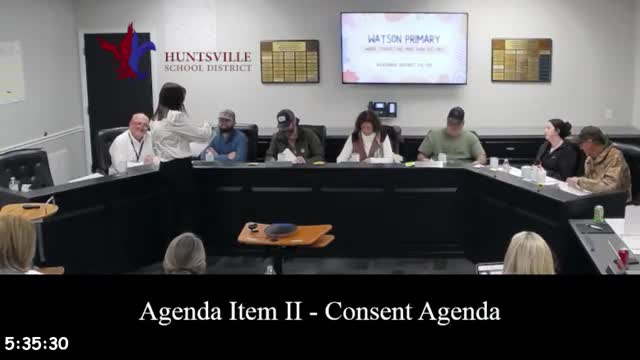
At the Huntsville School District board meeting on Jan. 7, 2025, Jennifer, a Watson Primary administrator, presented midyear K–2 academic data and described gains in several early literacy measures while cautioning that the state's new Atlas K–2 screener has produced inconsistent results.
Jennifer told the board the district is using three assessment sources to guide instruction at Watson Primary: the state’s Atlas K–2 screener, Acadience (a universal screener), and teacher-created common formative assessments (CFAs). She said Atlas “is a brand new assessment to the state of Arkansas and the K–2, and it is not without its faults right now,” adding, “they're building the plane while they're flying it.” She told the board the district is relying more on Acadience and CFAs while Atlas is refined.
Why it matters: K–2 is the district’s foundation for future reading achievement. The Atlas screener’s unreliability limits the district’s statewide-comparable midyear measures, so Watson Primary has emphasized Acadience diagnostics and teacher CFAs to identify students who need tiered interventions.
Key details Jennifer gave the board included:
- Atlas: District staff said some kindergarten Atlas data were invalidated statewide, and the midyear Atlas screener window was canceled; officials therefore have limited reliable statewide midyear comparisons. Parents’ access to state data remains available for individual students.
- Acadience and CFAs: Teachers used Acadience subtests and diagnostic checks to validate whether low scores reflected real skill gaps or assessment glitches, then launched tier 2 and tier 3 intervention plans and progress monitoring.
- Selected results reported by grade (presenter-provided comparisons to last year): first sound fluency in kindergarten rose from about 46% at the start of the year to about 69% at midyear; letter identification in kindergarten moved from roughly 1% at the start of the year to 37% in October and reached a midyear goal set at 75%; kindergarten nonsense word fluency and other early decoding measures showed mixed results but signs of growth; first-grade oral reading fluency rose about 5% over the prior year; second-grade oral reading fluency and accuracy were down modestly compared with last year, prompting adjustments in pacing and instructional practice.
Jennifer described how the school uses assessment cycles: screeners to detect risk, diagnostic assessment to validate deficits, targeted interventions (tier 2/tier 3) and monitoring, then CFA and midyear checks to adjust instruction. She credited teachers’ use of PLCs (professional learning communities) and small-group instruction as consistent, nonnegotiable practices driving gains. The presenter also said teachers are finding ways to add reading practice into nonreading times, such as math instruction, to increase students’ practice and automaticity.
Board members asked clarifying questions about Atlas classroom resources and rollout; Jennifer and other staff said parts of the Atlas platform and teacher resources remain “coming soon” and are not fully available to teachers yet. Jennifer warned that some midyear measures (for example, oral reading passages) are written to reflect end-of-year expectations for readers and that midyear results may appear low because students have not yet covered all end-of-year skills.
The presentation closed with a district summary: the school will continue to use multiple screeners and diagnostics, maintain daily small-group instruction and tiered support, and monitor progress through CFAs and midyear/end-of-year checks. Jennifer and staff emphasized the district is celebrating incremental growth while continuing to address areas—particularly second grade—where fluency remains a concern.
Questions and short discussion followed; no formal board action was taken on the presentation itself.
Jennifer told the board the district is using three assessment sources to guide instruction at Watson Primary: the state’s Atlas K–2 screener, Acadience (a universal screener), and teacher-created common formative assessments (CFAs). She said Atlas “is a brand new assessment to the state of Arkansas and the K–2, and it is not without its faults right now,” adding, “they're building the plane while they're flying it.” She told the board the district is relying more on Acadience and CFAs while Atlas is refined.
Why it matters: K–2 is the district’s foundation for future reading achievement. The Atlas screener’s unreliability limits the district’s statewide-comparable midyear measures, so Watson Primary has emphasized Acadience diagnostics and teacher CFAs to identify students who need tiered interventions.
Key details Jennifer gave the board included:
- Atlas: District staff said some kindergarten Atlas data were invalidated statewide, and the midyear Atlas screener window was canceled; officials therefore have limited reliable statewide midyear comparisons. Parents’ access to state data remains available for individual students.
- Acadience and CFAs: Teachers used Acadience subtests and diagnostic checks to validate whether low scores reflected real skill gaps or assessment glitches, then launched tier 2 and tier 3 intervention plans and progress monitoring.
- Selected results reported by grade (presenter-provided comparisons to last year): first sound fluency in kindergarten rose from about 46% at the start of the year to about 69% at midyear; letter identification in kindergarten moved from roughly 1% at the start of the year to 37% in October and reached a midyear goal set at 75%; kindergarten nonsense word fluency and other early decoding measures showed mixed results but signs of growth; first-grade oral reading fluency rose about 5% over the prior year; second-grade oral reading fluency and accuracy were down modestly compared with last year, prompting adjustments in pacing and instructional practice.
Jennifer described how the school uses assessment cycles: screeners to detect risk, diagnostic assessment to validate deficits, targeted interventions (tier 2/tier 3) and monitoring, then CFA and midyear checks to adjust instruction. She credited teachers’ use of PLCs (professional learning communities) and small-group instruction as consistent, nonnegotiable practices driving gains. The presenter also said teachers are finding ways to add reading practice into nonreading times, such as math instruction, to increase students’ practice and automaticity.
Board members asked clarifying questions about Atlas classroom resources and rollout; Jennifer and other staff said parts of the Atlas platform and teacher resources remain “coming soon” and are not fully available to teachers yet. Jennifer warned that some midyear measures (for example, oral reading passages) are written to reflect end-of-year expectations for readers and that midyear results may appear low because students have not yet covered all end-of-year skills.
The presentation closed with a district summary: the school will continue to use multiple screeners and diagnostics, maintain daily small-group instruction and tiered support, and monitor progress through CFAs and midyear/end-of-year checks. Jennifer and staff emphasized the district is celebrating incremental growth while continuing to address areas—particularly second grade—where fluency remains a concern.
Questions and short discussion followed; no formal board action was taken on the presentation itself.
Don't Miss a Word: See the Full Meeting!
Go beyond summaries. Unlock every video, transcript, and key insight with a Founder Membership.
✓
Get instant access to full meeting videos
✓
Search and clip any phrase from complete transcripts
✓
Receive AI-powered summaries & custom alerts
✓
Enjoy lifetime, unrestricted access to government data
30-day money-back guarantee
