Idaho CEC hears governor�s 5% pay recommendation, staff outline costs and policy choices
January 07, 2025 | Change in Employee Compensation Committee, JOINT, Committees, Legislative, Idaho
This article was created by AI summarizing key points discussed. AI makes mistakes, so for full details and context, please refer to the video of the full meeting. Please report any errors so we can fix them. Report an error »
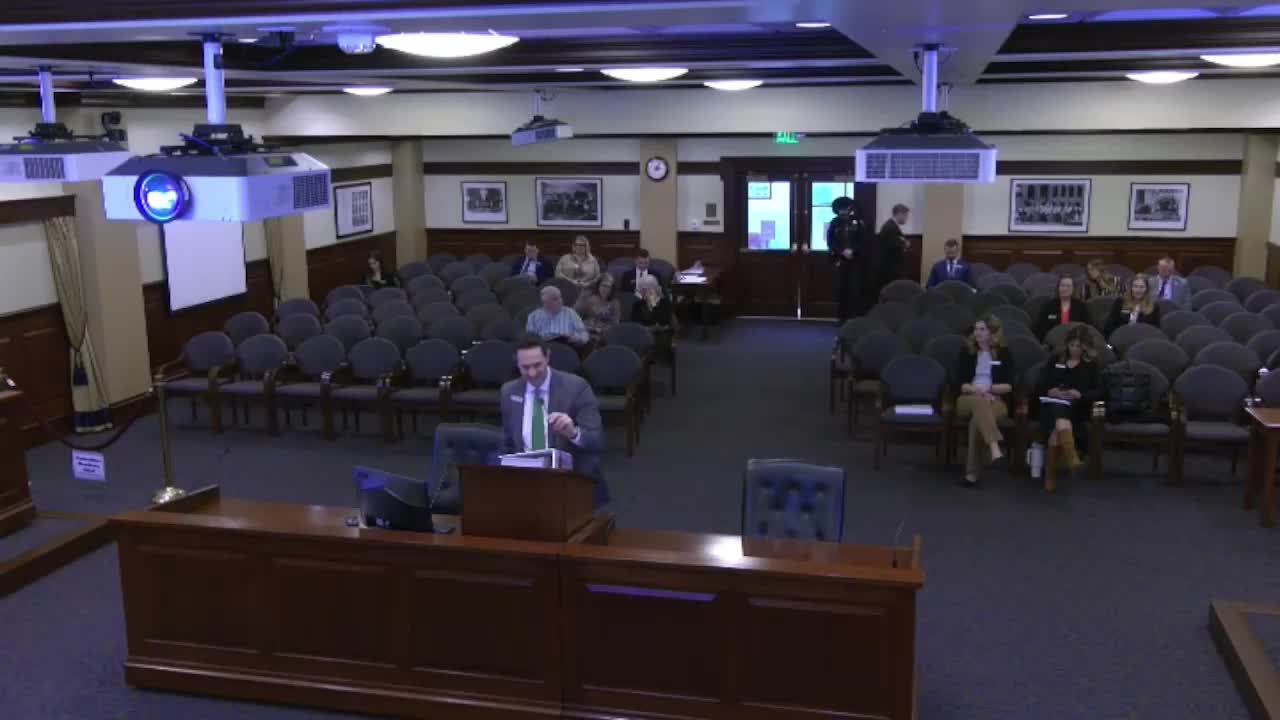
The Change in Employee Compensation Committee met Jan. 9 and reviewed the governors recommendation for fiscal year 2026 that includes a 5% change in employee compensation and related adjustments to salary structures, benefit funding and targeted market corrections.
The recommendation matters because it sets the policy direction the committee will forward to the Joint Finance-Appropriations Committee (JFAC) for appropriation. Committee staff and executive branch administrators laid out the projected fiscal impact, how salary-structure adjustments differ from merit pay, and why targeted funding for IT and engineering positions and continued funding for health benefits were included in the governors budget.
Keith Bybee, Division Manager of the Budget and Policy Analysis Division, briefed the committee on the states revenue and appropriation picture and explained why the Legislature currently appears to have one-time and ongoing options. "Having structural balance like you see on the screen right now gives the legislature a lot of options to consider," Bybee said, summarizing the larger fiscal context that frames CEC choices. He walked members through revenue projections, the governors budget column and the difference between ongoing expenditures and one-time spending the Legislature has used in recent years.
Lori Wolfe, administrator of the Division of Financial Management for Governor Little, said the executive branch recommended a 5% change in employee compensation after updated December revenue numbers created more room in the budget. "When DHR was putting the initial recommendation together, we worked pretty closely in terms of what's needed for state employees and what will the budget allow," Wolfe said, describing the process that produced the governors CEC recommendation.
Frances Lippett, budget and policy analyst with the Legislative Services Office, reviewed the mechanics the committee must decide and provided staffs cost estimates. Lippett told members the governors recommended 5% change in employee compensation carries a general-fund cost of $130,500,000 and an overall (all funds) cost of $179,700,000; she said roughly $83,500,000 of that amount is set aside for public schools, leaving about $96,200,000 for state employees.
Staff and administrators emphasized that CEC covers four separate components of total compensation: adjustments to salary structures (market-related changes), pay-line exceptions (targeted above-range pay for hard-to-fill roles), the merit increase, and benefits (retirement and health insurance). Lippett said the governors recommendation funds new minimums for revised grades and fully funds a 4.5% market adjustment for IT and engineering positions that DHR previously restructured.
Janelle White, administrator of the Division of Human Resources, explained pay-line exceptions and why some high-turnover public safety positions are not on that list. "The reason they are not on pay line exception is because they are not being paid at or above the maximum of their pay grade. So there is still room, a lot of room within their pay range, to pay them competitively with the market," White said.
Members asked for additional detail on how the public-school portion of CEC would be distributed. Staff and executive presenters said the $83.5 million set aside for public schools is based on support-unit funding calculations; distribution to individual districts depends on local formulas and district-level decisions. "What I can't tell you is how exactly that will be distributed at the district level," Wolfe said.
Committee staff also reviewed benefit-cost trends and the driver behind a large increase in the health-insurance appropriation. Lippett said the governor's recommendation uses $14,300 per full-time position as the actuarially recommended appropriation level for health insurance and that changes in health costs account for roughly $56.6 million of the maintenance budget increase.
Before adjourning, the committee requested that members submit written motions in advance of the next meeting to allow staff and Legislative Services Office review of cost and drafting language. The committee approved the minutes from its Dec. 20, 2024 meeting by voice vote; the minutes motion was made and seconded on the record and the chair announced, "Ayes have it." No formal fiscal decisions on the governors CEC recommendation were taken at this meeting; discussion will continue when members circulate motions for JFAC consideration.
The committee is scheduled to meet again on Thursday to consider motions that members are asked to submit in writing ahead of that meeting.
The recommendation matters because it sets the policy direction the committee will forward to the Joint Finance-Appropriations Committee (JFAC) for appropriation. Committee staff and executive branch administrators laid out the projected fiscal impact, how salary-structure adjustments differ from merit pay, and why targeted funding for IT and engineering positions and continued funding for health benefits were included in the governors budget.
Keith Bybee, Division Manager of the Budget and Policy Analysis Division, briefed the committee on the states revenue and appropriation picture and explained why the Legislature currently appears to have one-time and ongoing options. "Having structural balance like you see on the screen right now gives the legislature a lot of options to consider," Bybee said, summarizing the larger fiscal context that frames CEC choices. He walked members through revenue projections, the governors budget column and the difference between ongoing expenditures and one-time spending the Legislature has used in recent years.
Lori Wolfe, administrator of the Division of Financial Management for Governor Little, said the executive branch recommended a 5% change in employee compensation after updated December revenue numbers created more room in the budget. "When DHR was putting the initial recommendation together, we worked pretty closely in terms of what's needed for state employees and what will the budget allow," Wolfe said, describing the process that produced the governors CEC recommendation.
Frances Lippett, budget and policy analyst with the Legislative Services Office, reviewed the mechanics the committee must decide and provided staffs cost estimates. Lippett told members the governors recommended 5% change in employee compensation carries a general-fund cost of $130,500,000 and an overall (all funds) cost of $179,700,000; she said roughly $83,500,000 of that amount is set aside for public schools, leaving about $96,200,000 for state employees.
Staff and administrators emphasized that CEC covers four separate components of total compensation: adjustments to salary structures (market-related changes), pay-line exceptions (targeted above-range pay for hard-to-fill roles), the merit increase, and benefits (retirement and health insurance). Lippett said the governors recommendation funds new minimums for revised grades and fully funds a 4.5% market adjustment for IT and engineering positions that DHR previously restructured.
Janelle White, administrator of the Division of Human Resources, explained pay-line exceptions and why some high-turnover public safety positions are not on that list. "The reason they are not on pay line exception is because they are not being paid at or above the maximum of their pay grade. So there is still room, a lot of room within their pay range, to pay them competitively with the market," White said.
Members asked for additional detail on how the public-school portion of CEC would be distributed. Staff and executive presenters said the $83.5 million set aside for public schools is based on support-unit funding calculations; distribution to individual districts depends on local formulas and district-level decisions. "What I can't tell you is how exactly that will be distributed at the district level," Wolfe said.
Committee staff also reviewed benefit-cost trends and the driver behind a large increase in the health-insurance appropriation. Lippett said the governor's recommendation uses $14,300 per full-time position as the actuarially recommended appropriation level for health insurance and that changes in health costs account for roughly $56.6 million of the maintenance budget increase.
Before adjourning, the committee requested that members submit written motions in advance of the next meeting to allow staff and Legislative Services Office review of cost and drafting language. The committee approved the minutes from its Dec. 20, 2024 meeting by voice vote; the minutes motion was made and seconded on the record and the chair announced, "Ayes have it." No formal fiscal decisions on the governors CEC recommendation were taken at this meeting; discussion will continue when members circulate motions for JFAC consideration.
The committee is scheduled to meet again on Thursday to consider motions that members are asked to submit in writing ahead of that meeting.
Don't Miss a Word: See the Full Meeting!
Go beyond summaries. Unlock every video, transcript, and key insight with a Founder Membership.
✓
Get instant access to full meeting videos
✓
Search and clip any phrase from complete transcripts
✓
Receive AI-powered summaries & custom alerts
✓
Enjoy lifetime, unrestricted access to government data
30-day money-back guarantee
