Residents urge stricter drainage controls as Huntsville council reviews 'The Ridge' development update
January 07, 2025 | Huntsville, Walker County, Texas
This article was created by AI summarizing key points discussed. AI makes mistakes, so for full details and context, please refer to the video of the full meeting. Please report any errors so we can fix them. Report an error »
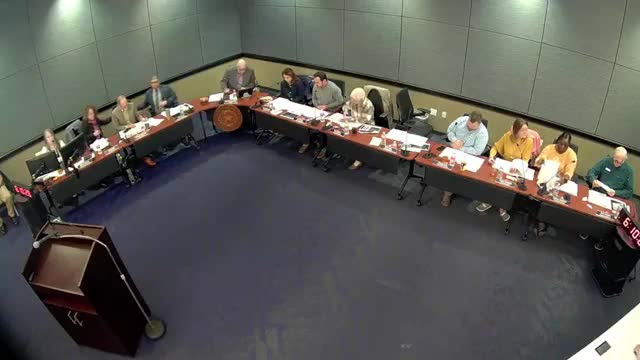
City of Huntsville officials received a status update on The Ridge subdivision and extended public comment from Spring Lake Estates residents who said recent clearing and grading have increased flood risk and damaged homes.
The Ridge is a proposed in‑city municipal utility district (MUD) and residential subdivision that was authorized by ordinance and annexed to the city in 2022. Lane, identified in the meeting as Development Services staff, told the council that the developer has received TCEQ Storm Water Pollution Prevention (SWPPP) permits and a clearing and grubbing permit, and that a tree preservation plan has been approved for portions of the site. Lane said civil drawings and a drainage study are under review and that the final plat cannot be recorded until the civil plans and plat match exactly.
Why it matters: Spring Lake Estates, Club Lake and adjacent neighborhoods drain into McDonald Creek and Spring Lake downstream of the Ridge site. Residents said flooding during earlier high‑rain events this year caused property damage they had not experienced in decades and that additional runoff from the Ridge could cause more flooding, sewage contamination and public‑safety impacts.
Several residents described recent, unprecedented flooding and asked the council to halt further work until effective silt and runoff controls are installed and inspected. Laurie Rose, a Spring Lake Estates resident, told the council, “Please review all grading, excavating, and clear cutting of trees, and do not allow further work until there are appropriate and effective silt and runoff mitigation measures in place.” Natalie Manus, another resident whose home flooded in May–June 2024, said her damages exceeded $65,000 and urged the council to require engineers’ plans that fully address downstream capacity.
Other speakers reported visible siltation in McDonald Creek and expressed concern about the number and placement of detention ponds shown in preliminary developer exhibits. One speaker said the exhibit on the meeting screen showed “only 4 detention ponds for 350 acres,” a claim he asked the council to verify with submitted civil documents. Multiple residents said they had filed TCEQ complaints and asked the city to pursue remediation or insurance recoveries where appropriate.
Council members and staff described the engineering review process used by the city. Lane said drainage analyses compare pre‑development runoff and post‑development runoff and that detention pond sizing and outfall calculations are set by the city’s engineering criteria and the adopted design standards. Councilman Strong and others noted that the city’s runoff design standards have been tightened in recent years (for example, moving from shorter storm routing periods to longer design storms) and that new developments are therefore held to more stringent criteria than older subdivisions.
Council members asked for clarification about floodplain boundaries and where runoff from the Ridge would be routed. Lane said the Ridge site is located on a ridge (hence the name) and that the primary FEMA floodplain fingers lie along Winter Way and the lake edge; Lane said the Ridge itself is above the floodplain. He also reiterated that the civil drainage study must demonstrate the project will not create adverse impacts to neighboring properties and that the plat and civil plans must align before approval and plat recording.
Residents pressed for ongoing monitoring and enforcement after construction, asking who would inspect and maintain silt controls and detention systems. Lane said construction inspection and enforcement are handled by the city’s engineering/inspections division and invited residents to report problems so staff can investigate.
No formal action was taken on the Ridge item during the meeting. Council members said they would continue to review submitted civil plans and the drainage study, and staff indicated they would follow up on specific resident claims and complaints.
Residents asked the council to ensure developers comply with state law; at one point a speaker cited “Texas Water Code 11.08 6” as the statutory basis for prohibiting diversion of surface waters that damages another’s property (citation noted as provided by the speaker). City staff did not announce any immediate changes to approvals or permits during the meeting.
The Ridge is a proposed in‑city municipal utility district (MUD) and residential subdivision that was authorized by ordinance and annexed to the city in 2022. Lane, identified in the meeting as Development Services staff, told the council that the developer has received TCEQ Storm Water Pollution Prevention (SWPPP) permits and a clearing and grubbing permit, and that a tree preservation plan has been approved for portions of the site. Lane said civil drawings and a drainage study are under review and that the final plat cannot be recorded until the civil plans and plat match exactly.
Why it matters: Spring Lake Estates, Club Lake and adjacent neighborhoods drain into McDonald Creek and Spring Lake downstream of the Ridge site. Residents said flooding during earlier high‑rain events this year caused property damage they had not experienced in decades and that additional runoff from the Ridge could cause more flooding, sewage contamination and public‑safety impacts.
Several residents described recent, unprecedented flooding and asked the council to halt further work until effective silt and runoff controls are installed and inspected. Laurie Rose, a Spring Lake Estates resident, told the council, “Please review all grading, excavating, and clear cutting of trees, and do not allow further work until there are appropriate and effective silt and runoff mitigation measures in place.” Natalie Manus, another resident whose home flooded in May–June 2024, said her damages exceeded $65,000 and urged the council to require engineers’ plans that fully address downstream capacity.
Other speakers reported visible siltation in McDonald Creek and expressed concern about the number and placement of detention ponds shown in preliminary developer exhibits. One speaker said the exhibit on the meeting screen showed “only 4 detention ponds for 350 acres,” a claim he asked the council to verify with submitted civil documents. Multiple residents said they had filed TCEQ complaints and asked the city to pursue remediation or insurance recoveries where appropriate.
Council members and staff described the engineering review process used by the city. Lane said drainage analyses compare pre‑development runoff and post‑development runoff and that detention pond sizing and outfall calculations are set by the city’s engineering criteria and the adopted design standards. Councilman Strong and others noted that the city’s runoff design standards have been tightened in recent years (for example, moving from shorter storm routing periods to longer design storms) and that new developments are therefore held to more stringent criteria than older subdivisions.
Council members asked for clarification about floodplain boundaries and where runoff from the Ridge would be routed. Lane said the Ridge site is located on a ridge (hence the name) and that the primary FEMA floodplain fingers lie along Winter Way and the lake edge; Lane said the Ridge itself is above the floodplain. He also reiterated that the civil drainage study must demonstrate the project will not create adverse impacts to neighboring properties and that the plat and civil plans must align before approval and plat recording.
Residents pressed for ongoing monitoring and enforcement after construction, asking who would inspect and maintain silt controls and detention systems. Lane said construction inspection and enforcement are handled by the city’s engineering/inspections division and invited residents to report problems so staff can investigate.
No formal action was taken on the Ridge item during the meeting. Council members said they would continue to review submitted civil plans and the drainage study, and staff indicated they would follow up on specific resident claims and complaints.
Residents asked the council to ensure developers comply with state law; at one point a speaker cited “Texas Water Code 11.08 6” as the statutory basis for prohibiting diversion of surface waters that damages another’s property (citation noted as provided by the speaker). City staff did not announce any immediate changes to approvals or permits during the meeting.
Don't Miss a Word: See the Full Meeting!
Go beyond summaries. Unlock every video, transcript, and key insight with a Founder Membership.
✓
Get instant access to full meeting videos
✓
Search and clip any phrase from complete transcripts
✓
Receive AI-powered summaries & custom alerts
✓
Enjoy lifetime, unrestricted access to government data
30-day money-back guarantee
