Senate Bill 95 seeks code carve‑out for summer camp cabins; camps and fire marshal work on details
January 28, 2025 | Executive Departments and Administration, Senate , Committees , Legislative, New Hampshire
This article was created by AI summarizing key points discussed. AI makes mistakes, so for full details and context, please refer to the video of the full meeting. Please report any errors so we can fix them. Report an error »
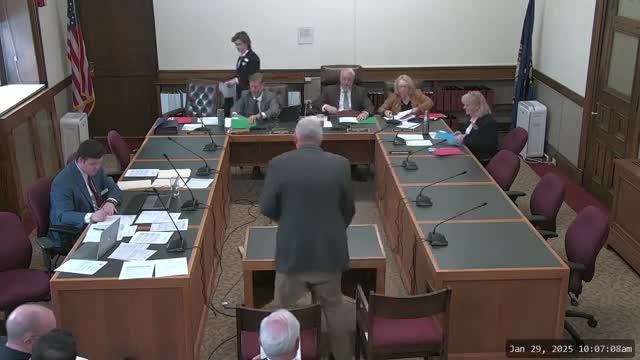
Senator Mark McConkie introduced Senate Bill 95 to establish targeted building and fire‑code requirements for summer camp cabins. Scott Brody, owner/operator of Camps Kenwood and Evergreen and representative of New Hampshire’s camp community, said summer camp cabins are distinct from dormitories or rooming houses and urged a tailored framework. "Camps are all about safety," Brody said, adding that counselors reside with campers, operate under mandated ratios, and run emergency drills.
Brody and Senator McConkie said the proposal would define summer camp cabins, limit seasonal occupancy classifications, and permit an exemption from full sprinkler requirements for typical seasonal cabins while requiring smoke detectors, handheld extinguishers and emergency exit plans. McConkie noted possible technical amendments: increasing the seasonal allowance from 150 to 210 days and changing an occupancy cutoff from 60 to 80 persons; he asked for technical coordination with DHHS youth‑camp definitions.
State Fire Marshal Sean Toomey said he has worked with camps to identify appropriate protections and supported preserving administrative flexibility for egress and other situational elements. Toomey said detection and minimum egress standards will be crucial and that some existing cabins already comply with fire‑safety measures; he said many cabins lack the electrical or mechanical infrastructure to support full sprinkler retrofits and that a one‑size‑fits‑all sprinkler mandate could be impractical and costly.
Camp witnesses and the fire marshal agreed to continue refining statutory language and amendments; the committee did not act at the hearing.
Committee members pressed on capacity and egress questions and asked whether camps that operate outside the peak summer season — for retreats or events — should be included in a longer seasonal definition. Witnesses said some camps use facilities in shoulder seasons for youth retreats and that technical language should reflect differences between youth‑program use and commercial event use.
Brody and Senator McConkie said the proposal would define summer camp cabins, limit seasonal occupancy classifications, and permit an exemption from full sprinkler requirements for typical seasonal cabins while requiring smoke detectors, handheld extinguishers and emergency exit plans. McConkie noted possible technical amendments: increasing the seasonal allowance from 150 to 210 days and changing an occupancy cutoff from 60 to 80 persons; he asked for technical coordination with DHHS youth‑camp definitions.
State Fire Marshal Sean Toomey said he has worked with camps to identify appropriate protections and supported preserving administrative flexibility for egress and other situational elements. Toomey said detection and minimum egress standards will be crucial and that some existing cabins already comply with fire‑safety measures; he said many cabins lack the electrical or mechanical infrastructure to support full sprinkler retrofits and that a one‑size‑fits‑all sprinkler mandate could be impractical and costly.
Camp witnesses and the fire marshal agreed to continue refining statutory language and amendments; the committee did not act at the hearing.
Committee members pressed on capacity and egress questions and asked whether camps that operate outside the peak summer season — for retreats or events — should be included in a longer seasonal definition. Witnesses said some camps use facilities in shoulder seasons for youth retreats and that technical language should reflect differences between youth‑program use and commercial event use.
View the Full Meeting & All Its Details
This article offers just a summary. Unlock complete video, transcripts, and insights as a Founder Member.
✓
Watch full, unedited meeting videos
✓
Search every word spoken in unlimited transcripts
✓
AI summaries & real-time alerts (all government levels)
✓
Permanent access to expanding government content
30-day money-back guarantee
