Human Services Committee raises concepts, drafts bills and reserves hearings; roll-call votes held on multiple measures
January 28, 2025 | 2025 Legislature CT, Connecticut
This article was created by AI summarizing key points discussed. AI makes mistakes, so for full details and context, please refer to the video of the full meeting. Please report any errors so we can fix them. Report an error »
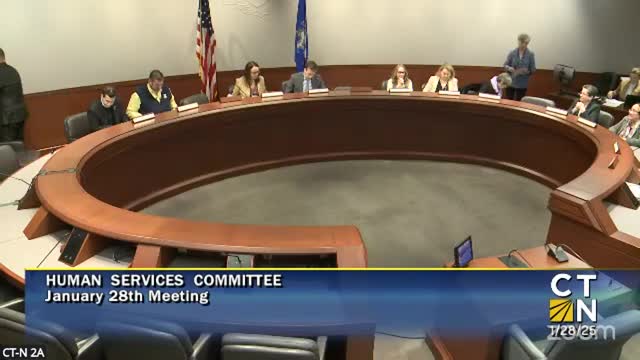
The Human Services Committee met Jan. 28, 2025, in a Capitol hearing room and moved to raise, draft or reserve a series of bill concepts affecting Medicaid, long-term care, SNAP access and other social services programs, concluding with multiple roll-call votes to advance those concepts for further work.
The co-chair, Representative Matthew Gilchrist, told the committee it was monitoring recent federal notices and coordinating with the Department of Social Services: “we are in contact with the Commissioner at the Department of Social Services, and we are doing everything we can to understand what this means, and how we can take action to ensure folks get the services they need here in the state of Connecticut,” Representative Gilchrist said.
Why it matters: The committee’s actions do not adopt final law but move measures into drafting, hearing or screening stages. Several items advanced at the meeting—most notably the committee’s annual omnibus Medicaid bill, proposals on nursing-home spending, elimination of certain asset limits for HUSKY beneficiaries, and bills related to SNAP or food deserts—could affect program eligibility, provider reimbursement and state oversight if they proceed through later legislative steps.
What the committee did
- Built and approved a consent calendar for multiple concept items by voice vote after listing the concept topics. Bam Clark, committee clerk, read the items for consent: “The items for consent are 1, 2, 3, 4, 5, 7, 8, 9, 10, 12, 13, 14, 15, 17, 18, 20, and 21.” The chair’s motion on the consent calendar carried.
- The committee then considered and voted—generally by roll call—to raise or draft a series of concepts and to reserve one bill for a subject-matter public hearing. Several motions were seconded and advanced; where members requested roll-call votes, the clerk conducted them and the chair announced that votes would be held open until noon. Representative Vail asked that bill titles or concepts be identified on the record so viewers at home would know what was being raised: “if we could at least mention the concepts so that people here don't think we're trying to slide stuff through number 24,” Vail said.
Votes at a glance (committee action taken at the meeting)
- Item 3 (consent calendar formation): Motion to raise multiple concepts and build a consent calendar — carried (voice vote); clerk read consent item numbers as above.
- Item 4 (proposed bills to draft listed on the agenda): Motion to draft concepts including nonprofit support for Hispanic and communities of color, changes to the 2-Gen advisory board, Husky/HUSKY health reimbursement and care delivery model concepts, pharmacy reimbursement complaints and performance audits of Medicaid programs — motion approved.
- Item 5 (items reserved for subject-matter public hearing): Committee voted to reserve proposed items for public hearing (including an independent bureau for deaf/hard-of-hearing services, Medicaid coverage of noninvasive custom breast prostheses, prescription drug discount transparency, provider cash-acceptance requirements where state funds are received, Medicaid eligibility expansion for older persons/persons with disabilities, diabetes prevention/education coverage, recognition of hearing impairment as a disability, and expanded access to outpatient substance abuse treatment) — motion approved.
- Item 6: Motion to raise/draft a pilot program to mitigate the benefits cliff — motion approved after procedural discussion and a brief recess.
- Item 11: Motion to raise an act concerning private equity ownership and REIT health care — motion approved on roll-call (roll call requested). The chair said votes on several roll calls would remain open until noon.
- Item 16: Motion to raise an act concerning medical debt — motion approved on roll-call (roll call requested).
- Item 19: Motion to raise an act concerning food deserts and the SNAP program — motion approved on roll-call (roll call requested); members noted prior federal requirements that have complicated similar proposals.
- Item 22: Motion to raise the committee’s annual omnibus Medicaid bill (act concerning Medicaid and Medicaid-funded programs) — motion approved on roll-call (roll call requested).
- Item 23: Motion to raise the committee’s annual DSS bill (act concerning the Department of Social Services) — motion approved on roll-call (roll call requested).
- Item 4 / SB 1158 (listed under item 4 earlier): Motion to draft Proposed Senate Bill 1158, an act concerning establishment of a Department of Aging (reorganization discussion) — motion approved on roll-call (members asked clarifying questions about whether the proposal reorganizes existing agencies rather than increasing services).
- Item 7 / SB 805: Motion to draft Senate Bill 805, an act requiring nursing homes to spend not less than 80% of revenues on direct patient care — motion approved on roll-call; members discussed that any such requirement would likely apply to facilities receiving state or federal funds (Medicaid) and not to wholly private-pay facilities.
- Item 8 / SB 806: Motion to draft Senate Bill 806, expanding Medicaid coverage for outpatient treatment of certain emergency medical conditions — motion approved on roll-call.
- Item 9 / SB 807: Motion to draft Senate Bill 807, eliminating asset limits for HUSKY beneficiaries over a five-year period — motion approved on roll-call.
- Item (Reserve) HB 6101: Motion to reserve House Bill 6101 for subject-matter public hearing (coverage of “food as medicine” and expanding access to Farmers Market WIC nutrition benefits) — motion approved on roll-call.
What was discussion vs. decision
- Discussion-only items: Committee members asked clarifying questions during multiple items (for example, whether proposals would expand government structure or reorganize existing agencies; whether nursing-home spending requirements would apply only to Medicaid-funded facilities; and whether federal requirements limit SNAP or related programs). Those questions were part of screening and clarification and did not constitute final policy.
- Directions/assignments: The committee instructed staff/clerks to draft the listed bills and to schedule subject-matter hearings for reserved items; the clerk read back and recorded motions and roll-call votes.
- Formal actions: The committee approved motions to raise, draft or reserve the listed concepts and bills (see “Votes at a glance” above). Several items were advanced by roll-call vote at members’ request; the clerk recorded yes/no votes on the record.
Other context and next steps
- Several members emphasized that a vote to raise or draft a concept does not indicate final approval of the policy content—it only places the concept into the legislative process for debate, drafting and hearings.
- Committee staff announced that roll-call votes would be held open until noon, to allow members to submit or confirm votes if necessary. The clerk noted availability by Zoom and in Human Services 2000 for members seeking to record votes.
- The committee announced a likely next meeting on Feb. 11, 2025 (time noted as “10 or 11 a.m.” on the record), pending the governor’s budget address and scheduling.
Ending: The committee recessed at the close of the scheduled agenda and cleared remaining roll-call logistics off the record.
The co-chair, Representative Matthew Gilchrist, told the committee it was monitoring recent federal notices and coordinating with the Department of Social Services: “we are in contact with the Commissioner at the Department of Social Services, and we are doing everything we can to understand what this means, and how we can take action to ensure folks get the services they need here in the state of Connecticut,” Representative Gilchrist said.
Why it matters: The committee’s actions do not adopt final law but move measures into drafting, hearing or screening stages. Several items advanced at the meeting—most notably the committee’s annual omnibus Medicaid bill, proposals on nursing-home spending, elimination of certain asset limits for HUSKY beneficiaries, and bills related to SNAP or food deserts—could affect program eligibility, provider reimbursement and state oversight if they proceed through later legislative steps.
What the committee did
- Built and approved a consent calendar for multiple concept items by voice vote after listing the concept topics. Bam Clark, committee clerk, read the items for consent: “The items for consent are 1, 2, 3, 4, 5, 7, 8, 9, 10, 12, 13, 14, 15, 17, 18, 20, and 21.” The chair’s motion on the consent calendar carried.
- The committee then considered and voted—generally by roll call—to raise or draft a series of concepts and to reserve one bill for a subject-matter public hearing. Several motions were seconded and advanced; where members requested roll-call votes, the clerk conducted them and the chair announced that votes would be held open until noon. Representative Vail asked that bill titles or concepts be identified on the record so viewers at home would know what was being raised: “if we could at least mention the concepts so that people here don't think we're trying to slide stuff through number 24,” Vail said.
Votes at a glance (committee action taken at the meeting)
- Item 3 (consent calendar formation): Motion to raise multiple concepts and build a consent calendar — carried (voice vote); clerk read consent item numbers as above.
- Item 4 (proposed bills to draft listed on the agenda): Motion to draft concepts including nonprofit support for Hispanic and communities of color, changes to the 2-Gen advisory board, Husky/HUSKY health reimbursement and care delivery model concepts, pharmacy reimbursement complaints and performance audits of Medicaid programs — motion approved.
- Item 5 (items reserved for subject-matter public hearing): Committee voted to reserve proposed items for public hearing (including an independent bureau for deaf/hard-of-hearing services, Medicaid coverage of noninvasive custom breast prostheses, prescription drug discount transparency, provider cash-acceptance requirements where state funds are received, Medicaid eligibility expansion for older persons/persons with disabilities, diabetes prevention/education coverage, recognition of hearing impairment as a disability, and expanded access to outpatient substance abuse treatment) — motion approved.
- Item 6: Motion to raise/draft a pilot program to mitigate the benefits cliff — motion approved after procedural discussion and a brief recess.
- Item 11: Motion to raise an act concerning private equity ownership and REIT health care — motion approved on roll-call (roll call requested). The chair said votes on several roll calls would remain open until noon.
- Item 16: Motion to raise an act concerning medical debt — motion approved on roll-call (roll call requested).
- Item 19: Motion to raise an act concerning food deserts and the SNAP program — motion approved on roll-call (roll call requested); members noted prior federal requirements that have complicated similar proposals.
- Item 22: Motion to raise the committee’s annual omnibus Medicaid bill (act concerning Medicaid and Medicaid-funded programs) — motion approved on roll-call (roll call requested).
- Item 23: Motion to raise the committee’s annual DSS bill (act concerning the Department of Social Services) — motion approved on roll-call (roll call requested).
- Item 4 / SB 1158 (listed under item 4 earlier): Motion to draft Proposed Senate Bill 1158, an act concerning establishment of a Department of Aging (reorganization discussion) — motion approved on roll-call (members asked clarifying questions about whether the proposal reorganizes existing agencies rather than increasing services).
- Item 7 / SB 805: Motion to draft Senate Bill 805, an act requiring nursing homes to spend not less than 80% of revenues on direct patient care — motion approved on roll-call; members discussed that any such requirement would likely apply to facilities receiving state or federal funds (Medicaid) and not to wholly private-pay facilities.
- Item 8 / SB 806: Motion to draft Senate Bill 806, expanding Medicaid coverage for outpatient treatment of certain emergency medical conditions — motion approved on roll-call.
- Item 9 / SB 807: Motion to draft Senate Bill 807, eliminating asset limits for HUSKY beneficiaries over a five-year period — motion approved on roll-call.
- Item (Reserve) HB 6101: Motion to reserve House Bill 6101 for subject-matter public hearing (coverage of “food as medicine” and expanding access to Farmers Market WIC nutrition benefits) — motion approved on roll-call.
What was discussion vs. decision
- Discussion-only items: Committee members asked clarifying questions during multiple items (for example, whether proposals would expand government structure or reorganize existing agencies; whether nursing-home spending requirements would apply only to Medicaid-funded facilities; and whether federal requirements limit SNAP or related programs). Those questions were part of screening and clarification and did not constitute final policy.
- Directions/assignments: The committee instructed staff/clerks to draft the listed bills and to schedule subject-matter hearings for reserved items; the clerk read back and recorded motions and roll-call votes.
- Formal actions: The committee approved motions to raise, draft or reserve the listed concepts and bills (see “Votes at a glance” above). Several items were advanced by roll-call vote at members’ request; the clerk recorded yes/no votes on the record.
Other context and next steps
- Several members emphasized that a vote to raise or draft a concept does not indicate final approval of the policy content—it only places the concept into the legislative process for debate, drafting and hearings.
- Committee staff announced that roll-call votes would be held open until noon, to allow members to submit or confirm votes if necessary. The clerk noted availability by Zoom and in Human Services 2000 for members seeking to record votes.
- The committee announced a likely next meeting on Feb. 11, 2025 (time noted as “10 or 11 a.m.” on the record), pending the governor’s budget address and scheduling.
Ending: The committee recessed at the close of the scheduled agenda and cleared remaining roll-call logistics off the record.
Don't Miss a Word: See the Full Meeting!
Go beyond summaries. Unlock every video, transcript, and key insight with a Founder Membership.
✓
Get instant access to full meeting videos
✓
Search and clip any phrase from complete transcripts
✓
Receive AI-powered summaries & custom alerts
✓
Enjoy lifetime, unrestricted access to government data
30-day money-back guarantee
