Utica mayor proposes $3.01-per‑$1,000 tax increase in FY26 estimate, cites $3.8M fund‑balance draw and cost controls
February 06, 2025 | Utica, Oneida County, New York
This article was created by AI summarizing key points discussed. AI makes mistakes, so for full details and context, please refer to the video of the full meeting. Please report any errors so we can fix them. Report an error »
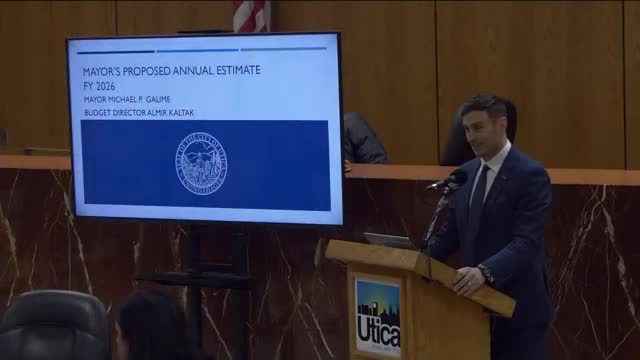
Mayor Mike Golini presented the City of Utica's fiscal year 2026 annual estimate at a meeting of the city's governing body, proposing a $3.01-per-$1,000 increase to the property tax levy and continuing an approximate $3.8 million draw from the city's fund balance to close the gap between revenues and expenses.
Golini said the proposed tax change equates to an average residential increase of about $165 per year (roughly $13.79 per month) and a 9.77% increase overall; he gave example monthly impacts by ward, saying the Third Ward would see about $19 per month, his own house about $28, the Second Ward about $12, the Fifth about $10, the First about $8, the Fourth about $15 and the Sixth about $16.
The mayor framed the proposal as part of a broader fiscal turnaround. "We're burning cash. We're trying to turn that around," Golini said, and described a combination of revenue actions, grant-seeking and tighter spending controls intended to stabilize Utica's finances.
Why it matters: Golini said the city closed the most recent audited year with a net deficit and a reduced fund balance after several years of rising fixed costs. He told the meeting the city ended the last audited year with an $11.7 million fund balance and a $1.1 million deficit; the proposed FY26 estimate uses restricted and unrestricted reserves to avoid deeper cuts to core services, particularly public safety, which he said accounts for roughly 65% of the general fund.
Key figures and drivers: Golini identified several structural pressures driving the gap: a roughly $1.9 million year‑over‑year increase in the city's state retirement contribution, $1.48 million in increased health insurance costs, and roughly $900,000 in contractual increases. He summarized the year‑over‑year total increase the budget must absorb at about $4.8 million, down from an even larger increase the prior year.
Cost controls and operational changes: Golini described policy changes instituted since taking office, including creation of a purchasing department linked to the Munis accounting system, new purchasing oversight, and tighter approval of change orders for capital projects. He highlighted several examples of cost savings and operational changes: converting the planned contractor-run ice rink into a workforce-development staffed operation (saving the city significant upfront and operating costs and creating youth jobs); renegotiating animal-control arrangements to reduce costs; and challenging past environmental cleanup estimates.
Environmental liability and legal work: Golini said a long-running liability at Incinerator Road, previously estimated as high as $40 million for cleanup and fines, was reworked in negotiations with the New York Power Authority and outside environmental counsel and reduced to about $25,000 in city cost. He described hiring an environmental lawyer who, he said, cost the city roughly $27,000 and helped renegotiate cleanup obligations and secure capped land for potential future uses.
Revenue initiatives and grants: The mayor emphasized efforts to shift Utica's revenue mix away from sole reliance on property taxes. He said the administration is pursuing additional AIM (state aid), participation in the New York Conference of Mayors (NICOM) to press for AIM funding increases, sales-tax redistribution discussions with Oneida County, a possible occupancy/bed tax for hotels and short-term rentals, and continued pursuit of state and federal grants. Golini cited recent and proposed awards including a $4.6 million TAP/Broad Street grant for multimodal street improvements, a $3 million REDC grant for the Cornhill housing project, Canal Corporation funding, and smaller grants that funded generators, building efficiency projects, and youth programming. He credited a "pro housing community" designation for enabling certain grant awards.
Economic development and capital projects: Golini described work to market shovel-ready sites, revive the urban and economic development office, and pursue projects including a DRI (Downtown Revitalization Initiative) proposal focused on a civic center concept, solar canopy opportunities on parking garages, and redevelopment of several corridors. He named staff and local business examples to illustrate ongoing manufacturing strength in the city.
Procedural actions at the meeting: Golini made a motion to introduce a new table of organization and a separate motion to introduce the proposed annual budget estimate; both motions were seconded, and the mayor told the body no vote would be taken on the budget at the meeting. The introductions, as the mayor described them, were preliminary steps to bring the documents to the council for formal consideration.
Questions and next steps: Golini said the administration will invite the controller to conduct another fiscal assessment, is working with bond counsel on possible restructuring, and expects to present the estimate to the common council following the ENA process. He encouraged board members to review the new, formula-driven Excel budget document the administration prepared and to contact the budget director with questions.
Ending: The mayor closed by stressing the tradeoffs inherent in the proposal and urging the public and council to consider whether the proposed monthly increases are preferable to deeper layoffs or service cuts: "Is $15 more a month worth keeping public safety right now?" Golini asked, reiterating that the administration seeks to protect core services while rebuilding the city's fiscal footing.
Golini said the proposed tax change equates to an average residential increase of about $165 per year (roughly $13.79 per month) and a 9.77% increase overall; he gave example monthly impacts by ward, saying the Third Ward would see about $19 per month, his own house about $28, the Second Ward about $12, the Fifth about $10, the First about $8, the Fourth about $15 and the Sixth about $16.
The mayor framed the proposal as part of a broader fiscal turnaround. "We're burning cash. We're trying to turn that around," Golini said, and described a combination of revenue actions, grant-seeking and tighter spending controls intended to stabilize Utica's finances.
Why it matters: Golini said the city closed the most recent audited year with a net deficit and a reduced fund balance after several years of rising fixed costs. He told the meeting the city ended the last audited year with an $11.7 million fund balance and a $1.1 million deficit; the proposed FY26 estimate uses restricted and unrestricted reserves to avoid deeper cuts to core services, particularly public safety, which he said accounts for roughly 65% of the general fund.
Key figures and drivers: Golini identified several structural pressures driving the gap: a roughly $1.9 million year‑over‑year increase in the city's state retirement contribution, $1.48 million in increased health insurance costs, and roughly $900,000 in contractual increases. He summarized the year‑over‑year total increase the budget must absorb at about $4.8 million, down from an even larger increase the prior year.
Cost controls and operational changes: Golini described policy changes instituted since taking office, including creation of a purchasing department linked to the Munis accounting system, new purchasing oversight, and tighter approval of change orders for capital projects. He highlighted several examples of cost savings and operational changes: converting the planned contractor-run ice rink into a workforce-development staffed operation (saving the city significant upfront and operating costs and creating youth jobs); renegotiating animal-control arrangements to reduce costs; and challenging past environmental cleanup estimates.
Environmental liability and legal work: Golini said a long-running liability at Incinerator Road, previously estimated as high as $40 million for cleanup and fines, was reworked in negotiations with the New York Power Authority and outside environmental counsel and reduced to about $25,000 in city cost. He described hiring an environmental lawyer who, he said, cost the city roughly $27,000 and helped renegotiate cleanup obligations and secure capped land for potential future uses.
Revenue initiatives and grants: The mayor emphasized efforts to shift Utica's revenue mix away from sole reliance on property taxes. He said the administration is pursuing additional AIM (state aid), participation in the New York Conference of Mayors (NICOM) to press for AIM funding increases, sales-tax redistribution discussions with Oneida County, a possible occupancy/bed tax for hotels and short-term rentals, and continued pursuit of state and federal grants. Golini cited recent and proposed awards including a $4.6 million TAP/Broad Street grant for multimodal street improvements, a $3 million REDC grant for the Cornhill housing project, Canal Corporation funding, and smaller grants that funded generators, building efficiency projects, and youth programming. He credited a "pro housing community" designation for enabling certain grant awards.
Economic development and capital projects: Golini described work to market shovel-ready sites, revive the urban and economic development office, and pursue projects including a DRI (Downtown Revitalization Initiative) proposal focused on a civic center concept, solar canopy opportunities on parking garages, and redevelopment of several corridors. He named staff and local business examples to illustrate ongoing manufacturing strength in the city.
Procedural actions at the meeting: Golini made a motion to introduce a new table of organization and a separate motion to introduce the proposed annual budget estimate; both motions were seconded, and the mayor told the body no vote would be taken on the budget at the meeting. The introductions, as the mayor described them, were preliminary steps to bring the documents to the council for formal consideration.
Questions and next steps: Golini said the administration will invite the controller to conduct another fiscal assessment, is working with bond counsel on possible restructuring, and expects to present the estimate to the common council following the ENA process. He encouraged board members to review the new, formula-driven Excel budget document the administration prepared and to contact the budget director with questions.
Ending: The mayor closed by stressing the tradeoffs inherent in the proposal and urging the public and council to consider whether the proposed monthly increases are preferable to deeper layoffs or service cuts: "Is $15 more a month worth keeping public safety right now?" Golini asked, reiterating that the administration seeks to protect core services while rebuilding the city's fiscal footing.
Don't Miss a Word: See the Full Meeting!
Go beyond summaries. Unlock every video, transcript, and key insight with a Founder Membership.
✓
Get instant access to full meeting videos
✓
Search and clip any phrase from complete transcripts
✓
Receive AI-powered summaries & custom alerts
✓
Enjoy lifetime, unrestricted access to government data
30-day money-back guarantee
