Mount Vernon planning board denies subdivision at 1605 Summit Avenue after resident opposition
February 06, 2025 | Mount Vernon, Westchester County, New York
This article was created by AI summarizing key points discussed. AI makes mistakes, so for full details and context, please refer to the video of the full meeting. Please report any errors so we can fix them. Report an error »
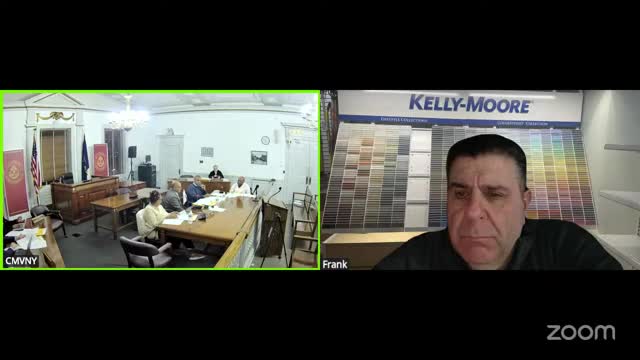
The Mount Vernon City Planning Board voted on Feb. 5, 2025, to disapprove an application to subdivide the property at 1605 Summit Avenue after a lengthy public hearing in which nearby residents and several commissioners raised concerns about density, parking and safety.
The applicant, represented by attorney Thomas Scully, proposed subdividing an existing parcel that contains a four‑family dwelling into four lots that would accommodate three additional two‑family houses. Scully told the board the zone (RMF 6.75) permits multifamily development and that the proposed plan would result in fewer units than the parcel could yield “as of right.”
Why it matters: Neighbors said the addition of multiple two‑family houses on the property would sharply increase the number of residents and vehicles on narrow neighborhood streets and change the area’s character. Commissioners said they were persuaded by community testimony and the absence of any design compromises from the applicant.
Board deliberations and applicant’s case
Scully urged the board to weigh the development against what is permitted under the RMF 6.75 zoning classification and pointed to legal precedent and requirements in the New York State General City Law that allow the board to evaluate subdivisions’ consistency with neighborhood development patterns. He said the applicant’s plans met or exceeded many dimensional standards, including setbacks and lot width, and presented evidence on stormwater and impervious‑surface controls.
Multiple commissioners and residents disputed the conclusion that the plan would be consistent with the immediate neighborhood. Commissioner Jamelle Thompson and others emphasized the board’s ability to consider density and traffic impacts even for projects that meet zoning numeric standards. Residents described existing parking shortages and said the proposal would worsen daily conditions.
Resident testimony
Local homeowners said they had experienced parking shortages, drainage problems and speeding and that adding several two‑family homes would add dozens of additional occupants and vehicles. Robert Wright said he lived at the “last house on the dead end street” and told the board he would “vote against it regardless of what happens.” Liz Ferrer, who said she has lived across the street for 40 years, called the proposal “overcrowding” and suggested alternatives such as a single new house or smaller additions. Several other residents, including Bernice Kennedy, James White and Charles James, urged the board to require the applicant to return with a scaled‑back plan developed in consultation with neighbors.
Procedural steps and vote
The board closed the public hearing after receiving additional public comments and testimony from counsel and staff. The board issued a SEQRA (State Environmental Quality Review Act) negative declaration, concluding the project would not require an environmental impact statement. After further discussion the planning board adopted a motion to disapprove the application, citing density, traffic and parking concerns, quality of life impacts and the applicant’s refusal to submit a revised proposal responsive to community requests. The motion carried; the chair announced, “The application has been denied.”
What the record shows and next steps
The record contains multiple resident letters and in‑person testimony asking for a reduced scale or a different configuration. Attorney Scully told the board he would discuss the matters with his client but said his client maintained rights under the existing zoning. The board noted it may accept written departmental comment if departments submit them within standard timelines, but the board’s denial stands unless further administrative appeals or new applications are filed.
Ending
Board members and residents said they hope any future proposal will be developed in direct consultation with neighbors and that a revised plan would address parking, emergency access and the scale of new housing on the block.
The applicant, represented by attorney Thomas Scully, proposed subdividing an existing parcel that contains a four‑family dwelling into four lots that would accommodate three additional two‑family houses. Scully told the board the zone (RMF 6.75) permits multifamily development and that the proposed plan would result in fewer units than the parcel could yield “as of right.”
Why it matters: Neighbors said the addition of multiple two‑family houses on the property would sharply increase the number of residents and vehicles on narrow neighborhood streets and change the area’s character. Commissioners said they were persuaded by community testimony and the absence of any design compromises from the applicant.
Board deliberations and applicant’s case
Scully urged the board to weigh the development against what is permitted under the RMF 6.75 zoning classification and pointed to legal precedent and requirements in the New York State General City Law that allow the board to evaluate subdivisions’ consistency with neighborhood development patterns. He said the applicant’s plans met or exceeded many dimensional standards, including setbacks and lot width, and presented evidence on stormwater and impervious‑surface controls.
Multiple commissioners and residents disputed the conclusion that the plan would be consistent with the immediate neighborhood. Commissioner Jamelle Thompson and others emphasized the board’s ability to consider density and traffic impacts even for projects that meet zoning numeric standards. Residents described existing parking shortages and said the proposal would worsen daily conditions.
Resident testimony
Local homeowners said they had experienced parking shortages, drainage problems and speeding and that adding several two‑family homes would add dozens of additional occupants and vehicles. Robert Wright said he lived at the “last house on the dead end street” and told the board he would “vote against it regardless of what happens.” Liz Ferrer, who said she has lived across the street for 40 years, called the proposal “overcrowding” and suggested alternatives such as a single new house or smaller additions. Several other residents, including Bernice Kennedy, James White and Charles James, urged the board to require the applicant to return with a scaled‑back plan developed in consultation with neighbors.
Procedural steps and vote
The board closed the public hearing after receiving additional public comments and testimony from counsel and staff. The board issued a SEQRA (State Environmental Quality Review Act) negative declaration, concluding the project would not require an environmental impact statement. After further discussion the planning board adopted a motion to disapprove the application, citing density, traffic and parking concerns, quality of life impacts and the applicant’s refusal to submit a revised proposal responsive to community requests. The motion carried; the chair announced, “The application has been denied.”
What the record shows and next steps
The record contains multiple resident letters and in‑person testimony asking for a reduced scale or a different configuration. Attorney Scully told the board he would discuss the matters with his client but said his client maintained rights under the existing zoning. The board noted it may accept written departmental comment if departments submit them within standard timelines, but the board’s denial stands unless further administrative appeals or new applications are filed.
Ending
Board members and residents said they hope any future proposal will be developed in direct consultation with neighbors and that a revised plan would address parking, emergency access and the scale of new housing on the block.
Don't Miss a Word: See the Full Meeting!
Go beyond summaries. Unlock every video, transcript, and key insight with a Founder Membership.
✓
Get instant access to full meeting videos
✓
Search and clip any phrase from complete transcripts
✓
Receive AI-powered summaries & custom alerts
✓
Enjoy lifetime, unrestricted access to government data
30-day money-back guarantee
