Subcommittee reviews Office of the Deaf and Hard of Hearing budget, asks about interpreter licensing timeline
February 06, 2025 | Health and Human Services (HHS) Subcommittee, Budget and Taxation Committee, SENATE, SENATE, Committees, Legislative, Maryland
This article was created by AI summarizing key points discussed. AI makes mistakes, so for full details and context, please refer to the video of the full meeting. Please report any errors so we can fix them. Report an error »
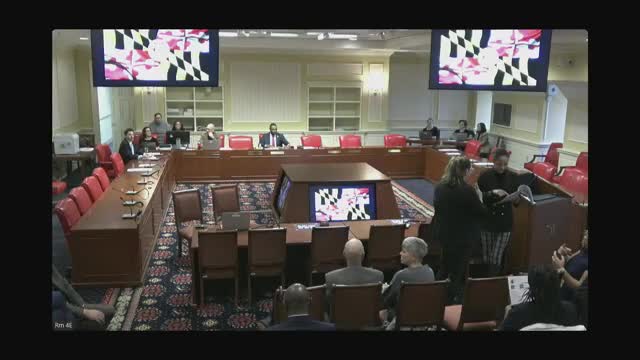
The Health and Human Services Subcommittee examined the Office of the Deaf and Hard of Hearing’s (ODHH) fiscal 2026 budget and asked agency leaders for a timetable on interpreter licensing regulations.
Natalia Andrade, budget analyst, Department of Legislative Services, told the panel that “the fiscal 26 budget increases by $111,000 or 10.5% bringing the total to $1,200,000.” Andrade said personal expenses account for 78% of the budget, cost allocations 7%, and sign-language interpreting services 6%, and noted an additional $10,000 in general funds for interpretation services to support accessibility for deaf participants.
The presentation highlighted personnel issues: as of Dec. 31, 2024 the office had four vacant positions. The fiscal 2025 budget had allocated four new roles (a deputy director, outreach and interpreter manager, a compliance officer and an administrative assistant). According to the analysis, the outreach/interpreter manager and administrative assistant positions were filled in July and August 2024; the deputy director and compliance officer positions remain vacant along with a policy manager and a public relations officer. Andrade said the office indicated it would prioritize filling the deputy director and compliance officer roles before advertising the remaining vacancies.
Madam Director (director, Governor’s Office of the Deaf and Hard of Hearing) told the subcommittee the office is undergoing “a reorganization” and said the deputy director and compliance officer positions “are in the final interview stage.” She added there were 15 applicants for the deputy director role and 29 for the compliance officer position and said delays were driven by scheduling, holidays and lack of a completed MS-22 job description.
Committee members pressed the agency on the status of licensing regulations for sign-language interpreters created under the Maryland Sign Language Interpreters Act. Andrade told the subcommittee the regulations were not yet public; the director said “the regulations are completed by the Board but right now we are waiting for it to go up for Comar.” The chair then asked the director to coordinate offline with Andrade to confirm the timeline for publication; the chair said the regulations “were approved in June” and had been expected to post July 1.
The analysis also reported the State Board of Sign Language Interpreters has developed draft licensing regulations and a licensing portal ready to launch once regulations are finalized; as of January 2025 the board had seven seats with five filled and two vacancies. The board set application fees at $150 for individual licenses and $300 for provisional licenses and has multiple channels for handling interpreter-related complaints.
Why it matters: ODHH’s budget is small and personnel-intensive; vacancies in leadership roles and delays in publishing licensure regulations affect both internal operations and public access to certified interpreters. The subcommittee asked for follow-up on the agency’s recruitment timeline and on when the board’s regulations will be posted to COMAR and the ODHH website.
Officials said the agency concurs with the Department of Legislative Services’ recommendation to concur with the governor’s allowance and agreed to work with analysts on timelines for making the licensing rules public.
Natalia Andrade, budget analyst, Department of Legislative Services, told the panel that “the fiscal 26 budget increases by $111,000 or 10.5% bringing the total to $1,200,000.” Andrade said personal expenses account for 78% of the budget, cost allocations 7%, and sign-language interpreting services 6%, and noted an additional $10,000 in general funds for interpretation services to support accessibility for deaf participants.
The presentation highlighted personnel issues: as of Dec. 31, 2024 the office had four vacant positions. The fiscal 2025 budget had allocated four new roles (a deputy director, outreach and interpreter manager, a compliance officer and an administrative assistant). According to the analysis, the outreach/interpreter manager and administrative assistant positions were filled in July and August 2024; the deputy director and compliance officer positions remain vacant along with a policy manager and a public relations officer. Andrade said the office indicated it would prioritize filling the deputy director and compliance officer roles before advertising the remaining vacancies.
Madam Director (director, Governor’s Office of the Deaf and Hard of Hearing) told the subcommittee the office is undergoing “a reorganization” and said the deputy director and compliance officer positions “are in the final interview stage.” She added there were 15 applicants for the deputy director role and 29 for the compliance officer position and said delays were driven by scheduling, holidays and lack of a completed MS-22 job description.
Committee members pressed the agency on the status of licensing regulations for sign-language interpreters created under the Maryland Sign Language Interpreters Act. Andrade told the subcommittee the regulations were not yet public; the director said “the regulations are completed by the Board but right now we are waiting for it to go up for Comar.” The chair then asked the director to coordinate offline with Andrade to confirm the timeline for publication; the chair said the regulations “were approved in June” and had been expected to post July 1.
The analysis also reported the State Board of Sign Language Interpreters has developed draft licensing regulations and a licensing portal ready to launch once regulations are finalized; as of January 2025 the board had seven seats with five filled and two vacancies. The board set application fees at $150 for individual licenses and $300 for provisional licenses and has multiple channels for handling interpreter-related complaints.
Why it matters: ODHH’s budget is small and personnel-intensive; vacancies in leadership roles and delays in publishing licensure regulations affect both internal operations and public access to certified interpreters. The subcommittee asked for follow-up on the agency’s recruitment timeline and on when the board’s regulations will be posted to COMAR and the ODHH website.
Officials said the agency concurs with the Department of Legislative Services’ recommendation to concur with the governor’s allowance and agreed to work with analysts on timelines for making the licensing rules public.
View the Full Meeting & All Its Details
This article offers just a summary. Unlock complete video, transcripts, and insights as a Founder Member.
✓
Watch full, unedited meeting videos
✓
Search every word spoken in unlimited transcripts
✓
AI summaries & real-time alerts (all government levels)
✓
Permanent access to expanding government content
30-day money-back guarantee
