Subcommittee reviews Prevention and Health Promotion Administration budget; DLS recommends $5.7M reduction to tobacco cessation funding
February 06, 2025 | Health and Human Services (HHS) Subcommittee, Budget and Taxation Committee, SENATE, SENATE, Committees, Legislative, Maryland
This article was created by AI summarizing key points discussed. AI makes mistakes, so for full details and context, please refer to the video of the full meeting. Please report any errors so we can fix them. Report an error »
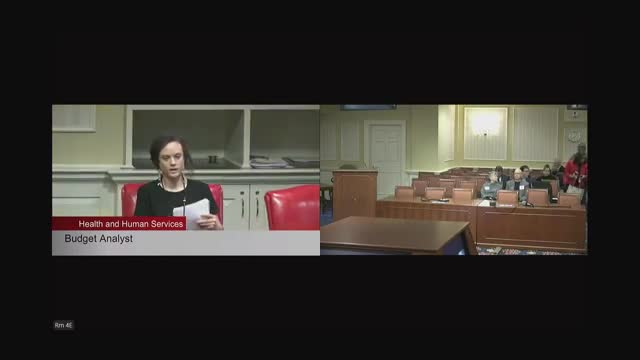
The Health and Human Services Subcommittee heard the Department of Legislative Services’ review of the Prevention and Health Promotion Administration’s (P/HPA) fiscal 2026 allowance and probed multiple programmatic and funding issues including a DLS recommendation to reduce general-fund support for tobacco cessation programs by $5.7 million.
Naomi Camaro, budget analyst, Department of Legislative Services, told the subcommittee the fiscal 2026 budget for the Prevention and Health Promotion Administration increases by $7,000,000 to $531,500,000. Camaro walked members through performance measures for tobacco use (adult, high school and middle school measures), new measures for unintentional exposure to cannabis and changes tied to federal grants and internal realignment.
Camaro said DLS asked the Administration to explain tobacco-usage trends among youth and adult groups and to consider updating goals because adult cigarette-use goals have been met for several years. She also described the Administration’s use of cigarette restitution fund (CRF) monies for tobacco cessation and noted a 2021 statutory minimum of $18,250,000 for those programs; the fiscal 2026 allowance includes $24,000,000 for cessation programs and DLS recommended reducing that line by $5,700,000 to meet the mandated level.
The DLS presentation covered other items: a new epidemiology and laboratory capacity (ELC) grant that increases certain federal stimulus-driven funding (Camaro said an increase of about $61.3 million from an extended ELC grant), expirations of other stimulus funds (Camaro cited reductions of $26.2 million), transfer of harm reduction services to the Behavioral Health Administration (a reduction of about $17.5 million in P/HPA), and personnel changes (the fiscal 2026 allowance includes 569.34 regular positions and shows a 12-position reduction tied to program transfers). Camaro said P/HPA’s vacancy rate was 18.68% as of Dec. 31, 2024 and DLS asked the Administration to explain recruitment plans and impacts of vacancies.
In response, Laura Herrera Scott, Secretary of Health, and Dr. Nilesh Kalyanaraman, Deputy Secretary for Public Health, joined the subcommittee. The administration disputed DLS’s recommended cut to tobacco cessation funding. Dr. Kalyanaraman said, “We’re concerned that this $5,700,000 reduction will greatly compromise our ability to continue. The successes we’ve had ... come through persistent effort and investment.” The Department said the funds support local health departments’ enforcement, cancer screening and tobacco cessation and that the Department disagrees with the reduction recommendation.
Camaro also summarized questions DLS had submitted on MATAP pharmaceutical-rebate revenue (used for HIV/AIDS services) and on the pediatric cancer research fund. The pediatric fund currently holds $5,000,000 appropriated in fiscal 2023; Camaro said MDH reported seven of 12 commission members had been appointed as of January 2025 but no spending was included in FY26 because the commission must set grant criteria and oversight guidelines before awards.
DLS recommended reducing $5.7 million in general funds for tobacco cessation in its fiscal 2026 recommendation; the Administration objected and said the reduction would harm sustained prevention gains. DLS also recommended releasing $100,000 in restricted funds for the prenatal and infant care grant program once reporting requirements were met.
Why it matters: The Administration’s public health programs cover a wide range of preventive services — tobacco cessation, infectious disease, maternal and child health, cancer and chronic disease prevention — and funding changes can materially affect local health departments, screening programs and prevention efforts across the state. The subcommittee asked for follow-up on performance metrics, vacancy impacts and the status of the pediatric cancer commission.
Naomi Camaro, budget analyst, Department of Legislative Services, told the subcommittee the fiscal 2026 budget for the Prevention and Health Promotion Administration increases by $7,000,000 to $531,500,000. Camaro walked members through performance measures for tobacco use (adult, high school and middle school measures), new measures for unintentional exposure to cannabis and changes tied to federal grants and internal realignment.
Camaro said DLS asked the Administration to explain tobacco-usage trends among youth and adult groups and to consider updating goals because adult cigarette-use goals have been met for several years. She also described the Administration’s use of cigarette restitution fund (CRF) monies for tobacco cessation and noted a 2021 statutory minimum of $18,250,000 for those programs; the fiscal 2026 allowance includes $24,000,000 for cessation programs and DLS recommended reducing that line by $5,700,000 to meet the mandated level.
The DLS presentation covered other items: a new epidemiology and laboratory capacity (ELC) grant that increases certain federal stimulus-driven funding (Camaro said an increase of about $61.3 million from an extended ELC grant), expirations of other stimulus funds (Camaro cited reductions of $26.2 million), transfer of harm reduction services to the Behavioral Health Administration (a reduction of about $17.5 million in P/HPA), and personnel changes (the fiscal 2026 allowance includes 569.34 regular positions and shows a 12-position reduction tied to program transfers). Camaro said P/HPA’s vacancy rate was 18.68% as of Dec. 31, 2024 and DLS asked the Administration to explain recruitment plans and impacts of vacancies.
In response, Laura Herrera Scott, Secretary of Health, and Dr. Nilesh Kalyanaraman, Deputy Secretary for Public Health, joined the subcommittee. The administration disputed DLS’s recommended cut to tobacco cessation funding. Dr. Kalyanaraman said, “We’re concerned that this $5,700,000 reduction will greatly compromise our ability to continue. The successes we’ve had ... come through persistent effort and investment.” The Department said the funds support local health departments’ enforcement, cancer screening and tobacco cessation and that the Department disagrees with the reduction recommendation.
Camaro also summarized questions DLS had submitted on MATAP pharmaceutical-rebate revenue (used for HIV/AIDS services) and on the pediatric cancer research fund. The pediatric fund currently holds $5,000,000 appropriated in fiscal 2023; Camaro said MDH reported seven of 12 commission members had been appointed as of January 2025 but no spending was included in FY26 because the commission must set grant criteria and oversight guidelines before awards.
DLS recommended reducing $5.7 million in general funds for tobacco cessation in its fiscal 2026 recommendation; the Administration objected and said the reduction would harm sustained prevention gains. DLS also recommended releasing $100,000 in restricted funds for the prenatal and infant care grant program once reporting requirements were met.
Why it matters: The Administration’s public health programs cover a wide range of preventive services — tobacco cessation, infectious disease, maternal and child health, cancer and chronic disease prevention — and funding changes can materially affect local health departments, screening programs and prevention efforts across the state. The subcommittee asked for follow-up on performance metrics, vacancy impacts and the status of the pediatric cancer commission.
View the Full Meeting & All Its Details
This article offers just a summary. Unlock complete video, transcripts, and insights as a Founder Member.
✓
Watch full, unedited meeting videos
✓
Search every word spoken in unlimited transcripts
✓
AI summaries & real-time alerts (all government levels)
✓
Permanent access to expanding government content
30-day money-back guarantee
