Cancer centers and advocates urge lawmakers to preserve cigarette restitution and prevention funding
February 06, 2025 | Health and Human Services (HHS) Subcommittee, Budget and Taxation Committee, SENATE, SENATE, Committees, Legislative, Maryland
This article was created by AI summarizing key points discussed. AI makes mistakes, so for full details and context, please refer to the video of the full meeting. Please report any errors so we can fix them. Report an error »
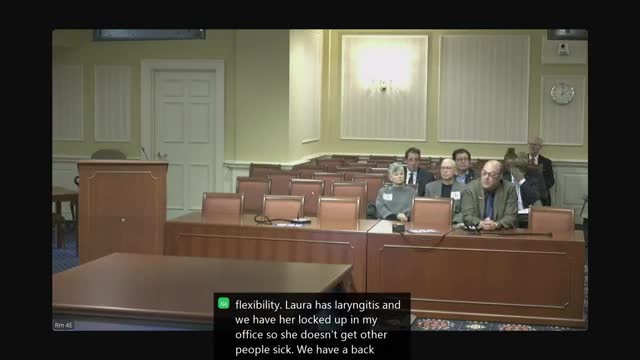
University cancer center leaders, researchers and patients testified before the Health and Human Services Subcommittee about the role of the Cigarette Restitution Fund (CRF) and related tobacco-prevention funding in sustaining cancer research, clinical trials and prevention programs across Maryland.
Bill Nelson (testifier) opened the panel and thanked the legislature for restoring tobacco-control funding to about $18.25 million. He said the program is “very important” and urged lawmakers not to accept the DLS-recommended $5.7 million cut to prevention funding.
Representatives from Johns Hopkins described CRF-funded recruitment and research work that they said generated federal grants, start-up activity and career development. John Groupman, co-director of the CRF program at Johns Hopkins, described the program’s long-term impact: he said the state was once among the worst for cancer mortality and that investments have helped recruit scientists and expand research capacity.
Speakers from the University of Maryland Greenebaum Comprehensive Cancer Center stressed patient impact and clinical-trial access. Tafiko Oeneko (director, Greenebaum Cancer Center) said the center treats hundreds of thousands of patients across affiliates and highlighted that more than 60% of its clinical-trial participants are from underrepresented groups. Patient speakers described clinical-trial participation and the difference it made in their treatment options and quality of life.
Otis Brawley (medical oncologist and epidemiologist) and others argued CRF investments have yielded measurable public-health returns. Lance Kilpatrick of the American Cancer Society Cancer Action Network reminded the committee that “this funding has never been zeroed out before” and urged lawmakers to consider federal funding uncertainty when setting state tobacco-prevention levels.
Why it matters: The CRF and related tobacco-prevention funding supports research recruitment, clinical trials and prevention programs that leaders say have reduced cancer mortality and expanded early access to therapies. Testimony emphasized that cutting prevention or research support could reverse long-term public-health and economic gains.
Bill Nelson (testifier) opened the panel and thanked the legislature for restoring tobacco-control funding to about $18.25 million. He said the program is “very important” and urged lawmakers not to accept the DLS-recommended $5.7 million cut to prevention funding.
Representatives from Johns Hopkins described CRF-funded recruitment and research work that they said generated federal grants, start-up activity and career development. John Groupman, co-director of the CRF program at Johns Hopkins, described the program’s long-term impact: he said the state was once among the worst for cancer mortality and that investments have helped recruit scientists and expand research capacity.
Speakers from the University of Maryland Greenebaum Comprehensive Cancer Center stressed patient impact and clinical-trial access. Tafiko Oeneko (director, Greenebaum Cancer Center) said the center treats hundreds of thousands of patients across affiliates and highlighted that more than 60% of its clinical-trial participants are from underrepresented groups. Patient speakers described clinical-trial participation and the difference it made in their treatment options and quality of life.
Otis Brawley (medical oncologist and epidemiologist) and others argued CRF investments have yielded measurable public-health returns. Lance Kilpatrick of the American Cancer Society Cancer Action Network reminded the committee that “this funding has never been zeroed out before” and urged lawmakers to consider federal funding uncertainty when setting state tobacco-prevention levels.
Why it matters: The CRF and related tobacco-prevention funding supports research recruitment, clinical trials and prevention programs that leaders say have reduced cancer mortality and expanded early access to therapies. Testimony emphasized that cutting prevention or research support could reverse long-term public-health and economic gains.
View the Full Meeting & All Its Details
This article offers just a summary. Unlock complete video, transcripts, and insights as a Founder Member.
✓
Watch full, unedited meeting videos
✓
Search every word spoken in unlimited transcripts
✓
AI summaries & real-time alerts (all government levels)
✓
Permanent access to expanding government content
30-day money-back guarantee
