Local providers and a board member urge district to issue RFP for comprehensive UPK planning amid placement concerns
September 04, 2025 | WATERTOWN CITY SCHOOL DISTRICT, School Districts, New York
This article was created by AI summarizing key points discussed. AI makes mistakes, so for full details and context, please refer to the video of the full meeting. Please report any errors so we can fix them. Report an error »
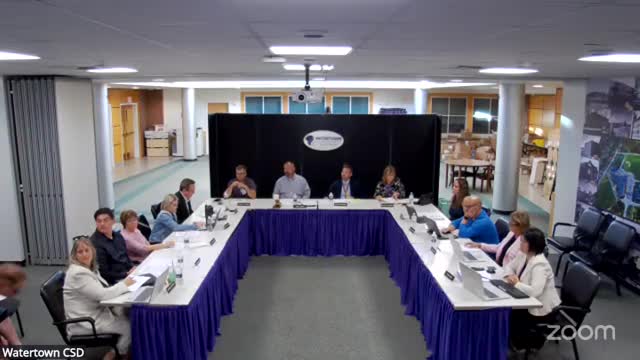
Several community speakers and at least one board member pressed the Watertown City School District on universal pre-kindergarten (UPK) planning and district transparency during public comment at the Oct. 17 board meeting, urging the district to issue a request for proposals (RFP) for a comprehensive UPK strategic plan.
Craig Cashman, who identified himself as a leader of local community-based organizations that run early-childhood programs, told the board the CBOs want a transparent community-driven planning process and urged the board to “authorize the release of an RFP for a comprehensive UPK plan.” He told the board the study should assess current UPK availability, quality and capacity, identify gaps in access and alignment, build trust by engaging families and partners, and propose staffing and sustainable funding strategies. Cashman said the planning process could take five to six months from RFP release to initial implementation and urged the board to expedite the work so planning could inform the 2026–27 school year.
Board member Millie Smith spoke at length about problems she said families experienced during the recent UPK allocation process. Smith said she had tried to resolve concerns privately but felt compelled to raise them in public after that effort failed. She asserted that some families remain without placements and described anecdotal cases — including triplets where two were placed and one was not, and a separated twin case — to illustrate her point. Smith also said the child of the district’s immediate past board president did not receive a UPK slot after what she described as a lottery process.
Smith challenged the board on transparency, asking why she was required to submit a public-record (FOIL) request to obtain RFP proposals and bid amounts after she had requested the information. She described the process for disclosing proposals as “a waste of taxpayer dollars” when, she said, the information should have been delivered in public meeting materials. Smith requested clearer, consistent policies about how communications and agenda materials are handled and asked the board to place the RFP recommendation and the communication policy review on a future agenda.
Superintendent Dr. Larry Schneegel responded during the public comment exchange that district staff were still “working on trying to find placements” and encouraged parents to take advantage of placements that were available. The superintendent did not give a final count of unplaced children during the public session; board members later asked staff to follow up and provide the numbers.
Why it matters: UPK capacity and allocation affect families’ childcare arrangements and early-education access. Community providers argued for a transparent, community-engaged planning process to align capacity, quality and funding. Board and administration processes for sharing proposals and bid figures also drew criticism and calls for clearer procedures.
What’s next: Community speakers asked the board to authorize an RFP and to clarify communications and FOIL/public-request procedures; several board members said they would place discussion of transparency and communications policy on a future agenda.
Craig Cashman, who identified himself as a leader of local community-based organizations that run early-childhood programs, told the board the CBOs want a transparent community-driven planning process and urged the board to “authorize the release of an RFP for a comprehensive UPK plan.” He told the board the study should assess current UPK availability, quality and capacity, identify gaps in access and alignment, build trust by engaging families and partners, and propose staffing and sustainable funding strategies. Cashman said the planning process could take five to six months from RFP release to initial implementation and urged the board to expedite the work so planning could inform the 2026–27 school year.
Board member Millie Smith spoke at length about problems she said families experienced during the recent UPK allocation process. Smith said she had tried to resolve concerns privately but felt compelled to raise them in public after that effort failed. She asserted that some families remain without placements and described anecdotal cases — including triplets where two were placed and one was not, and a separated twin case — to illustrate her point. Smith also said the child of the district’s immediate past board president did not receive a UPK slot after what she described as a lottery process.
Smith challenged the board on transparency, asking why she was required to submit a public-record (FOIL) request to obtain RFP proposals and bid amounts after she had requested the information. She described the process for disclosing proposals as “a waste of taxpayer dollars” when, she said, the information should have been delivered in public meeting materials. Smith requested clearer, consistent policies about how communications and agenda materials are handled and asked the board to place the RFP recommendation and the communication policy review on a future agenda.
Superintendent Dr. Larry Schneegel responded during the public comment exchange that district staff were still “working on trying to find placements” and encouraged parents to take advantage of placements that were available. The superintendent did not give a final count of unplaced children during the public session; board members later asked staff to follow up and provide the numbers.
Why it matters: UPK capacity and allocation affect families’ childcare arrangements and early-education access. Community providers argued for a transparent, community-engaged planning process to align capacity, quality and funding. Board and administration processes for sharing proposals and bid figures also drew criticism and calls for clearer procedures.
What’s next: Community speakers asked the board to authorize an RFP and to clarify communications and FOIL/public-request procedures; several board members said they would place discussion of transparency and communications policy on a future agenda.
Don't Miss a Word: See the Full Meeting!
Go beyond summaries. Unlock every video, transcript, and key insight with a Founder Membership.
✓
Get instant access to full meeting videos
✓
Search and clip any phrase from complete transcripts
✓
Receive AI-powered summaries & custom alerts
✓
Enjoy lifetime, unrestricted access to government data
30-day money-back guarantee
