RCS board adopts cell-phone policy and heat action plan; administrators to create building playbooks
August 07, 2025 | RAVENA-COEYMANS-SELKIRK CENTRAL SCHOOL DISTRICT, School Districts, New York
This article was created by AI summarizing key points discussed. AI makes mistakes, so for full details and context, please refer to the video of the full meeting. Please report any errors so we can fix them. Report an error »
The Ravena-Coeymans-Selkirk Board of Education voted to adopt a district student personal-device (cell phone) policy and a related classroom heat action plan. Board and administration leaders said both policies respond to recent state mandates and guidance and that building-level procedures (a "playbook") will be developed to guide day-to-day implementation.
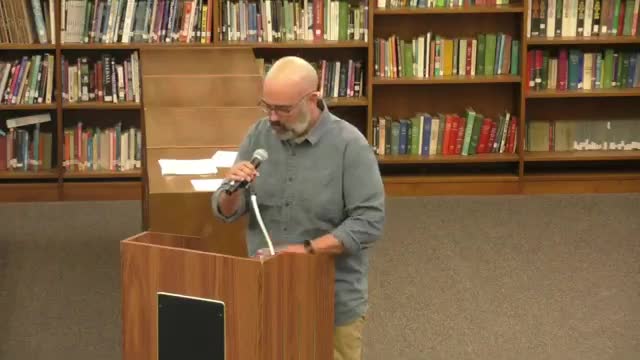
During public comment, Ted Smith, a community member, urged the board to take both issues seriously. "Classroom heat is a major and growing concern," Smith said, adding that the district should aim for conditions that support learning rather than only meeting a minimum state floor. On the device policy he argued that "the cell phone thing is probably the principal challenge facing young people in America today" and urged sustained, faithful enforcement rather than a token policy.
Superintendent Chandler told the board he will provide an operational "playbook" for heat incidents and said administrators will prepare building-level plans that can be enacted when high temperatures are forecast. The district described a phased approach intended to reduce the need for mid-day classroom moves: if forecasts show extended heat the playbook's earlier actions (for example, moving activities to cooler spaces overnight or before school) will already be in place. Administrators added that staff will still be able to take temperature readings and respond to classroom-level concerns if needed.
The board and staff discussed measurement questions and remediation costs. Board members asked whether temperature readings must be taken from specified locations in classrooms to comply with law; administrators said the playbook will address measurement procedure and that they will follow state guidance. District staff also reported early contractor estimates for window or portable cooling units and questioned some of the contractor cost figures; they said state contract pricing and deeper cost review will follow if installations are required. Several board members urged the administration to examine state contracts and direct-purchase pricing before proceeding.
On electronic communications and enforcement, the district said it will offer limited exterior e-mail access for parents through a "white list" (parent addresses in the student information system) so parents can contact their child during the school day in specific cases. The district also noted it expects state implementation funds for the policy and said allowable uses include employee salaries; administrators indicated the district may designate funds to support an employee responsible for elements of policy enforcement and communications.
Board members emphasized that the policies must include meaningful stakeholder input. The state-required policy had to be filed on a compressed timetable; board members and administrators said they will continue to solicit feedback from bargaining units, parents, students and staff and will revise procedures as needed during the school year.
Ending: The board approved the policies and asked administrators to finalize building playbooks, test measurement and remediation procedures, examine vendor pricing through state contracts, and return to the board with updates and stakeholder feedback.
During public comment, Ted Smith, a community member, urged the board to take both issues seriously. "Classroom heat is a major and growing concern," Smith said, adding that the district should aim for conditions that support learning rather than only meeting a minimum state floor. On the device policy he argued that "the cell phone thing is probably the principal challenge facing young people in America today" and urged sustained, faithful enforcement rather than a token policy.
Superintendent Chandler told the board he will provide an operational "playbook" for heat incidents and said administrators will prepare building-level plans that can be enacted when high temperatures are forecast. The district described a phased approach intended to reduce the need for mid-day classroom moves: if forecasts show extended heat the playbook's earlier actions (for example, moving activities to cooler spaces overnight or before school) will already be in place. Administrators added that staff will still be able to take temperature readings and respond to classroom-level concerns if needed.
The board and staff discussed measurement questions and remediation costs. Board members asked whether temperature readings must be taken from specified locations in classrooms to comply with law; administrators said the playbook will address measurement procedure and that they will follow state guidance. District staff also reported early contractor estimates for window or portable cooling units and questioned some of the contractor cost figures; they said state contract pricing and deeper cost review will follow if installations are required. Several board members urged the administration to examine state contracts and direct-purchase pricing before proceeding.
On electronic communications and enforcement, the district said it will offer limited exterior e-mail access for parents through a "white list" (parent addresses in the student information system) so parents can contact their child during the school day in specific cases. The district also noted it expects state implementation funds for the policy and said allowable uses include employee salaries; administrators indicated the district may designate funds to support an employee responsible for elements of policy enforcement and communications.
Board members emphasized that the policies must include meaningful stakeholder input. The state-required policy had to be filed on a compressed timetable; board members and administrators said they will continue to solicit feedback from bargaining units, parents, students and staff and will revise procedures as needed during the school year.
Ending: The board approved the policies and asked administrators to finalize building playbooks, test measurement and remediation procedures, examine vendor pricing through state contracts, and return to the board with updates and stakeholder feedback.
View the Full Meeting & All Its Details
This article offers just a summary. Unlock complete video, transcripts, and insights as a Founder Member.
✓
Watch full, unedited meeting videos
✓
Search every word spoken in unlimited transcripts
✓
AI summaries & real-time alerts (all government levels)
✓
Permanent access to expanding government content
30-day money-back guarantee
