Board adopts MClass DIBELS 8 and Lectura for K–2 reading screening to meet state mandate
April 27, 2025 | Santa Clara Unified, School Districts, California
This article was created by AI summarizing key points discussed. AI makes mistakes, so for full details and context, please refer to the video of the full meeting. Please report any errors so we can fix them. Report an error »
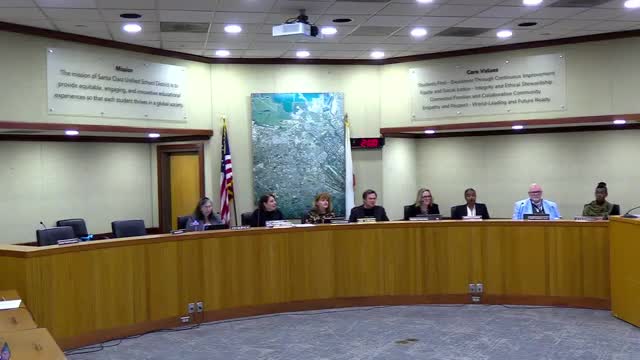
The Santa Clara Unified Board of Trustees approved a district recommendation to adopt MClass DIBELS (eighth edition) and MClass Lectura for Spanish as the district’s K–2 screening tools for students at risk of reading difficulties. The motion passed 6–0.
The recommendation came from the Elementary Literacy Work Group, which evaluated the state’s approved list of screeners and met in an accelerated timeline after the State Board of Education released an approved-screeners list late in the previous year. Director Tricia Knavel presented the selection process and said the group reviewed the products, held provider briefings and compared features important to the district’s English-learner population.
District materials presented to the board said the state’s process produced four approved options on the list the district considered: Amira, MClass DIBELS (with MClass Lectura for Spanish), and others; the board materials and presenters noted that one widely discussed option (ROAR) was available only in English, which factored into the district's decision because a large share of district families use Spanish as a primary language.
Knavel told the board that Senate Bill 114 and related changes require districts to adopt a certified reading-risk screener by June 30 and to provide screened students with follow-up instruction and progress monitoring. She described implementation requirements the district must still finalize, including screening windows, household notice and opt-out procedures (families must receive notice at least 15 calendar days prior to screening), and reporting results to families within 45 calendar days of the assessment.
Trustee Watanabe noted that MClass’s dual-language reporting and guidance were important to the district’s needs. Public commenters who spoke in favor of early screening praised the choice as research-based and appropriate for dual-language assessment.
What happens next: District staff will finalize screening schedules, communication materials for families and progress-monitoring protocols. The screening cannot be used alone to determine special education eligibility; it is intended to identify students who need further diagnostic assessment or evidence-based instructional supports.
Why it matters: The screener decision affects how the district identifies K–2 students at risk for reading difficulties, how families receive information about their child’s reading progress, and how school teams will prioritize early literacy interventions next school year.
The recommendation came from the Elementary Literacy Work Group, which evaluated the state’s approved list of screeners and met in an accelerated timeline after the State Board of Education released an approved-screeners list late in the previous year. Director Tricia Knavel presented the selection process and said the group reviewed the products, held provider briefings and compared features important to the district’s English-learner population.
District materials presented to the board said the state’s process produced four approved options on the list the district considered: Amira, MClass DIBELS (with MClass Lectura for Spanish), and others; the board materials and presenters noted that one widely discussed option (ROAR) was available only in English, which factored into the district's decision because a large share of district families use Spanish as a primary language.
Knavel told the board that Senate Bill 114 and related changes require districts to adopt a certified reading-risk screener by June 30 and to provide screened students with follow-up instruction and progress monitoring. She described implementation requirements the district must still finalize, including screening windows, household notice and opt-out procedures (families must receive notice at least 15 calendar days prior to screening), and reporting results to families within 45 calendar days of the assessment.
Trustee Watanabe noted that MClass’s dual-language reporting and guidance were important to the district’s needs. Public commenters who spoke in favor of early screening praised the choice as research-based and appropriate for dual-language assessment.
What happens next: District staff will finalize screening schedules, communication materials for families and progress-monitoring protocols. The screening cannot be used alone to determine special education eligibility; it is intended to identify students who need further diagnostic assessment or evidence-based instructional supports.
Why it matters: The screener decision affects how the district identifies K–2 students at risk for reading difficulties, how families receive information about their child’s reading progress, and how school teams will prioritize early literacy interventions next school year.
Don't Miss a Word: See the Full Meeting!
Go beyond summaries. Unlock every video, transcript, and key insight with a Founder Membership.
✓
Get instant access to full meeting videos
✓
Search and clip any phrase from complete transcripts
✓
Receive AI-powered summaries & custom alerts
✓
Enjoy lifetime, unrestricted access to government data
30-day money-back guarantee
