House committee weighs mobile-home financing, classification and municipal-services options
May 09, 2025 | General & Housing, HOUSE OF REPRESENTATIVES, Committees, Legislative , Vermont
This article was created by AI summarizing key points discussed. AI makes mistakes, so for full details and context, please refer to the video of the full meeting. Please report any errors so we can fix them. Report an error »
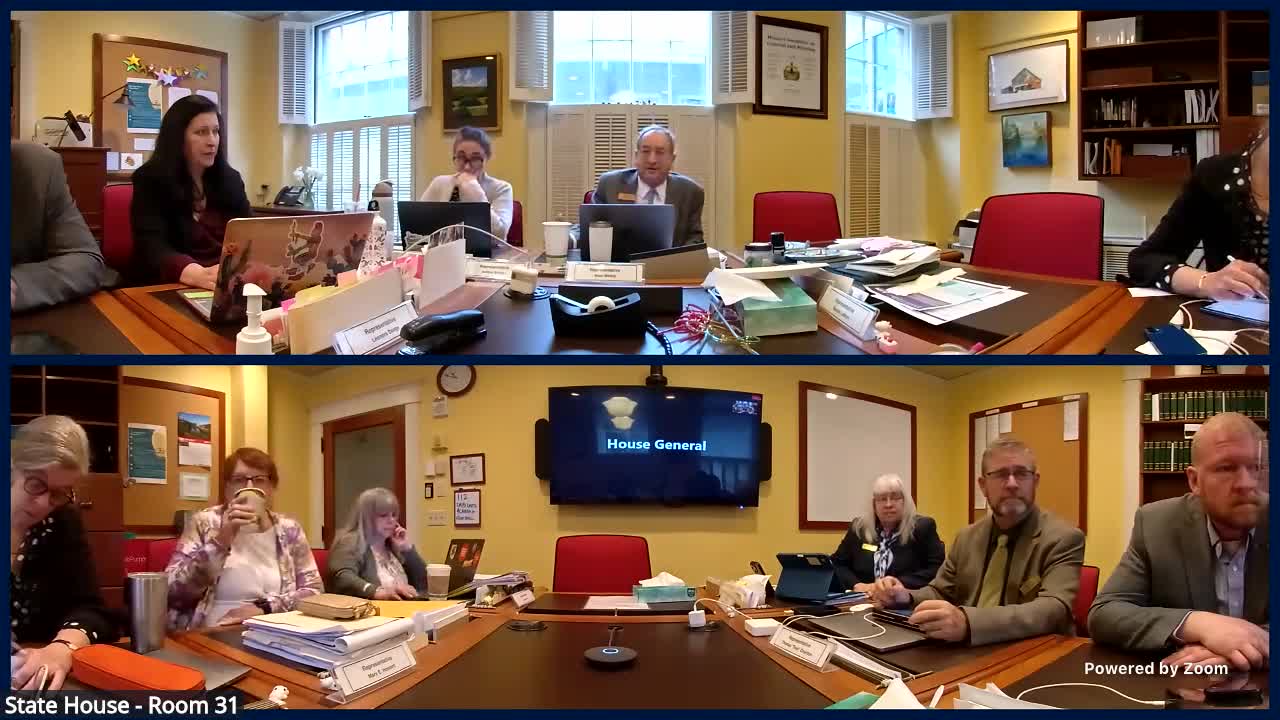
Members of the House General & Housing Committee spent substantial time discussing policy options to improve financing and services for mobile‑home communities, including whether to reclassify mobile homes from personal property to real property and what that change would mean for taxes, mortgage availability and municipal services.
Committee members said the issue matters because many Vermonters rely on mobile homes for lower‑cost housing and current financing practices and legal classifications can limit access to conventional mortgages and to programs that require properties to be on registries. The committee agreed to collect more technical information and hear testimony before drafting legislation.
Discussion focused on several recurring themes. Members asked staff to consult legislative counsel and the Joint Fiscal Office about tax implications of reclassification. Committee members reported banks often treat mobile‑home loans as higher risk — citing examples in testimony where mortgage pricing for mobile housing appeared substantially higher than for a conventional home — and noted some lenders’ underwriting software and policies do not accommodate ground‑lease or similar ownership arrangements. Members also raised the practical barrier that many mobile‑home communities lack municipal services and that service provision (water, hydrants, trash) can be complicated by private ownership of parks.
Committee members identified program‑eligibility problems tied to the state mobile‑home registry: some owners who own their lots are not on the registry and are therefore ineligible for certain grant programs discussed in committee. Witnesses and members urged the committee to review the mobile‑home task force report and to invite housing finance experts and state housing agency staff (examples named in the meeting included staff from VHFA and the Department for Housing and Community Development) as witnesses.
Members discussed nomenclature and statutory definitions — whether to use terms such as “manufactured home” versus “mobile home” — and the importance of clarifying definitions before drafting changes. Several members volunteered to lead follow‑up work: Representative Gail agreed to spearhead the mobile‑home project over the summer and to provide a witness list to committee staff for upcoming hearings.
Next steps the committee identified were to request technical analyses from legislative counsel and JFO on tax consequences, compile a list of possible witnesses (including bank representatives, VHFA, DHCD and organizations that participated in the mobile‑home task force), and schedule hearings to gather lived experience and technical testimony. No formal policy change or vote was taken during this meeting.
Committee members said the issue matters because many Vermonters rely on mobile homes for lower‑cost housing and current financing practices and legal classifications can limit access to conventional mortgages and to programs that require properties to be on registries. The committee agreed to collect more technical information and hear testimony before drafting legislation.
Discussion focused on several recurring themes. Members asked staff to consult legislative counsel and the Joint Fiscal Office about tax implications of reclassification. Committee members reported banks often treat mobile‑home loans as higher risk — citing examples in testimony where mortgage pricing for mobile housing appeared substantially higher than for a conventional home — and noted some lenders’ underwriting software and policies do not accommodate ground‑lease or similar ownership arrangements. Members also raised the practical barrier that many mobile‑home communities lack municipal services and that service provision (water, hydrants, trash) can be complicated by private ownership of parks.
Committee members identified program‑eligibility problems tied to the state mobile‑home registry: some owners who own their lots are not on the registry and are therefore ineligible for certain grant programs discussed in committee. Witnesses and members urged the committee to review the mobile‑home task force report and to invite housing finance experts and state housing agency staff (examples named in the meeting included staff from VHFA and the Department for Housing and Community Development) as witnesses.
Members discussed nomenclature and statutory definitions — whether to use terms such as “manufactured home” versus “mobile home” — and the importance of clarifying definitions before drafting changes. Several members volunteered to lead follow‑up work: Representative Gail agreed to spearhead the mobile‑home project over the summer and to provide a witness list to committee staff for upcoming hearings.
Next steps the committee identified were to request technical analyses from legislative counsel and JFO on tax consequences, compile a list of possible witnesses (including bank representatives, VHFA, DHCD and organizations that participated in the mobile‑home task force), and schedule hearings to gather lived experience and technical testimony. No formal policy change or vote was taken during this meeting.
View the Full Meeting & All Its Details
This article offers just a summary. Unlock complete video, transcripts, and insights as a Founder Member.
✓
Watch full, unedited meeting videos
✓
Search every word spoken in unlimited transcripts
✓
AI summaries & real-time alerts (all government levels)
✓
Permanent access to expanding government content
30-day money-back guarantee
