Health Care committee presses for contingency plans as federal funding for Medicaid remains uncertain
May 09, 2025 | Health Care, HOUSE OF REPRESENTATIVES, Committees, Legislative , Vermont
This article was created by AI summarizing key points discussed. AI makes mistakes, so for full details and context, please refer to the video of the full meeting. Please report any errors so we can fix them. Report an error »
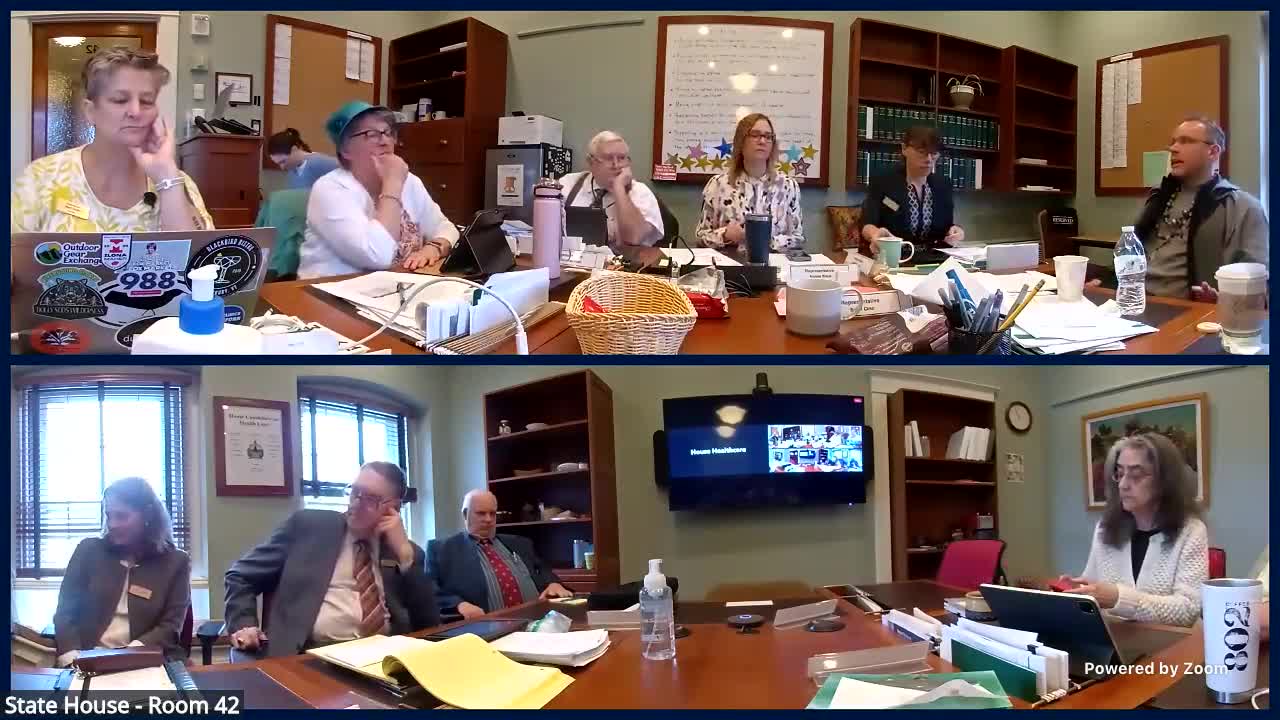
Members of the Health Care committee met May 9 to discuss contingency planning for Medicaid and other programs as federal funding questions remain unresolved.
Committee members said the Joint Fiscal Office tracker and briefings from budget staff would help them explain impacts to constituents and decide whether the legislature must reconvene under budget trigger language. The meeting focused on how federal choices — including possible changes to enhanced premium tax credits and cost‑sharing reduction (CSR) policy and discussions about cuts to the provider tax — could affect state budgeting for Medicaid and related services.
Committee members asked staff for updated numbers and a short briefing they could share with constituents, and discussed asking the Joint Fiscal Office for an updated “tracker” of federal developments. Members also proposed inviting the treasurer and other officials to community forums or committee testimony to explore options for using state funds or reserves to shore up services.
Members highlighted two federal issues separately tracked in testimony: a potential loss in buying power for Vermonters if enhanced premium tax credits expire (an estimate discussed in the meeting attributed to “Deepa” put the loss at about $65,000,000 for Vermonters) and renewed federal guidance about CSR funding versus state “silver loading” approaches. The committee discussed a marketplace estimate that reversing prior state silver‑loading choices combined with federal changes could represent roughly $115,000,000 in impacts to Vermonters.
The group also discussed reporting in national press and informal analyses that reductions of the provider tax could cost Vermont between $250,000,000 and $500,000,000, depending on whether half or all of the provider tax were lost. Members framed that risk as a driver for caution about new state spending and for identifying contingency steps in the budget language that trigger fuller legislative involvement; committee members noted budget language with percentage triggers (for example, a 5% threshold that would require the full legislature to reconvene).
The committee agreed to pursue briefings (including a possible Joint Fiscal Office presentation), gather updated numbers and consider targeted testimony from affected providers and advocates. They also discussed tracking social drivers of health (food pantries, Head Start, rural maternal health) and how cuts outside Medicaid could indirectly raise health needs and costs.
The meeting did not adopt new spending or a formal policy change; members asked staff to prepare materials and testimony options for summer work and for potential reconvening if federal developments require it.
Ending — The committee set next steps: request updated JFO materials and budget language walk‑throughs, line up testimony from state fiscal and treasury staff and from community providers, and continue tracking federal developments over the summer.
Committee members said the Joint Fiscal Office tracker and briefings from budget staff would help them explain impacts to constituents and decide whether the legislature must reconvene under budget trigger language. The meeting focused on how federal choices — including possible changes to enhanced premium tax credits and cost‑sharing reduction (CSR) policy and discussions about cuts to the provider tax — could affect state budgeting for Medicaid and related services.
Committee members asked staff for updated numbers and a short briefing they could share with constituents, and discussed asking the Joint Fiscal Office for an updated “tracker” of federal developments. Members also proposed inviting the treasurer and other officials to community forums or committee testimony to explore options for using state funds or reserves to shore up services.
Members highlighted two federal issues separately tracked in testimony: a potential loss in buying power for Vermonters if enhanced premium tax credits expire (an estimate discussed in the meeting attributed to “Deepa” put the loss at about $65,000,000 for Vermonters) and renewed federal guidance about CSR funding versus state “silver loading” approaches. The committee discussed a marketplace estimate that reversing prior state silver‑loading choices combined with federal changes could represent roughly $115,000,000 in impacts to Vermonters.
The group also discussed reporting in national press and informal analyses that reductions of the provider tax could cost Vermont between $250,000,000 and $500,000,000, depending on whether half or all of the provider tax were lost. Members framed that risk as a driver for caution about new state spending and for identifying contingency steps in the budget language that trigger fuller legislative involvement; committee members noted budget language with percentage triggers (for example, a 5% threshold that would require the full legislature to reconvene).
The committee agreed to pursue briefings (including a possible Joint Fiscal Office presentation), gather updated numbers and consider targeted testimony from affected providers and advocates. They also discussed tracking social drivers of health (food pantries, Head Start, rural maternal health) and how cuts outside Medicaid could indirectly raise health needs and costs.
The meeting did not adopt new spending or a formal policy change; members asked staff to prepare materials and testimony options for summer work and for potential reconvening if federal developments require it.
Ending — The committee set next steps: request updated JFO materials and budget language walk‑throughs, line up testimony from state fiscal and treasury staff and from community providers, and continue tracking federal developments over the summer.
Don't Miss a Word: See the Full Meeting!
Go beyond summaries. Unlock every video, transcript, and key insight with a Founder Membership.
✓
Get instant access to full meeting videos
✓
Search and clip any phrase from complete transcripts
✓
Receive AI-powered summaries & custom alerts
✓
Enjoy lifetime, unrestricted access to government data
30-day money-back guarantee
