House committee debates CHIP housing bill language, size of public benefit and site‑preparation scope
May 09, 2025 | Ways & Means, HOUSE OF REPRESENTATIVES, Committees, Legislative , Vermont
This article was created by AI summarizing key points discussed. AI makes mistakes, so for full details and context, please refer to the video of the full meeting. Please report any errors so we can fix them. Report an error »
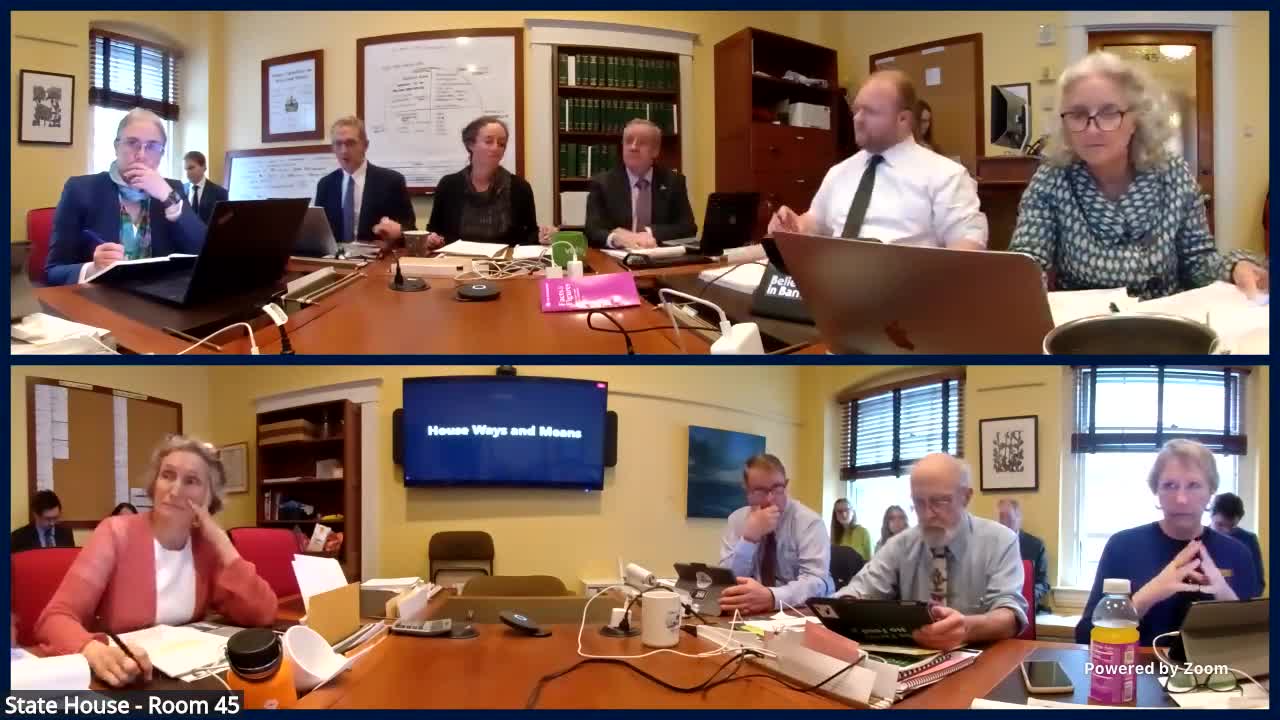
A House committee reviewing H.479 continued work on the housing infrastructure provisions known in the discussion as the CHIP program on Friday, May 9, focusing on the bill's purpose language, eligibility definitions and who will set prioritization and location criteria.
Committee members said the CHIP section is intended to "create financing opportunities to help build housing when there is a certain degree of market failure," a staff member summarized during the meeting. Lawmakers differed on how to define that market failure and where public funds should be directed.
The debate centered on several technical but consequential choices: the share of a development that must be housing, the share of housing units that must be affordable, and which site‑preparation activities the program may subsidize. Committee staff noted the bill as drafted treats a development that is 60% housing with 20% of those units affordable as meeting the test; that math means about 12% of the total development would be required to be affordable under that example. Several lawmakers described that outcome as a "light bulb" moment and flagged it as a possible "edge" they might revisit.
Members also pressed whether public money may pay for land acquisition, demolition, brownfield remediation or flood mitigation tied to a development. Some expressed concern that buying and preparing privately held parcels could generate private gain; others said remediation or demolition can be a public benefit if it enables housing where none otherwise would be built. The committee noted that rulemaking and prioritization criteria in the bill will narrow what ultimately qualifies.
Committee counsel John Gray explained how the bill treats affordability covenants and duration, saying the statute the draft points to allows different durational approaches and that removing an affordability covenant would generally require the consent of all parties to the covenant. Staff and a participant identified as Chris said consent‑based termination of covenants is possible but ‘‘very, very, very rare."
Members also debated program governance and roles. The draft assigns program administration and some eligibility checks to the agency spoken of in the hearing (referred to in the transcript as "Pepsi"/"Vepsi"), while locating geographic or location‑criteria expertise on a CHIP board. Several members said they expect the board to provide location expertise and prioritization guidance while the administering agency will handle application logistics.
Lawmakers discussed a three‑tier location approach in the draft: immediate areas (tier 1a/1b), a broader tier 2 and interim exemptions such as a half‑mile rule. Because the tier 2 designations are not yet mapped, the committee considered making tier 2 contingently effective and discussed a proposed effective date in the draft of Jan. 1, 2028 for tier 2 elements. Committee members asked staff to consider a swap mechanism (interim rules replaced when tier 2 designations are ready) so that projects would not be blocked while mapping and rulemaking are completed.
On implementation timelines, the committee noted the program itself is scheduled to begin on July 1 ("July 1 this year," as stated in the meeting), while some location or expansion criteria would phase in later. Members and staff repeatedly pointed to rulemaking and prioritization criteria as the vehicle to resolve many discretionary questions left in the statutory text.
A minority of members pushed back on the bill's overall approach. One lawmaker objected to using a bond bank mechanism in the bill, calling it "a very costly and ... less transparent way" to distribute grants and said a simpler direct grant approach would get more resources to practitioners.
The committee paused work to reconvene after lunch and scheduled a short follow‑up for Tuesday at 9 a.m. for final line edits and a vote on outstanding items.
Committee members said the CHIP section is intended to "create financing opportunities to help build housing when there is a certain degree of market failure," a staff member summarized during the meeting. Lawmakers differed on how to define that market failure and where public funds should be directed.
The debate centered on several technical but consequential choices: the share of a development that must be housing, the share of housing units that must be affordable, and which site‑preparation activities the program may subsidize. Committee staff noted the bill as drafted treats a development that is 60% housing with 20% of those units affordable as meeting the test; that math means about 12% of the total development would be required to be affordable under that example. Several lawmakers described that outcome as a "light bulb" moment and flagged it as a possible "edge" they might revisit.
Members also pressed whether public money may pay for land acquisition, demolition, brownfield remediation or flood mitigation tied to a development. Some expressed concern that buying and preparing privately held parcels could generate private gain; others said remediation or demolition can be a public benefit if it enables housing where none otherwise would be built. The committee noted that rulemaking and prioritization criteria in the bill will narrow what ultimately qualifies.
Committee counsel John Gray explained how the bill treats affordability covenants and duration, saying the statute the draft points to allows different durational approaches and that removing an affordability covenant would generally require the consent of all parties to the covenant. Staff and a participant identified as Chris said consent‑based termination of covenants is possible but ‘‘very, very, very rare."
Members also debated program governance and roles. The draft assigns program administration and some eligibility checks to the agency spoken of in the hearing (referred to in the transcript as "Pepsi"/"Vepsi"), while locating geographic or location‑criteria expertise on a CHIP board. Several members said they expect the board to provide location expertise and prioritization guidance while the administering agency will handle application logistics.
Lawmakers discussed a three‑tier location approach in the draft: immediate areas (tier 1a/1b), a broader tier 2 and interim exemptions such as a half‑mile rule. Because the tier 2 designations are not yet mapped, the committee considered making tier 2 contingently effective and discussed a proposed effective date in the draft of Jan. 1, 2028 for tier 2 elements. Committee members asked staff to consider a swap mechanism (interim rules replaced when tier 2 designations are ready) so that projects would not be blocked while mapping and rulemaking are completed.
On implementation timelines, the committee noted the program itself is scheduled to begin on July 1 ("July 1 this year," as stated in the meeting), while some location or expansion criteria would phase in later. Members and staff repeatedly pointed to rulemaking and prioritization criteria as the vehicle to resolve many discretionary questions left in the statutory text.
A minority of members pushed back on the bill's overall approach. One lawmaker objected to using a bond bank mechanism in the bill, calling it "a very costly and ... less transparent way" to distribute grants and said a simpler direct grant approach would get more resources to practitioners.
The committee paused work to reconvene after lunch and scheduled a short follow‑up for Tuesday at 9 a.m. for final line edits and a vote on outstanding items.
View the Full Meeting & All Its Details
This article offers just a summary. Unlock complete video, transcripts, and insights as a Founder Member.
✓
Watch full, unedited meeting videos
✓
Search every word spoken in unlimited transcripts
✓
AI summaries & real-time alerts (all government levels)
✓
Permanent access to expanding government content
30-day money-back guarantee
