Building department reports slower permit revenue; officials outline how impact fees are collected and limited
May 09, 2025 | High Springs, Alachua County, Florida
This article was created by AI summarizing key points discussed. AI makes mistakes, so for full details and context, please refer to the video of the full meeting. Please report any errors so we can fix them. Report an error »
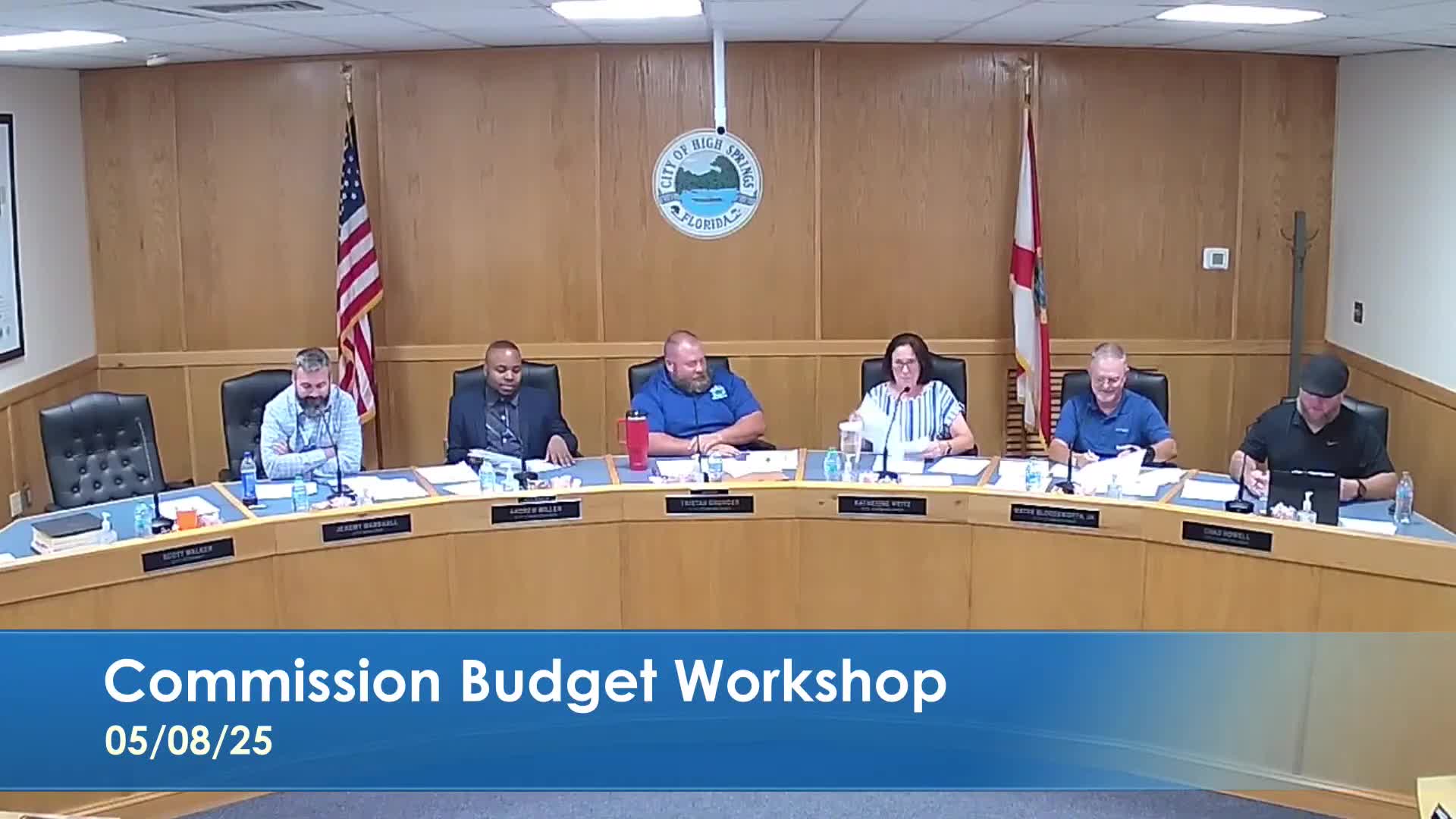
At a budget workshop, Alan Alligood, who introduced himself as the city’s building department representative, reported that permit revenue has slowed this fiscal year and that the department’s reserves could cover operations for a limited period if the trend continues.
The discussion matters because impact fees and permit revenues fund infrastructure and capital projects; restrictions on how those revenues may be used influence future budget and capital decisions.
Alligood outlined revenue sources in the building department, including building permits, surcharges, reinspection and reinstatement fees; he said reinspection fees declined after a local project finished. He described the department’s personnel budget and a contracted inspector who performs Monday and Thursday inspections. “We do have enough reserve though to cover us for maybe 2 to 3 years if it stays at the pace we’re at,” Alligood said about current reserves.
Commissioners asked about impact fees and how they are applied. Alligood and other staff said the city collects impact fees at the point of permit and records them to separate line items and bank accounts with restrictions on use. “They have a lot of restrictions on them,” a staff member said; the transcript includes discussion that transportation, parks and water/wastewater impact fees are kept in separate funds and are not generally available for routine operations or maintenance.
Officials compared local fees to neighboring jurisdictions. One commissioner reported a Newberry builder told him that Newberry’s impact fees approached $22,000 for a permit, while the same project in High Springs would be about $11,000 under current fees; Alligood agreed that High Springs’ fees are on the lower end in the county. The building office also referenced specific impact‑fee figures during the meeting: Alligood stated, “And I believe sewer is $21.20 and water is $2.50,” and staff noted a commercial transportation figure of “$23.47” per 1,000 square feet; a retail commercial fee was read aloud in the meeting as approximately “$45.22 per thousand square feet” (figures quoted verbatim from the meeting).
Officials said impact fees have strict eligibility rules tied to the original source area and project type; staff suggested the commission schedule a future agenda item with documentation to review allowable uses before authorizing any reallocation. Alligood said the city recently added a driveway permit fee collected through the building office and that some water/wastewater impact fees are “super duper low” and may need to be increased.
Commissioners discussed whether to reevaluate fee levels and compared High Springs with surrounding jurisdictions; Alligood and staff said they will provide documentation and specific account balances for future discussion so the commission can consider policy changes.
No formal motions or votes were taken on impact fees or fee schedules during the workshop.
The discussion matters because impact fees and permit revenues fund infrastructure and capital projects; restrictions on how those revenues may be used influence future budget and capital decisions.
Alligood outlined revenue sources in the building department, including building permits, surcharges, reinspection and reinstatement fees; he said reinspection fees declined after a local project finished. He described the department’s personnel budget and a contracted inspector who performs Monday and Thursday inspections. “We do have enough reserve though to cover us for maybe 2 to 3 years if it stays at the pace we’re at,” Alligood said about current reserves.
Commissioners asked about impact fees and how they are applied. Alligood and other staff said the city collects impact fees at the point of permit and records them to separate line items and bank accounts with restrictions on use. “They have a lot of restrictions on them,” a staff member said; the transcript includes discussion that transportation, parks and water/wastewater impact fees are kept in separate funds and are not generally available for routine operations or maintenance.
Officials compared local fees to neighboring jurisdictions. One commissioner reported a Newberry builder told him that Newberry’s impact fees approached $22,000 for a permit, while the same project in High Springs would be about $11,000 under current fees; Alligood agreed that High Springs’ fees are on the lower end in the county. The building office also referenced specific impact‑fee figures during the meeting: Alligood stated, “And I believe sewer is $21.20 and water is $2.50,” and staff noted a commercial transportation figure of “$23.47” per 1,000 square feet; a retail commercial fee was read aloud in the meeting as approximately “$45.22 per thousand square feet” (figures quoted verbatim from the meeting).
Officials said impact fees have strict eligibility rules tied to the original source area and project type; staff suggested the commission schedule a future agenda item with documentation to review allowable uses before authorizing any reallocation. Alligood said the city recently added a driveway permit fee collected through the building office and that some water/wastewater impact fees are “super duper low” and may need to be increased.
Commissioners discussed whether to reevaluate fee levels and compared High Springs with surrounding jurisdictions; Alligood and staff said they will provide documentation and specific account balances for future discussion so the commission can consider policy changes.
No formal motions or votes were taken on impact fees or fee schedules during the workshop.
Don't Miss a Word: See the Full Meeting!
Go beyond summaries. Unlock every video, transcript, and key insight with a Founder Membership.
✓
Get instant access to full meeting videos
✓
Search and clip any phrase from complete transcripts
✓
Receive AI-powered summaries & custom alerts
✓
Enjoy lifetime, unrestricted access to government data
30-day money-back guarantee
