Office of Racial Equity, advocates oppose mandatory domestic-violence-program penalties in testimony on House bill
May 09, 2025 | Judiciary, SENATE, Committees, Legislative , Vermont
This article was created by AI summarizing key points discussed. AI makes mistakes, so for full details and context, please refer to the video of the full meeting. Please report any errors so we can fix them. Report an error »
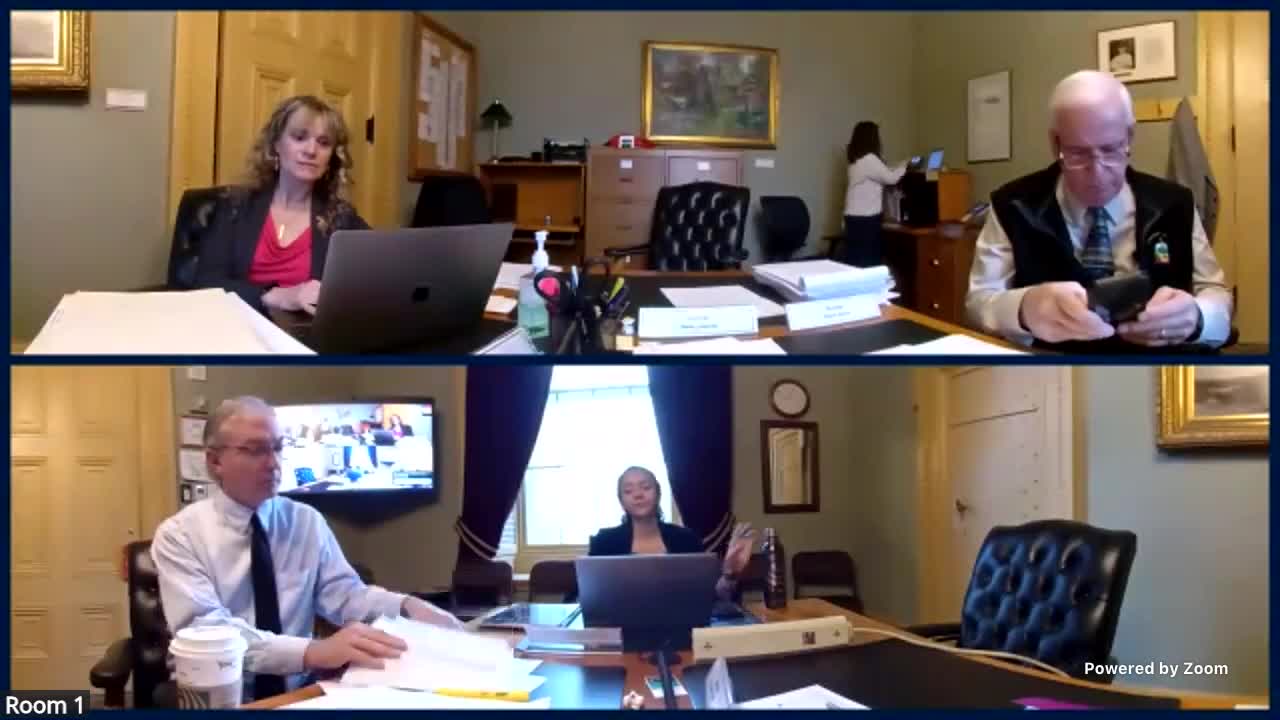
Members of the Vermont Senate Judiciary Committee heard testimony on a House bill that would change how courts handle orders of protection and require attendance at domestic-violence accountability programs.
The Office of Racial Equity testified that it opposes a provision in the bill (referred to repeatedly in testimony as "section J") that would permit judges to order mandatory attendance and create civil contempt or criminal penalties for failure to comply. Anhega, a representative of the Office of Racial Equity, said the topic is personal: "this conversation is very important to us as an artist, but to me as a person because I am a domestic violence survivor." The office said it supported the bill's updated definitions and gender-neutral language but asked the committee to remove the section that makes program attendance mandatory and criminalizes noncompliance.
The nut graf: Witnesses told the committee that mandatory attendance and criminal penalties could create enforcement and safety problems for survivors, increase caseloads for already-burdened prosecutors, and produce unintended consequences for plaintiffs and respondents in family- and criminal-court cases. Several presenters urged that the state first gather evidence about why people do not attend programs and strengthen prevention, trauma-informed responses and coordinated supports before adding penalties.
Office of Racial Equity testimony recounted two main concerns. First, presenters said mandatory attendance could place an enforcement burden on survivors: "That would put the onus on law enforcement or the survivor to report that the person is not doing what they're supposed to be doing with the court," Anthony, a Division of Racial Justice Statistics analyst, testified. He added that overlapping court conditions (for example, a 24-hour curfew ordered in another matter) can conflict with requirements to attend programming.
Second, witnesses warned that converting the currently civil-contempt approach to a criminal charge would expand prosecutors' caseloads and could produce more plea deals that disadvantage plaintiffs. Anthony said: "moving away from it, turning it into a criminal, charge creates more of a caseload for state advocates that are already overburdened with cases." The Office of Racial Equity and a representative said the ACLU of Vermont also does not support criminalization.
Mary McAllister, a domestic violence advocate with the Burlington Police Department, told the committee she supported parts of the bill that would allow plaintiffs to retain vehicles. "She thinks that she supports the bill in that she thinks that multiple plaintiffs who have filed RFA's in the last 6 months have lost access to their vehicles even though they were the ones paying for it," McAllister said, and noted enforcement remains a central concern for advocates.
Witnesses described implementation complexities that could arise if mandatory attendance remains. They noted that not all RFA (relief from abuse) filings are accompanied by criminal charges and that survivors or respondents may be living in the same household despite an RFA being in place. Anthony said that can make it difficult or unsafe for a survivor to report noncompliance.
Testimony also stressed the need to understand structural causes and barriers to program attendance before adding penalties. The Office of Racial Equity asked the committee to invite the Agency of Human Services' director on trauma prevention and resilience, Kaya Ganguly, to advise on trauma-informed approaches. The office recommended strengthening prevention and cross-agency coordination and listening to a broader set of community organizers and advocates before adopting mandatory sanctions.
On firearms, witnesses noted existing practice: "One of the portions of the RFA is the relinquishment of our of firearms, and that happens at the TRO," Anthony testified, and recommended clearer processes to remove and secure firearms at the time a temporary restraining order is granted.
No formal committee vote occurred during the testimony. Witnesses recommended removing the mandatory-attendance provision (referred to in testimony as section J) or, at minimum, not converting nonattendance into a criminal offense until the state addresses enforcement, service access (transportation, childcare, scheduling) and systemic supports.
Committee members asked clarifying questions during the hearing, including whether the office opposed civil contempt alone or also opposed converting contempt to criminal charges. The Office of Racial Equity stated it opposed the civil-contempt enforcement as written and would also oppose criminalization.
The testimony concluded with Office of Racial Equity presenters urging that the Legislature focus on prevention, trauma-informed services and coordination among law enforcement, prosecutors, judges and victim advocates as alternatives to mandatory attendance and expanded criminal penalties.
The Office of Racial Equity testified that it opposes a provision in the bill (referred to repeatedly in testimony as "section J") that would permit judges to order mandatory attendance and create civil contempt or criminal penalties for failure to comply. Anhega, a representative of the Office of Racial Equity, said the topic is personal: "this conversation is very important to us as an artist, but to me as a person because I am a domestic violence survivor." The office said it supported the bill's updated definitions and gender-neutral language but asked the committee to remove the section that makes program attendance mandatory and criminalizes noncompliance.
The nut graf: Witnesses told the committee that mandatory attendance and criminal penalties could create enforcement and safety problems for survivors, increase caseloads for already-burdened prosecutors, and produce unintended consequences for plaintiffs and respondents in family- and criminal-court cases. Several presenters urged that the state first gather evidence about why people do not attend programs and strengthen prevention, trauma-informed responses and coordinated supports before adding penalties.
Office of Racial Equity testimony recounted two main concerns. First, presenters said mandatory attendance could place an enforcement burden on survivors: "That would put the onus on law enforcement or the survivor to report that the person is not doing what they're supposed to be doing with the court," Anthony, a Division of Racial Justice Statistics analyst, testified. He added that overlapping court conditions (for example, a 24-hour curfew ordered in another matter) can conflict with requirements to attend programming.
Second, witnesses warned that converting the currently civil-contempt approach to a criminal charge would expand prosecutors' caseloads and could produce more plea deals that disadvantage plaintiffs. Anthony said: "moving away from it, turning it into a criminal, charge creates more of a caseload for state advocates that are already overburdened with cases." The Office of Racial Equity and a representative said the ACLU of Vermont also does not support criminalization.
Mary McAllister, a domestic violence advocate with the Burlington Police Department, told the committee she supported parts of the bill that would allow plaintiffs to retain vehicles. "She thinks that she supports the bill in that she thinks that multiple plaintiffs who have filed RFA's in the last 6 months have lost access to their vehicles even though they were the ones paying for it," McAllister said, and noted enforcement remains a central concern for advocates.
Witnesses described implementation complexities that could arise if mandatory attendance remains. They noted that not all RFA (relief from abuse) filings are accompanied by criminal charges and that survivors or respondents may be living in the same household despite an RFA being in place. Anthony said that can make it difficult or unsafe for a survivor to report noncompliance.
Testimony also stressed the need to understand structural causes and barriers to program attendance before adding penalties. The Office of Racial Equity asked the committee to invite the Agency of Human Services' director on trauma prevention and resilience, Kaya Ganguly, to advise on trauma-informed approaches. The office recommended strengthening prevention and cross-agency coordination and listening to a broader set of community organizers and advocates before adopting mandatory sanctions.
On firearms, witnesses noted existing practice: "One of the portions of the RFA is the relinquishment of our of firearms, and that happens at the TRO," Anthony testified, and recommended clearer processes to remove and secure firearms at the time a temporary restraining order is granted.
No formal committee vote occurred during the testimony. Witnesses recommended removing the mandatory-attendance provision (referred to in testimony as section J) or, at minimum, not converting nonattendance into a criminal offense until the state addresses enforcement, service access (transportation, childcare, scheduling) and systemic supports.
Committee members asked clarifying questions during the hearing, including whether the office opposed civil contempt alone or also opposed converting contempt to criminal charges. The Office of Racial Equity stated it opposed the civil-contempt enforcement as written and would also oppose criminalization.
The testimony concluded with Office of Racial Equity presenters urging that the Legislature focus on prevention, trauma-informed services and coordination among law enforcement, prosecutors, judges and victim advocates as alternatives to mandatory attendance and expanded criminal penalties.
View the Full Meeting & All Its Details
This article offers just a summary. Unlock complete video, transcripts, and insights as a Founder Member.
✓
Watch full, unedited meeting videos
✓
Search every word spoken in unlimited transcripts
✓
AI summaries & real-time alerts (all government levels)
✓
Permanent access to expanding government content
30-day money-back guarantee
