District 57 financial adviser outlines $35 million referendum plan and $6 million non‑referendum option
May 16, 2025 | New Trier Twp HSD 203, School Boards, Illinois
This article was created by AI summarizing key points discussed. AI makes mistakes, so for full details and context, please refer to the video of the full meeting. Please report any errors so we can fix them. Report an error »
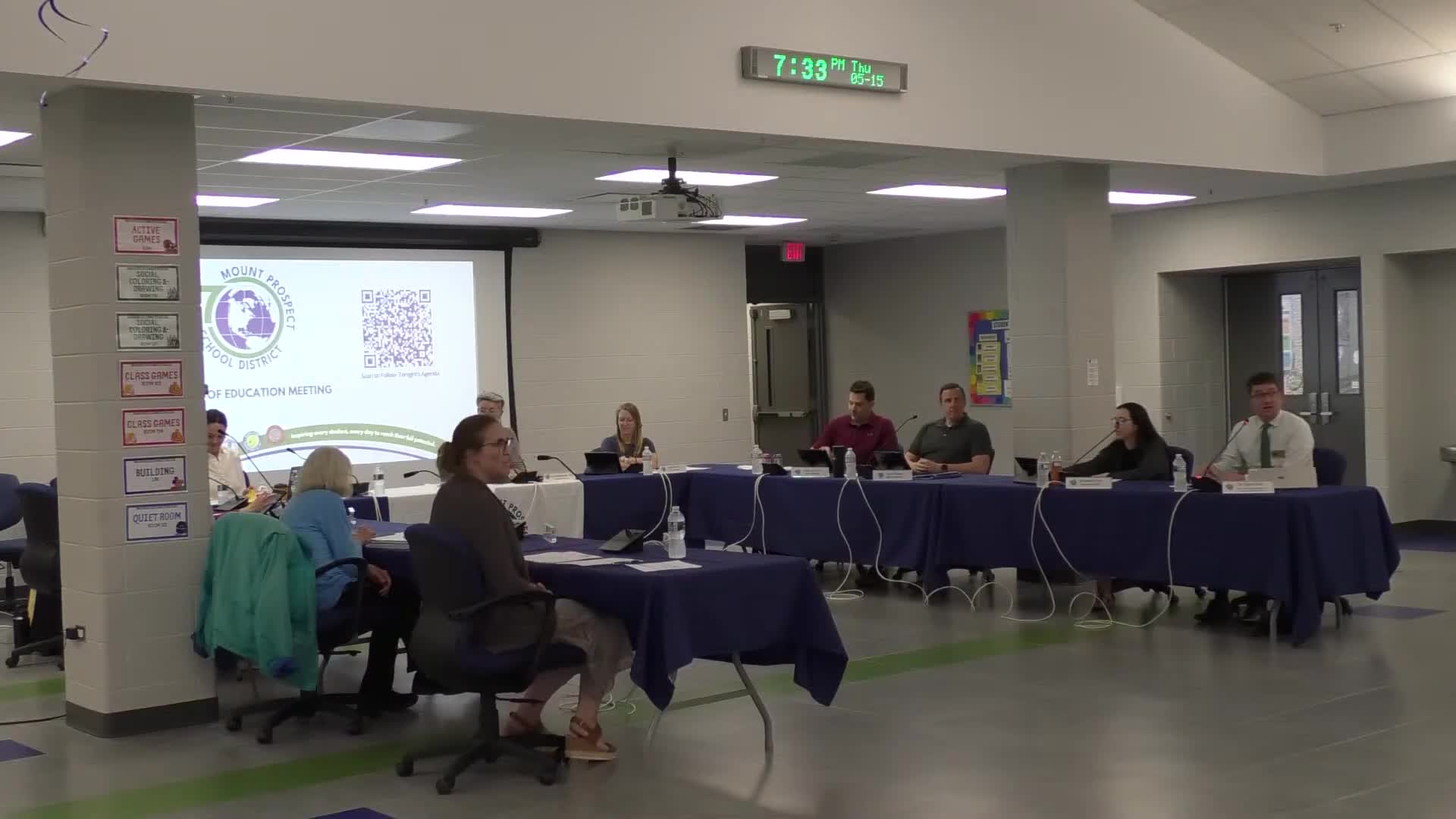
Bob Lewis, financial adviser from PMA, told the Mount Prospect District 57 Board of Education that the district is planning two separate financings tied to its school construction program: a referendum bond sale of up to $35 million and a non‑referendum reissuance capped at $6 million.
The adviser described the $6 million as “the amount that can be issued in on a non referendum basis without increasing the bond levy on the non referendum debt,” and explained that issuing the non‑referendum authority now clears required public proceedings so the district can sell later without raising the levy if it chooses. He added, “I've been doing this for over 28 years now,” to explain how often a petition requires converting a non‑referendum sale into a referendum.
Why it matters: If the board approves the parameters resolution the week of June 18 the district could move forward with a referendum sale as early as June 23 and close in mid‑July, locking in interest rates on a large portion of the authorized borrowing. Lewis said selling sooner can reduce exposure to later market volatility but that delegates (administrators and board officers) would have discretion to delay if market conditions turned unfavorable.
Most of Lewis’s presentation reviewed the district’s mix of funding sources for capital work, the timing of planned draws, and how federal and municipal market moves could affect interest costs. He said the administration adjusted the planned next financing from $28 million to $35 million after reviewing the draw schedule and exemptions that can allow the district to retain positive arbitrage if it occurs. Lewis described the market shock in April when municipal yields rose quickly and urged prudence: selling into a volatile market can produce poor outcomes because bidders may be limited on a bad day.
Board members pressed him on macroeconomic risk. Board member Pam asked whether global investor behavior has stabilized; Lewis said conditions had “stabilized” compared with the April volatility but noted treasury yields and muni spreads remain sensitive to economic data and international developments. Other trustees stressed flexibility: they asked for the transaction spreadsheets and about the legal “spend‑down” tests that determine whether the district can keep investment earnings (arbitrage exceptions). Lewis explained the tests and that “spend‑down” refers to actually spending proceeds (paying invoices), not just issuing purchase orders.
What the board will do next: Lewis and staff recommended three near‑term actions for the June 18 meeting: 1) adopt a parameters resolution authorizing a referendum bond sale not to exceed $35,000,000; 2) adopt a notice of intent and related proceedings authorizing up to $6,000,000 in non‑referendum working cash bonds (which triggers a 30‑day petition period); and 3) delegate the final sale timing to the authorized officials so sales can be delayed if market conditions are unfavorable. No formal board vote on bond issuance occurred at the May meeting.
The district will return to the board on the June 18 agenda for the parameters resolution and the non‑referendum proceedings; if the petition period ends without sufficient signatures the district may reissue the $6 million authority without a referendum and would have three years in which to sell it.
Details and timeline: Lewis outlined a calendar that anticipates a referendum sale date in late June with a July closing to provide funds for construction draws. He emphasized that the district can sell less than the authorized amount if cash needs or project pacing change, and that keeping flexibility is a deliberate part of the plan.
Sources: Presentation by Bob Lewis, PMA (financial adviser); board questions and discussion during the May 20 District 57 board meeting. Ending note: Administration recommended the board consider the parameters and notice actions on June 18 and to delegate sale timing to staff and designated officers to protect taxpayers from poor market timing.
The adviser described the $6 million as “the amount that can be issued in on a non referendum basis without increasing the bond levy on the non referendum debt,” and explained that issuing the non‑referendum authority now clears required public proceedings so the district can sell later without raising the levy if it chooses. He added, “I've been doing this for over 28 years now,” to explain how often a petition requires converting a non‑referendum sale into a referendum.
Why it matters: If the board approves the parameters resolution the week of June 18 the district could move forward with a referendum sale as early as June 23 and close in mid‑July, locking in interest rates on a large portion of the authorized borrowing. Lewis said selling sooner can reduce exposure to later market volatility but that delegates (administrators and board officers) would have discretion to delay if market conditions turned unfavorable.
Most of Lewis’s presentation reviewed the district’s mix of funding sources for capital work, the timing of planned draws, and how federal and municipal market moves could affect interest costs. He said the administration adjusted the planned next financing from $28 million to $35 million after reviewing the draw schedule and exemptions that can allow the district to retain positive arbitrage if it occurs. Lewis described the market shock in April when municipal yields rose quickly and urged prudence: selling into a volatile market can produce poor outcomes because bidders may be limited on a bad day.
Board members pressed him on macroeconomic risk. Board member Pam asked whether global investor behavior has stabilized; Lewis said conditions had “stabilized” compared with the April volatility but noted treasury yields and muni spreads remain sensitive to economic data and international developments. Other trustees stressed flexibility: they asked for the transaction spreadsheets and about the legal “spend‑down” tests that determine whether the district can keep investment earnings (arbitrage exceptions). Lewis explained the tests and that “spend‑down” refers to actually spending proceeds (paying invoices), not just issuing purchase orders.
What the board will do next: Lewis and staff recommended three near‑term actions for the June 18 meeting: 1) adopt a parameters resolution authorizing a referendum bond sale not to exceed $35,000,000; 2) adopt a notice of intent and related proceedings authorizing up to $6,000,000 in non‑referendum working cash bonds (which triggers a 30‑day petition period); and 3) delegate the final sale timing to the authorized officials so sales can be delayed if market conditions are unfavorable. No formal board vote on bond issuance occurred at the May meeting.
The district will return to the board on the June 18 agenda for the parameters resolution and the non‑referendum proceedings; if the petition period ends without sufficient signatures the district may reissue the $6 million authority without a referendum and would have three years in which to sell it.
Details and timeline: Lewis outlined a calendar that anticipates a referendum sale date in late June with a July closing to provide funds for construction draws. He emphasized that the district can sell less than the authorized amount if cash needs or project pacing change, and that keeping flexibility is a deliberate part of the plan.
Sources: Presentation by Bob Lewis, PMA (financial adviser); board questions and discussion during the May 20 District 57 board meeting. Ending note: Administration recommended the board consider the parameters and notice actions on June 18 and to delegate sale timing to staff and designated officers to protect taxpayers from poor market timing.
Don't Miss a Word: See the Full Meeting!
Go beyond summaries. Unlock every video, transcript, and key insight with a Founder Membership.
✓
Get instant access to full meeting videos
✓
Search and clip any phrase from complete transcripts
✓
Receive AI-powered summaries & custom alerts
✓
Enjoy lifetime, unrestricted access to government data
30-day money-back guarantee
