Advisory Committee Gets Detailed Rights-of-Way Review; Directs Staff to Identify Three Priority Trail Segments
May 16, 2025 | Town of Loxahatchee Groves, Palm Beach County, Florida
This article was created by AI summarizing key points discussed. AI makes mistakes, so for full details and context, please refer to the video of the full meeting. Please report any errors so we can fix them. Report an error »
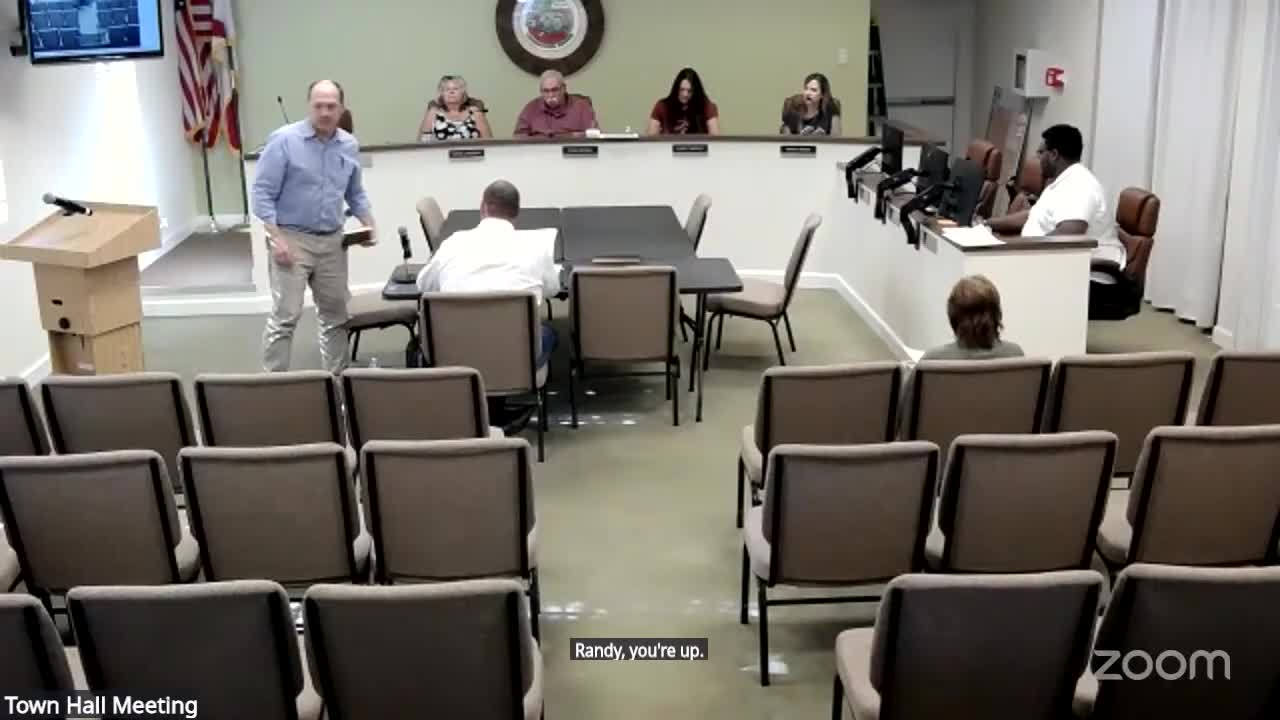
Consultants and town staff presented a multi-layered review of the town’s platted rights-of-way, recorded easements and typical trail cross-sections and told the Roadway, Trails and Greenway Advisory Committee where equestrian or multiuse trails are most feasible and where legal or physical constraints exist.
Danny (Kesher and Associates) began with an overview of historic plats and rights-of-way: “you have 60 foot wide rights of way that contain canal and roads,” he said, noting that the town also holds some additional roadway or maintenance easements in places. Consultants explained the difference between platted right-of-way, canal top‑of‑bank measurements and separate canal-maintenance easements, and said some maintenance easements were recorded to the water control district rather than directly to the town.
The consultants and staff walked the committee through example cross-sections and options used elsewhere (Village of Wellington standards) — from buffered trails on the west side of canals to curb-and-gutter sections that use less lateral space. One succinct summary from staff: “An equestrian trail is not a canal maintenance activity,” and the meaning of that language may limit permitted uses in some canal-maintenance easements; the town attorney would need to advise on specific dedications.
Presenters provided measured constraints: south of Okeechobee Boulevard the typical distance from the right-of-way line to the canal top-of-bank averaged 8–9 feet in many places, while other routes showed as little as four feet of usable space. Consultants warned that where the canal top-of-bank takes up nearly 50 feet and the road and required drainage occupy another 26 feet, the remaining space for a stabilized equestrian surface can be very limited without additional easements or infrastructure changes.
Committee members discussed practical mitigations: removing unauthorized gates on town right-of-way, installing low-profile horse gates that let riders pass but block ATVs, fencing and liability concerns, and using millings or stabilized lime-rock blends for trail surface. Members also encouraged bilingual signage and driver-focused education as complementary measures.
On a motion recorded without individual aye/nay names, the committee voted 4–0 to have staff identify three trail segments that could be advanced with the least time, effort and cost (“low-hanging fruit”) and return a prioritized recommendation and budget estimates at a future meeting. No land acquisitions were approved; the vote directs staff work and does not alter property rights.
Committee members also agreed to submit sign and maintenance priorities for inclusion in the town budget and to return with suggested priority items — including grant status updates — at the next meeting (scheduled by staff for June 19).
Danny (Kesher and Associates) began with an overview of historic plats and rights-of-way: “you have 60 foot wide rights of way that contain canal and roads,” he said, noting that the town also holds some additional roadway or maintenance easements in places. Consultants explained the difference between platted right-of-way, canal top‑of‑bank measurements and separate canal-maintenance easements, and said some maintenance easements were recorded to the water control district rather than directly to the town.
The consultants and staff walked the committee through example cross-sections and options used elsewhere (Village of Wellington standards) — from buffered trails on the west side of canals to curb-and-gutter sections that use less lateral space. One succinct summary from staff: “An equestrian trail is not a canal maintenance activity,” and the meaning of that language may limit permitted uses in some canal-maintenance easements; the town attorney would need to advise on specific dedications.
Presenters provided measured constraints: south of Okeechobee Boulevard the typical distance from the right-of-way line to the canal top-of-bank averaged 8–9 feet in many places, while other routes showed as little as four feet of usable space. Consultants warned that where the canal top-of-bank takes up nearly 50 feet and the road and required drainage occupy another 26 feet, the remaining space for a stabilized equestrian surface can be very limited without additional easements or infrastructure changes.
Committee members discussed practical mitigations: removing unauthorized gates on town right-of-way, installing low-profile horse gates that let riders pass but block ATVs, fencing and liability concerns, and using millings or stabilized lime-rock blends for trail surface. Members also encouraged bilingual signage and driver-focused education as complementary measures.
On a motion recorded without individual aye/nay names, the committee voted 4–0 to have staff identify three trail segments that could be advanced with the least time, effort and cost (“low-hanging fruit”) and return a prioritized recommendation and budget estimates at a future meeting. No land acquisitions were approved; the vote directs staff work and does not alter property rights.
Committee members also agreed to submit sign and maintenance priorities for inclusion in the town budget and to return with suggested priority items — including grant status updates — at the next meeting (scheduled by staff for June 19).
View the Full Meeting & All Its Details
This article offers just a summary. Unlock complete video, transcripts, and insights as a Founder Member.
✓
Watch full, unedited meeting videos
✓
Search every word spoken in unlimited transcripts
✓
AI summaries & real-time alerts (all government levels)
✓
Permanent access to expanding government content
30-day money-back guarantee
