Kenosha School District leaders outline $4.4 million in recommended reductions, propose staffing changes
May 16, 2025 | Kenosha School District, School Districts, Wisconsin
This article was created by AI summarizing key points discussed. AI makes mistakes, so for full details and context, please refer to the video of the full meeting. Please report any errors so we can fix them. Report an error »
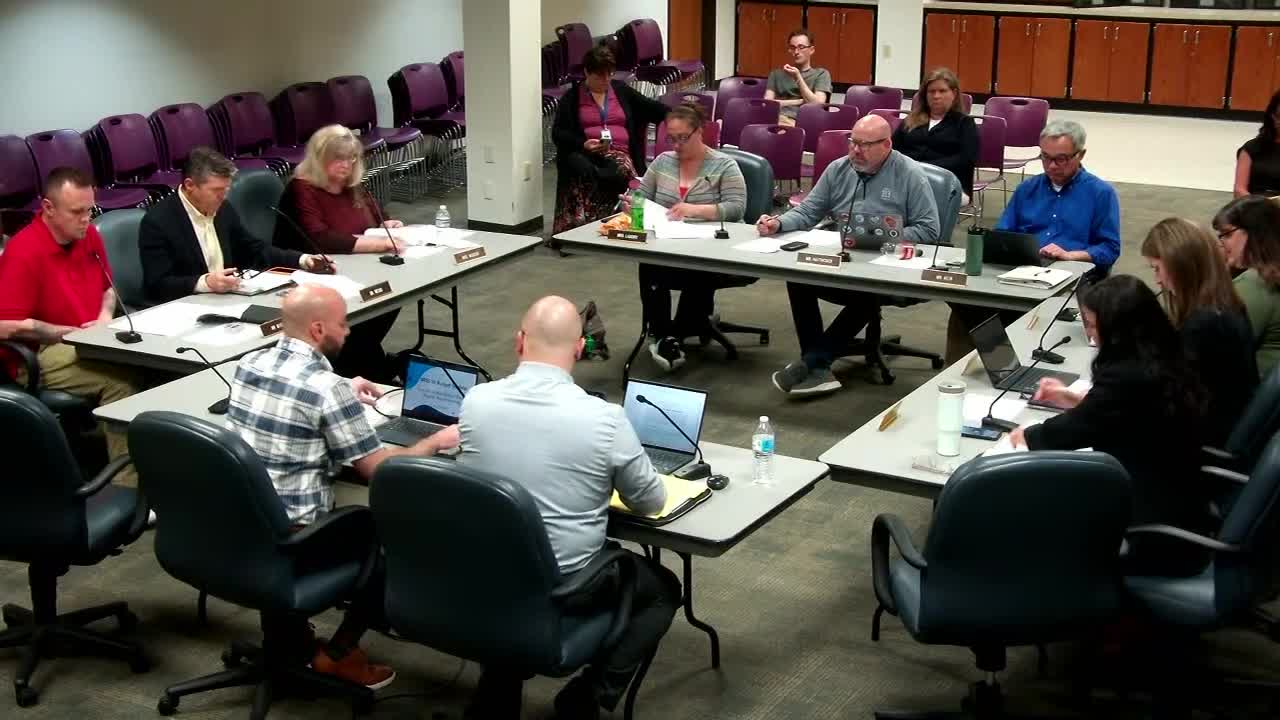
Kenosha School District officials on the board agenda Tuesday presented a plan of recommended reductions intended to address a $4,400,000 shortfall in next year’s budget, including proposed staffing adjustments and program cuts.
The recommendations matter because the district faces declining enrollment and uncertain state funding: presenters said projected enrollment is down by more than 500 students and that state budget action remains unresolved, both of which affect the revenue picture.
At the meeting, Dr. Weiss (presenter) introduced the budget recap and turned the detailed presentation over to Mr. Hamden, who described the district’s three budget categories — long-term holds, short-term holds, and recommended reductions — and the leadership team’s draft reductions. “The purpose of today's update is to address that $4,400,000 reduction,” Hamden said. He said the district still expects roughly a $3.5 million increase in revenues but cautioned the state budget was not yet final.
District staff described specific staffing changes the leadership team has drafted after reconciling school staffing with lower enrollment. Hamden said conversion of a charter into Lakeview K–8 yielded staffing efficiencies and a realized reduction of 13 teaching FTE at that site; middle schools showed a net reduction of 3.66 FTE and high schools a net reduction of 17.84 FTE. He told the board the elementary staffing approach intentionally avoided split or multi-age classes in K–3, so elementary staffing showed no net cuts in the draft.
Hamden detailed other targets for reduction: trimming the recognition committee budget by $45,000, eliminating district-supported funding for the Thespian Festival, reducing athletics equipment spending roughly 30% (about $12,000), and replacing an administrative instructional-technology position with a teacher-consultant. He also described case-driven additions, such as an additional special education teacher and related ESP positions tied to caseloads.
Board member Carl followed with questions about whether the staffing reductions involved layoffs. A human-resources staff member explained a reduction-in-force procedure had been used; the HR speaker said almost all affected teachers were reassigned into other vacancies and “all but one” secured a position elsewhere. The HR speaker added that AST (administrative support team) positions targeted in the draft would be managed through attrition as vacancies occur.
The presentation included proposed user-fee adjustments and program changes intended to reduce costs or shift them to families. Hamden said the fine-arts office recommended increasing middle- and high-school instrument rental from $50 to $100 to better cover repairs and maintenance; he also recommended limiting district-paid solo-and-ensemble fees to three events per student, with families covering additional entries. Hamden said those revenue changes would be recycled into fine-arts maintenance rather than increasing net district revenue.
Hamden said the recommendations remain under review and are driven by enrollment and the still-fluid state funding environment; he repeatedly framed the items as draft recommendations rather than board actions. No formal vote on the budget reductions occurred during the presentation.
Board members asked follow-up questions about timelines and next steps; staff said further refinements and confirmations will follow as enrollment data finalizes and contracts or negotiations (including bargaining-unit salary discussions) proceed.
The board will consider formal budget actions in subsequent meetings as staff returns with final proposals and any necessary motions for approval.
Ending: District leaders said they will continue to refine the reduction schedule and bring formal recommendations back to the board for potential action once negotiations, enrollment counts and state funding clarity are available.
The recommendations matter because the district faces declining enrollment and uncertain state funding: presenters said projected enrollment is down by more than 500 students and that state budget action remains unresolved, both of which affect the revenue picture.
At the meeting, Dr. Weiss (presenter) introduced the budget recap and turned the detailed presentation over to Mr. Hamden, who described the district’s three budget categories — long-term holds, short-term holds, and recommended reductions — and the leadership team’s draft reductions. “The purpose of today's update is to address that $4,400,000 reduction,” Hamden said. He said the district still expects roughly a $3.5 million increase in revenues but cautioned the state budget was not yet final.
District staff described specific staffing changes the leadership team has drafted after reconciling school staffing with lower enrollment. Hamden said conversion of a charter into Lakeview K–8 yielded staffing efficiencies and a realized reduction of 13 teaching FTE at that site; middle schools showed a net reduction of 3.66 FTE and high schools a net reduction of 17.84 FTE. He told the board the elementary staffing approach intentionally avoided split or multi-age classes in K–3, so elementary staffing showed no net cuts in the draft.
Hamden detailed other targets for reduction: trimming the recognition committee budget by $45,000, eliminating district-supported funding for the Thespian Festival, reducing athletics equipment spending roughly 30% (about $12,000), and replacing an administrative instructional-technology position with a teacher-consultant. He also described case-driven additions, such as an additional special education teacher and related ESP positions tied to caseloads.
Board member Carl followed with questions about whether the staffing reductions involved layoffs. A human-resources staff member explained a reduction-in-force procedure had been used; the HR speaker said almost all affected teachers were reassigned into other vacancies and “all but one” secured a position elsewhere. The HR speaker added that AST (administrative support team) positions targeted in the draft would be managed through attrition as vacancies occur.
The presentation included proposed user-fee adjustments and program changes intended to reduce costs or shift them to families. Hamden said the fine-arts office recommended increasing middle- and high-school instrument rental from $50 to $100 to better cover repairs and maintenance; he also recommended limiting district-paid solo-and-ensemble fees to three events per student, with families covering additional entries. Hamden said those revenue changes would be recycled into fine-arts maintenance rather than increasing net district revenue.
Hamden said the recommendations remain under review and are driven by enrollment and the still-fluid state funding environment; he repeatedly framed the items as draft recommendations rather than board actions. No formal vote on the budget reductions occurred during the presentation.
Board members asked follow-up questions about timelines and next steps; staff said further refinements and confirmations will follow as enrollment data finalizes and contracts or negotiations (including bargaining-unit salary discussions) proceed.
The board will consider formal budget actions in subsequent meetings as staff returns with final proposals and any necessary motions for approval.
Ending: District leaders said they will continue to refine the reduction schedule and bring formal recommendations back to the board for potential action once negotiations, enrollment counts and state funding clarity are available.
View the Full Meeting & All Its Details
This article offers just a summary. Unlock complete video, transcripts, and insights as a Founder Member.
✓
Watch full, unedited meeting videos
✓
Search every word spoken in unlimited transcripts
✓
AI summaries & real-time alerts (all government levels)
✓
Permanent access to expanding government content
30-day money-back guarantee
