Kankakee aldermen seek clarity on animal-control contract, fees and budget impact
May 16, 2025 | Kankakee City, Kankakee County, Illinois
This article was created by AI summarizing key points discussed. AI makes mistakes, so for full details and context, please refer to the video of the full meeting. Please report any errors so we can fix them. Report an error »
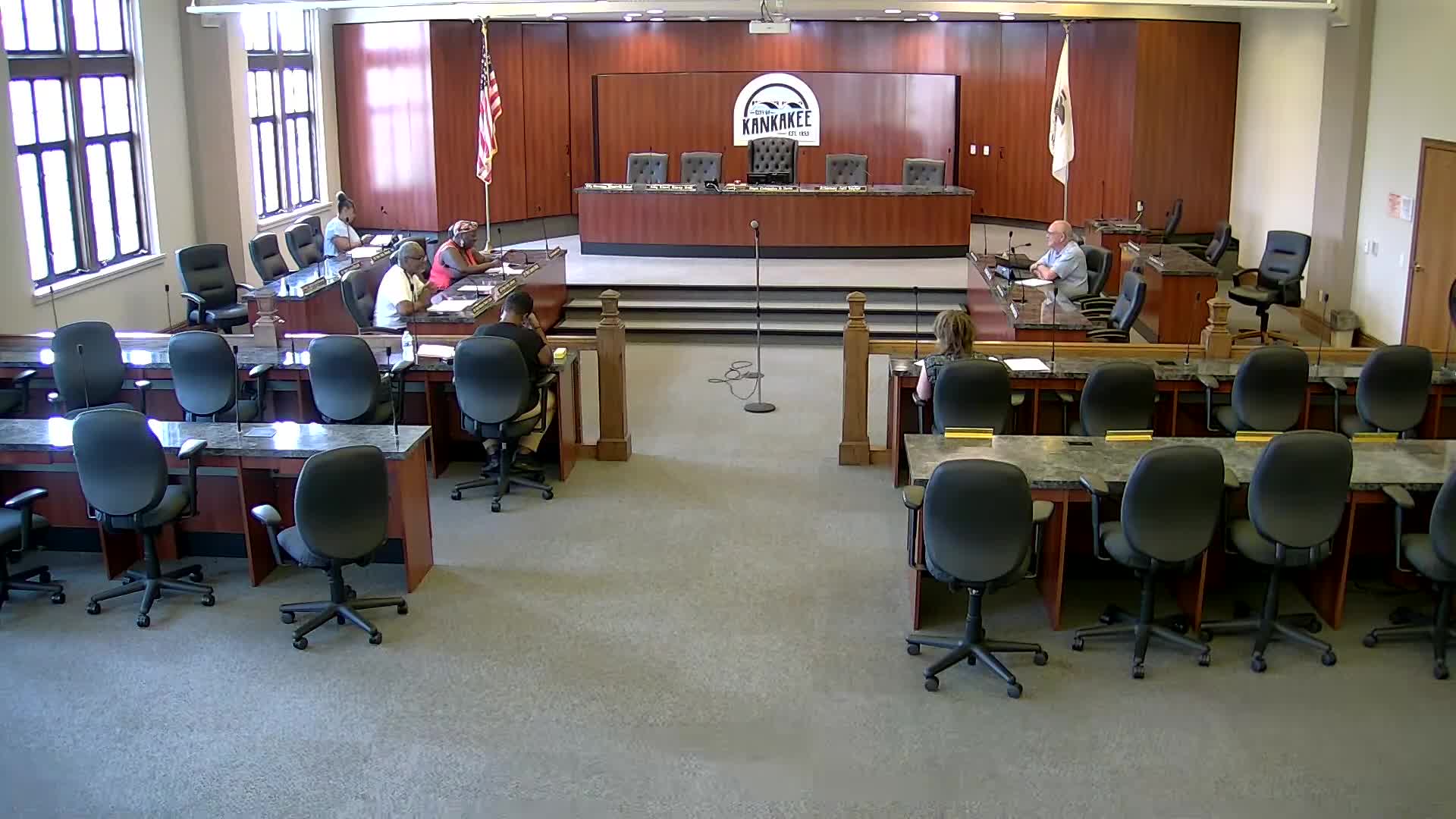
KANKAKEE, Ill. — Members of the Kankakee City Building and Code Committee spent the bulk of their meeting debating whether to enter a $35,000 animal-control contract and how that contract would affect existing per-call fees and the city budget.
The committee discussed a memorandum from Police Chief Kidwell arguing that a contract would provide priority service, reduce the police department’s animal-related calls and bring enforcement expertise. “In contracted areas, residents can contact animal control directly, [which] eliminate[s] the need for police involvement in many animal related calls,” the memo said, attributed in the meeting to Police Chief Kidwell.
The discussion mattered because the budget packet included an additional $10,000 to the animal control line to fund a contract and participants said the city currently spends roughly $20,000–$25,000 annually on animal-control costs without a contract. Committee members pressed staff to show what additional services would come for roughly $10,000 more — and to explain how per-call fees would be billed under a contract.
Director Nelson explained the existing billing structure: the city is typically charged for on-site or transport fees while animal owners are billed separately for facility or holding fees. “We issue a ticket and the ticket is $150,” Nelson said when asked about the penalty for operating without a renter’s license; that figure was cited during the discussion of enforcement practices and fees. Several aldermen said the existing invoices lacked the itemized detail they used to receive and urged staff to obtain line-item bills that show pickup, transport and holding fees.
Committee members repeatedly raised three concerns: (1) whether the contract would replace per-call fees currently charged to the city, (2) how often the city would still be billed in addition to the contract payment, and (3) whether the contract would improve response times and enforcement in practice. One alderman said there was a month in which the city received a $3,300 animal-control bill and called that an outlier; others said monthly totals had previously averaged in the $20,000–$25,000 range.
Participants also discussed practical outcomes the police chief had described: contracted animal control would be a priority responder, relieve patrol officers of many noncriminal animal calls and allow animal-control officers, who have specialized training, to pursue violations and reconnect animals with owners when appropriate.
No motion to approve a contract was taken. Committee members agreed to postpone final action and asked staff to return with clearer contract language and an itemized breakout of recent animal-control charges. The committee plans to readdress the issue at its next meeting with additional staff present to provide budget detail and the contract draft.
The committee’s questions focused on reconciling an annual contract figure with the city’s current per-call billing, and on clarifying when the city would be billed versus when owners would pay direct fees. Staff said they would research the billing practice, provide itemized invoices, and bring the contract and related budget impacts back to the committee.
The committee discussed a memorandum from Police Chief Kidwell arguing that a contract would provide priority service, reduce the police department’s animal-related calls and bring enforcement expertise. “In contracted areas, residents can contact animal control directly, [which] eliminate[s] the need for police involvement in many animal related calls,” the memo said, attributed in the meeting to Police Chief Kidwell.
The discussion mattered because the budget packet included an additional $10,000 to the animal control line to fund a contract and participants said the city currently spends roughly $20,000–$25,000 annually on animal-control costs without a contract. Committee members pressed staff to show what additional services would come for roughly $10,000 more — and to explain how per-call fees would be billed under a contract.
Director Nelson explained the existing billing structure: the city is typically charged for on-site or transport fees while animal owners are billed separately for facility or holding fees. “We issue a ticket and the ticket is $150,” Nelson said when asked about the penalty for operating without a renter’s license; that figure was cited during the discussion of enforcement practices and fees. Several aldermen said the existing invoices lacked the itemized detail they used to receive and urged staff to obtain line-item bills that show pickup, transport and holding fees.
Committee members repeatedly raised three concerns: (1) whether the contract would replace per-call fees currently charged to the city, (2) how often the city would still be billed in addition to the contract payment, and (3) whether the contract would improve response times and enforcement in practice. One alderman said there was a month in which the city received a $3,300 animal-control bill and called that an outlier; others said monthly totals had previously averaged in the $20,000–$25,000 range.
Participants also discussed practical outcomes the police chief had described: contracted animal control would be a priority responder, relieve patrol officers of many noncriminal animal calls and allow animal-control officers, who have specialized training, to pursue violations and reconnect animals with owners when appropriate.
No motion to approve a contract was taken. Committee members agreed to postpone final action and asked staff to return with clearer contract language and an itemized breakout of recent animal-control charges. The committee plans to readdress the issue at its next meeting with additional staff present to provide budget detail and the contract draft.
The committee’s questions focused on reconciling an annual contract figure with the city’s current per-call billing, and on clarifying when the city would be billed versus when owners would pay direct fees. Staff said they would research the billing practice, provide itemized invoices, and bring the contract and related budget impacts back to the committee.
Don't Miss a Word: See the Full Meeting!
Go beyond summaries. Unlock every video, transcript, and key insight with a Founder Membership.
✓
Get instant access to full meeting videos
✓
Search and clip any phrase from complete transcripts
✓
Receive AI-powered summaries & custom alerts
✓
Enjoy lifetime, unrestricted access to government data
30-day money-back guarantee
