Richland County commissioners approve letter to taxing jurisdictions as state law shifts homestead backfill
September 30, 2025 | Richland County, Ohio
This article was created by AI summarizing key points discussed. AI makes mistakes, so for full details and context, please refer to the video of the full meeting. Please report any errors so we can fix them. Report an error »
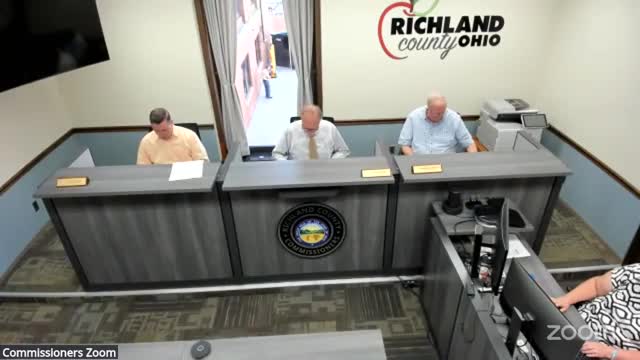
The Richland County Board of Commissioners voted to send a letter to all taxing jurisdictions in the county seeking input on whether to adopt changes the legislature recently authorized to homestead and owner-occupied property tax exemptions.
The question follows state legislation that lets counties extend or double existing homestead and 2.5% owner-occupied exemptions but, according to county staff, removes the state reimbursement that previously backfilled revenue lost to those exemptions. The county plans a public meeting at 10 a.m. Thursday, Oct. 9, to hear affected taxing districts before any local action.
Why it matters: the board and county staff said the change could shift millions of dollars in property-tax revenue away from local governments if the county doubles or extends the exemptions. County estimates presented at the meeting — attributed to the county auditor’s office — include a roughly $6.6 million total revenue loss across taxing jurisdictions under a full doubling scenario and an estimated $3.6 million hit to local schools if both exemptions were doubled. Staff also gave narrower examples: an estimated $900,000 to $1,000,000 loss to Mansfield City Schools and about $650,000 to districts such as Madison and Lexington under the scenarios discussed.
Board members and staff said the letter — drafted by county staffer Andrew and circulated to commissioners for review — is intended to notify all taxing authorities and to collect data before the board decides whether to adopt any local modifications allowed by the state law. Commissioners emphasized they do not yet have a final proposal and that any change would require additional public meetings and follow state notice requirements.
County officials said the state previously backfilled revenue lost to these exemptions but that the newly enacted legislative language indicates the state will not reimburse any new expansions of the exemptions. Auditor Pat Dropsy provided the revenue estimates the county is using to gauge local impacts. Commissioners said they have raised constitutional and practical concerns with state officials identified in the discussion as Marilyn and Mark, and that some school superintendents are independently studying the possible impacts.
The board discussed scheduling and logistics for the outreach letter: whether to send individualized notices to each taxing authority or a generic countywide letter, how many signatures would be needed for mailed copies, and whether to hold the Oct. 9 meeting in the county’s newly created conference room if attendance warrants. Commissioners asked county staff to coordinate distribution; one commissioner offered to forward the letter to taxing districts as an additional channel.
Next steps: the board approved sending the letter to taxing jurisdictions and scheduled the Oct. 9 meeting to gather responses. Commissioners said the county will wait for responses and additional figures from the auditor’s office before deciding on any changes that could take effect starting Jan. 1, depending on state timelines and the county’s adoption schedule.
Details from the meeting: commissioners and staff repeatedly framed the matter as a balance between providing property-tax relief for homeowners and protecting revenue streams for schools and other local services that rely heavily on property tax. Commissioners noted that eliminating or substantially reducing property taxes statewide would require a replacement revenue plan to avoid cutting core services such as schools, libraries, mental-health services and jail debt payments.
The board’s action was procedural and limited to approving distribution of the letter and scheduling the Oct. 9 meeting; no change to tax policy was adopted at the meeting.
The question follows state legislation that lets counties extend or double existing homestead and 2.5% owner-occupied exemptions but, according to county staff, removes the state reimbursement that previously backfilled revenue lost to those exemptions. The county plans a public meeting at 10 a.m. Thursday, Oct. 9, to hear affected taxing districts before any local action.
Why it matters: the board and county staff said the change could shift millions of dollars in property-tax revenue away from local governments if the county doubles or extends the exemptions. County estimates presented at the meeting — attributed to the county auditor’s office — include a roughly $6.6 million total revenue loss across taxing jurisdictions under a full doubling scenario and an estimated $3.6 million hit to local schools if both exemptions were doubled. Staff also gave narrower examples: an estimated $900,000 to $1,000,000 loss to Mansfield City Schools and about $650,000 to districts such as Madison and Lexington under the scenarios discussed.
Board members and staff said the letter — drafted by county staffer Andrew and circulated to commissioners for review — is intended to notify all taxing authorities and to collect data before the board decides whether to adopt any local modifications allowed by the state law. Commissioners emphasized they do not yet have a final proposal and that any change would require additional public meetings and follow state notice requirements.
County officials said the state previously backfilled revenue lost to these exemptions but that the newly enacted legislative language indicates the state will not reimburse any new expansions of the exemptions. Auditor Pat Dropsy provided the revenue estimates the county is using to gauge local impacts. Commissioners said they have raised constitutional and practical concerns with state officials identified in the discussion as Marilyn and Mark, and that some school superintendents are independently studying the possible impacts.
The board discussed scheduling and logistics for the outreach letter: whether to send individualized notices to each taxing authority or a generic countywide letter, how many signatures would be needed for mailed copies, and whether to hold the Oct. 9 meeting in the county’s newly created conference room if attendance warrants. Commissioners asked county staff to coordinate distribution; one commissioner offered to forward the letter to taxing districts as an additional channel.
Next steps: the board approved sending the letter to taxing jurisdictions and scheduled the Oct. 9 meeting to gather responses. Commissioners said the county will wait for responses and additional figures from the auditor’s office before deciding on any changes that could take effect starting Jan. 1, depending on state timelines and the county’s adoption schedule.
Details from the meeting: commissioners and staff repeatedly framed the matter as a balance between providing property-tax relief for homeowners and protecting revenue streams for schools and other local services that rely heavily on property tax. Commissioners noted that eliminating or substantially reducing property taxes statewide would require a replacement revenue plan to avoid cutting core services such as schools, libraries, mental-health services and jail debt payments.
The board’s action was procedural and limited to approving distribution of the letter and scheduling the Oct. 9 meeting; no change to tax policy was adopted at the meeting.
View the Full Meeting & All Its Details
This article offers just a summary. Unlock complete video, transcripts, and insights as a Founder Member.
✓
Watch full, unedited meeting videos
✓
Search every word spoken in unlimited transcripts
✓
AI summaries & real-time alerts (all government levels)
✓
Permanent access to expanding government content
30-day money-back guarantee
