Wilmington council adopts FY2026 operating and capital budgets with neighborhood and parks investments
May 23, 2025 | Wilmington City, New Castle County, Delaware
This article was created by AI summarizing key points discussed. AI makes mistakes, so for full details and context, please refer to the video of the full meeting. Please report any errors so we can fix them. Report an error »
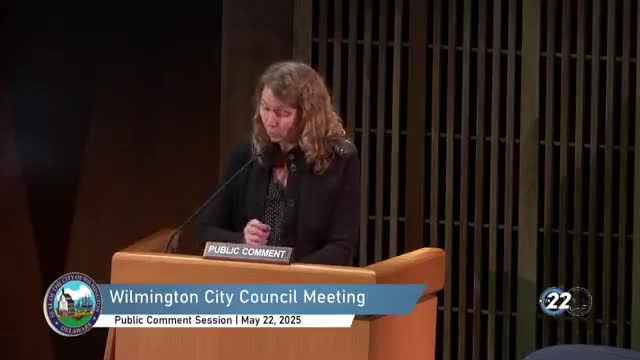
Wilmington City Council adopted the city’s FY2026 operating budget and related capital plans on Thursday after extensive hearings and amendments. Council approved substitute ordinance 25‑009 (the annual operating budget) and companion capital program and capital budget ordinances (25‑007 and 25‑008).
The council recorded the general fund at $201,700,000 and the water/sewer fund at $95,100,000 in the ordinance presentation. The finance chair, Councilwoman Harley, told the council the budget includes a range of council priorities: public safety funding including money for the police accountability board and recruiting, $2,000,000 for a home‑repair program, $3,000,000 for park capital, funding for HBCU scholarships for Wilmington residents, and $350,000 for minority small business programs and a $350,000 water utility assistance program.
Why it matters: The budget funds core city services and targeted neighborhood programs while responding to the tax reassessment by incorporating the substitute tax‑rate structure. Council members described the process as collaborative; the council held 19 departmental budget hearings in April and worked with the mayor’s administration to revise several items.
Votes and numbers: The six‑year capital program was presented with a multi‑year estimate (the recorded presentation included the figure string presented on the record). The capital budget and program passed with broad support (roll calls showed 13 yeas on capital program votes). The FY2026 operating budget substitute passed in roll call with 11 yeas and recorded oppositions noted on the record.
Program details and administration notes: The substitute budget lowered the initial proposed water rate increase from 6.5% to 5.5% (the water rate change was adopted by a separate ordinance). Administration and council staff said they reallocated certain debt service charges and included a plan to continue monitoring delinquencies and assistance programs. The finance chair flagged investments in neighborhood stabilization (alleyway repairs, tree removals), education advocacy funding and targeted capital for affordable housing; the budget also includes a request for a state bond bill focused on affordable housing.
Next steps and accountability: Council members said they will continue oversight of implementation and urged residents to use available assistance programs. Several councilmembers pledged to pursue longer‑term reforms to assessment and tax administration after the current fiscal year work is complete.
Ending note: Council leaders described the FY2026 package as an attempt to balance city service needs and neighborhood priorities while mitigating short‑term impacts from the county reassessment.
The council recorded the general fund at $201,700,000 and the water/sewer fund at $95,100,000 in the ordinance presentation. The finance chair, Councilwoman Harley, told the council the budget includes a range of council priorities: public safety funding including money for the police accountability board and recruiting, $2,000,000 for a home‑repair program, $3,000,000 for park capital, funding for HBCU scholarships for Wilmington residents, and $350,000 for minority small business programs and a $350,000 water utility assistance program.
Why it matters: The budget funds core city services and targeted neighborhood programs while responding to the tax reassessment by incorporating the substitute tax‑rate structure. Council members described the process as collaborative; the council held 19 departmental budget hearings in April and worked with the mayor’s administration to revise several items.
Votes and numbers: The six‑year capital program was presented with a multi‑year estimate (the recorded presentation included the figure string presented on the record). The capital budget and program passed with broad support (roll calls showed 13 yeas on capital program votes). The FY2026 operating budget substitute passed in roll call with 11 yeas and recorded oppositions noted on the record.
Program details and administration notes: The substitute budget lowered the initial proposed water rate increase from 6.5% to 5.5% (the water rate change was adopted by a separate ordinance). Administration and council staff said they reallocated certain debt service charges and included a plan to continue monitoring delinquencies and assistance programs. The finance chair flagged investments in neighborhood stabilization (alleyway repairs, tree removals), education advocacy funding and targeted capital for affordable housing; the budget also includes a request for a state bond bill focused on affordable housing.
Next steps and accountability: Council members said they will continue oversight of implementation and urged residents to use available assistance programs. Several councilmembers pledged to pursue longer‑term reforms to assessment and tax administration after the current fiscal year work is complete.
Ending note: Council leaders described the FY2026 package as an attempt to balance city service needs and neighborhood priorities while mitigating short‑term impacts from the county reassessment.
Don't Miss a Word: See the Full Meeting!
Go beyond summaries. Unlock every video, transcript, and key insight with a Founder Membership.
✓
Get instant access to full meeting videos
✓
Search and clip any phrase from complete transcripts
✓
Receive AI-powered summaries & custom alerts
✓
Enjoy lifetime, unrestricted access to government data
30-day money-back guarantee
