Commission approves 6-foot front, tapered 8-foot side fence at 310 East Polestad Street
May 23, 2025 | Palestine, Anderson County, Texas
This article was created by AI summarizing key points discussed. AI makes mistakes, so for full details and context, please refer to the video of the full meeting. Please report any errors so we can fix them. Report an error »
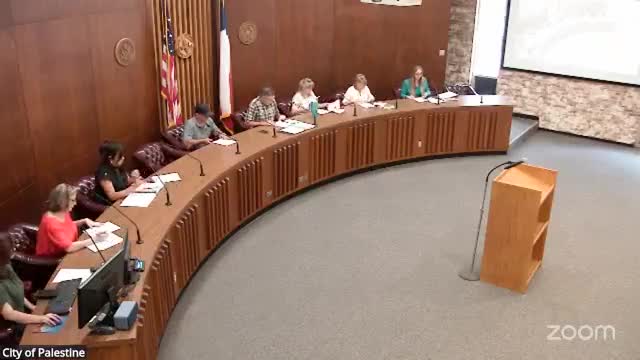
The Historic Preservation Commission on an unnamed date approved a certificate of appropriateness allowing a six-foot wood fence across the front of 310 East Polestad Street and an eight-foot wood fence along the side, tapered to meet the six-foot height at the front.
The commission’s staff explained the city’s historic guidelines recommend a maximum fence height of six feet in landmarked areas, so the applicants brought the request before the commission for review. “Guidelines recommend a max height of 6 foot,” said a staff member from the Historic Preservation Office during the discussion.
Applicant Terry Peters told the commission the existing plastic fence is deteriorating and the owners recently purchased the house. “The fence is... falling apart,” Peters said, explaining they prefer a board-on-board wood fence for longevity and to improve security. Peters said the property includes two lots (308 and 310 Polestad) and that the fence would run from the house line and in some places abut or connect to existing structures.
Commissioners discussed visibility from the street and the property’s historic appearance. A staff member clarified that city zoning allows up to eight-foot fences in some zones but landmarked properties within the historic district are limited to six feet unless the commission approves otherwise. Commissioners debated whether an extra two feet at the street would alter the house’s street-facing character and whether the eight-foot section would be visible from the public right-of-way.
After discussion, a commissioner moved to approve a six-foot wood fence across the front and an eight-foot wood fence down the side with a tapered transition so the change appears “nicely done.” The motion was seconded and passed with all in favor; no opposing votes were recorded on the record. The commission advised the applicant to submit building permit applications and bids to Development Services to complete permitting and inspection requirements.
The approval included these conditions: the front-facing portion must be six feet, board-on-board wood is appropriate in this house’s time frame, and any transition to eight feet should be tapered to reduce abrupt visual impact. The commission noted that portions of outbuildings or accessory structures that are outside the landmarked portion of the parcel may be treated differently under administrative rules, but the approved fence sections visible from the street were limited as described.
The commission did not record a roll-call vote with individual member votes in the minutes provided; the meeting closed the item after the motion passed.
The commission’s staff explained the city’s historic guidelines recommend a maximum fence height of six feet in landmarked areas, so the applicants brought the request before the commission for review. “Guidelines recommend a max height of 6 foot,” said a staff member from the Historic Preservation Office during the discussion.
Applicant Terry Peters told the commission the existing plastic fence is deteriorating and the owners recently purchased the house. “The fence is... falling apart,” Peters said, explaining they prefer a board-on-board wood fence for longevity and to improve security. Peters said the property includes two lots (308 and 310 Polestad) and that the fence would run from the house line and in some places abut or connect to existing structures.
Commissioners discussed visibility from the street and the property’s historic appearance. A staff member clarified that city zoning allows up to eight-foot fences in some zones but landmarked properties within the historic district are limited to six feet unless the commission approves otherwise. Commissioners debated whether an extra two feet at the street would alter the house’s street-facing character and whether the eight-foot section would be visible from the public right-of-way.
After discussion, a commissioner moved to approve a six-foot wood fence across the front and an eight-foot wood fence down the side with a tapered transition so the change appears “nicely done.” The motion was seconded and passed with all in favor; no opposing votes were recorded on the record. The commission advised the applicant to submit building permit applications and bids to Development Services to complete permitting and inspection requirements.
The approval included these conditions: the front-facing portion must be six feet, board-on-board wood is appropriate in this house’s time frame, and any transition to eight feet should be tapered to reduce abrupt visual impact. The commission noted that portions of outbuildings or accessory structures that are outside the landmarked portion of the parcel may be treated differently under administrative rules, but the approved fence sections visible from the street were limited as described.
The commission did not record a roll-call vote with individual member votes in the minutes provided; the meeting closed the item after the motion passed.
Don't Miss a Word: See the Full Meeting!
Go beyond summaries. Unlock every video, transcript, and key insight with a Founder Membership.
✓
Get instant access to full meeting videos
✓
Search and clip any phrase from complete transcripts
✓
Receive AI-powered summaries & custom alerts
✓
Enjoy lifetime, unrestricted access to government data
30-day money-back guarantee
