Albany commission defers decision on 52 James Street facade and upper‑level sign
May 23, 2025 | Albany City, Albany County, New York
This article was created by AI summarizing key points discussed. AI makes mistakes, so for full details and context, please refer to the video of the full meeting. Please report any errors so we can fix them. Report an error »
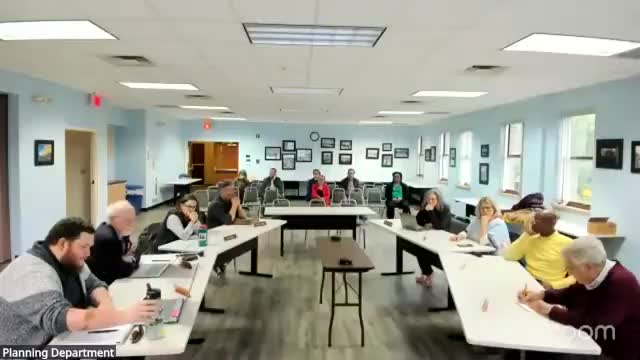
The Albany Historic Resources Commission voted to defer consideration of a certificate of appropriateness application for exterior modifications and signage at 52 James Street in the Downtown Albany Historic District, citing missing historic documentation and unresolved design questions.
Commissioners and the applicant spent the meeting reviewing proposed changes to the building's ground‑floor openings, entrances and signage. The applicant, represented by Florida Santana Jonas of Neo Vista, said the left side of the first floor will be a “fresh market” with ready‑to‑go food and produce, while the main entrance will serve a lobby leading to a daycare and offices on upper floors. “We're excited about it. We're investing a lot of money into the area,” Jonas said, and added the design aims to separate the market entrance from the daycare to improve safety and control access.
Why it matters: the project would alter prominent ground‑floor openings in a designated historic district and add upper‑level signage. Commissioners emphasized that new work should be compatible with the building's historic character and the rest of the elevation, and asked the applicant to produce additional historic evidence and revised drawings before the commission rules.
Discussion highlights
Planning staff and commissioners focused on three areas: the configuration of entrances, the amount and pattern of glazing, and the proposed upper‑level sign. Christopher Loman, historic preservation planner for the City of Albany, presented the application materials and noted procedural rules for the public hearing.
The applicant's design team proposed a multilite, overhead‑door aesthetic with two similar openings and central entrance doors to create symmetry. Commissioners debated whether the ground‑floor openings should recall a roll‑up/garage appearance or instead echo the vertical window rhythm on the floors above. Commissioners suggested alternatives such as flanking double doors at the outer edges of each bay, larger transom glazing to preserve verticality, or shifting the entrance to better match the upper fenestration.
Several commissioners and staff asked for historic photographs or archival drawings before accepting a reconstruction approach. Planning staff reported a 1985 photograph in city records that shows the current opening treatment documented at that time but said earlier images were not found in the planning office files. A meeting participant who reviewed historic Sanborn maps said, “I took a quick look at the 1908 and 1934 Sanborn, and it wasn't a firehouse,” and emailed map images to staff during the meeting; the commenter said a 1915 engraving shows a clothing‑factory façade and side doors. Commissioners said that finding and reviewing earlier documentation (for example in the Albany Room at the public library) could change the appropriate design direction.
Signage and materials
The applicant submitted a signage package prepared by Vital Signs that includes an illuminated aluminum channel‑letter sign proposed above the cornice. Commissioners noted that the Historic Resources Ordinance and downtown signage rules normally limit sign placement above the second story; staff and commissioners asked for a clearer demonstration of how the proposed top‑level sign would comply with the HRO and the city code. The applicant said the building exterior will be cleaned and that no state or federal funding (including SHPO tax credits) is currently involved; the project is being self‑funded.
Action and next steps
A commissioner moved to defer the application to allow staff and the applicant to gather additional historic documentation and to provide revised elevation options and clearer signage materials. A second was recorded and the motion carried. The commission did not record a roll‑call vote in the public transcript.
The commission advised the applicant to provide: archival photographs or maps showing the building's earlier appearance; revised elevation drawings showing alternative entrance configurations (centered entrances and flanking double doors were specifically requested); and a JPEG or full specifications for the proposed upper‑level sign. Staff indicated they will check local archives (including the Albany Room) and suggested speaking with local historians noted during the meeting. The applicant said construction would not start until the commission resolves the door and signage issues.
Ending
The commission deferred action and will revisit the certificate of appropriateness application for 52 James Street after staff and the applicant submit the requested historic documentation and revised designs. The file will return to the commission for a future public hearing once those materials are received and posted.
Commissioners and the applicant spent the meeting reviewing proposed changes to the building's ground‑floor openings, entrances and signage. The applicant, represented by Florida Santana Jonas of Neo Vista, said the left side of the first floor will be a “fresh market” with ready‑to‑go food and produce, while the main entrance will serve a lobby leading to a daycare and offices on upper floors. “We're excited about it. We're investing a lot of money into the area,” Jonas said, and added the design aims to separate the market entrance from the daycare to improve safety and control access.
Why it matters: the project would alter prominent ground‑floor openings in a designated historic district and add upper‑level signage. Commissioners emphasized that new work should be compatible with the building's historic character and the rest of the elevation, and asked the applicant to produce additional historic evidence and revised drawings before the commission rules.
Discussion highlights
Planning staff and commissioners focused on three areas: the configuration of entrances, the amount and pattern of glazing, and the proposed upper‑level sign. Christopher Loman, historic preservation planner for the City of Albany, presented the application materials and noted procedural rules for the public hearing.
The applicant's design team proposed a multilite, overhead‑door aesthetic with two similar openings and central entrance doors to create symmetry. Commissioners debated whether the ground‑floor openings should recall a roll‑up/garage appearance or instead echo the vertical window rhythm on the floors above. Commissioners suggested alternatives such as flanking double doors at the outer edges of each bay, larger transom glazing to preserve verticality, or shifting the entrance to better match the upper fenestration.
Several commissioners and staff asked for historic photographs or archival drawings before accepting a reconstruction approach. Planning staff reported a 1985 photograph in city records that shows the current opening treatment documented at that time but said earlier images were not found in the planning office files. A meeting participant who reviewed historic Sanborn maps said, “I took a quick look at the 1908 and 1934 Sanborn, and it wasn't a firehouse,” and emailed map images to staff during the meeting; the commenter said a 1915 engraving shows a clothing‑factory façade and side doors. Commissioners said that finding and reviewing earlier documentation (for example in the Albany Room at the public library) could change the appropriate design direction.
Signage and materials
The applicant submitted a signage package prepared by Vital Signs that includes an illuminated aluminum channel‑letter sign proposed above the cornice. Commissioners noted that the Historic Resources Ordinance and downtown signage rules normally limit sign placement above the second story; staff and commissioners asked for a clearer demonstration of how the proposed top‑level sign would comply with the HRO and the city code. The applicant said the building exterior will be cleaned and that no state or federal funding (including SHPO tax credits) is currently involved; the project is being self‑funded.
Action and next steps
A commissioner moved to defer the application to allow staff and the applicant to gather additional historic documentation and to provide revised elevation options and clearer signage materials. A second was recorded and the motion carried. The commission did not record a roll‑call vote in the public transcript.
The commission advised the applicant to provide: archival photographs or maps showing the building's earlier appearance; revised elevation drawings showing alternative entrance configurations (centered entrances and flanking double doors were specifically requested); and a JPEG or full specifications for the proposed upper‑level sign. Staff indicated they will check local archives (including the Albany Room) and suggested speaking with local historians noted during the meeting. The applicant said construction would not start until the commission resolves the door and signage issues.
Ending
The commission deferred action and will revisit the certificate of appropriateness application for 52 James Street after staff and the applicant submit the requested historic documentation and revised designs. The file will return to the commission for a future public hearing once those materials are received and posted.
Don't Miss a Word: See the Full Meeting!
Go beyond summaries. Unlock every video, transcript, and key insight with a Founder Membership.
✓
Get instant access to full meeting videos
✓
Search and clip any phrase from complete transcripts
✓
Receive AI-powered summaries & custom alerts
✓
Enjoy lifetime, unrestricted access to government data
30-day money-back guarantee
