Alaska witnesses tell Congress community quotas, global competition and trade pressure domestic seafood
June 05, 2025 | Natural Resources: House Committee, Standing Committees - House & Senate, Congressional Hearings Compilation, Legislative, Federal
This article was created by AI summarizing key points discussed. AI makes mistakes, so for full details and context, please refer to the video of the full meeting. Please report any errors so we can fix them. Report an error »
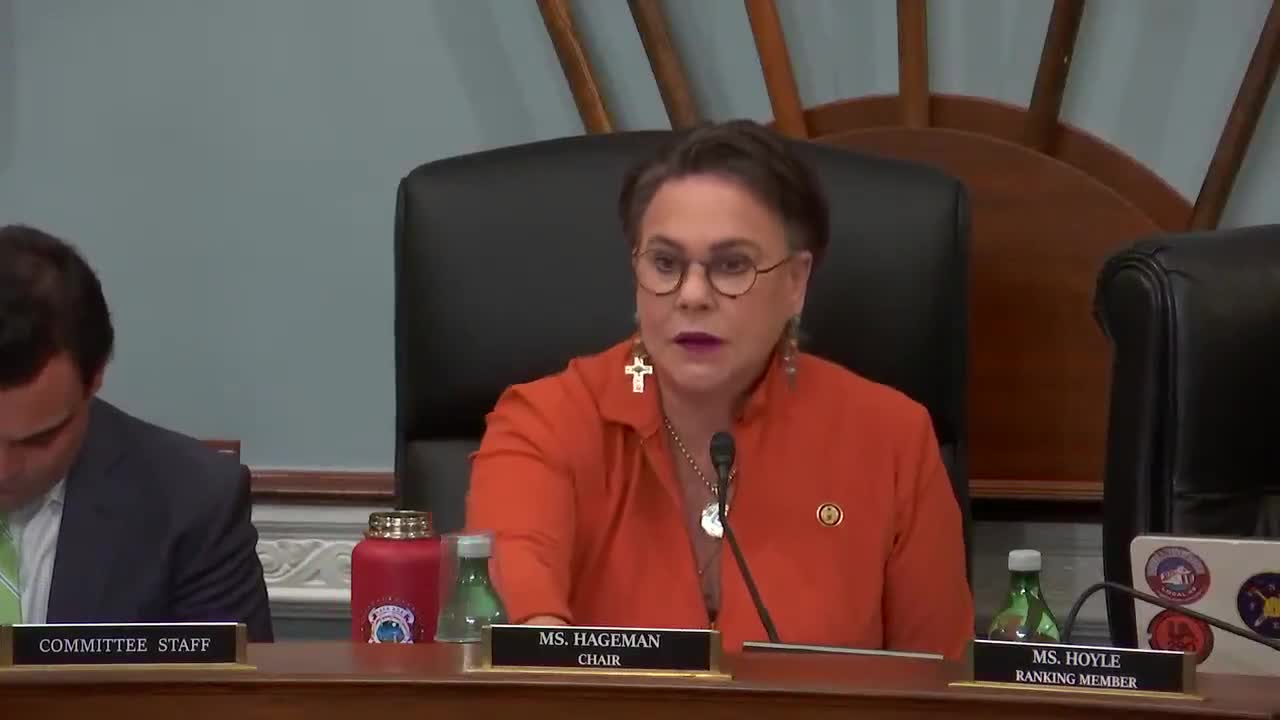
Witnesses from Alaska told the subcommittee that fishing is the economic backbone for many rural communities and that global competition, subsidies and trade distortions threaten those livelihoods.
Larson Hunter, chairman of the board of directors for the Coastal Villages Region Fund and city manager of Scammon Bay, described how the Community Development Quota (CDQ) program has created jobs, training and economic opportunities in Western Alaska. ‘‘Without CDQ, the alternative in our region is usually food stamps,’’ Hunter said, and he told members CBRF paid roughly $4 million in wages last year and supports more than 100 full‑time jobs in the communities it serves.
Hunter and others said Alaska is unusually dependent on exports: “Alaska accounts for 60% of America’s domestic harvest and 70% of that is exported,” he said. They described a strategic disadvantage against fleets from subsidizing nations. Hunter warned that Russian subsidies and expanding fleets have boosted Russia’s pollock harvest from about 1,750,000 tons to 2,460,000 tons since 2021, and that vessel construction costs are substantially lower overseas than in the United States, making U.S. producers less able to compete internationally.
Jamie O'Connor, a fifth‑generation Bristol Bay fisherman, urged Congress to treat working waterfronts as strategic infrastructure and to support port, processing and training investments. “We are not asking for a handout. We are asking for a fair shot alongside the rest of America's food producers,” she testified, and recommended creating a USDA office of seafood to integrate seafood into federal grant, loan and nutrition programs.
Members and witnesses discussed trade policy, labeling and supply‑chain transparency as levers to protect domestic producers from unfair competition. Hunter urged measures to make clear to buyers and consumers when products are Alaska wild‑caught and sustainable. Lawmakers said they would consider trade and labeling tools alongside funding to bolster processing plants, vessel construction and workforce development.
Larson Hunter, chairman of the board of directors for the Coastal Villages Region Fund and city manager of Scammon Bay, described how the Community Development Quota (CDQ) program has created jobs, training and economic opportunities in Western Alaska. ‘‘Without CDQ, the alternative in our region is usually food stamps,’’ Hunter said, and he told members CBRF paid roughly $4 million in wages last year and supports more than 100 full‑time jobs in the communities it serves.
Hunter and others said Alaska is unusually dependent on exports: “Alaska accounts for 60% of America’s domestic harvest and 70% of that is exported,” he said. They described a strategic disadvantage against fleets from subsidizing nations. Hunter warned that Russian subsidies and expanding fleets have boosted Russia’s pollock harvest from about 1,750,000 tons to 2,460,000 tons since 2021, and that vessel construction costs are substantially lower overseas than in the United States, making U.S. producers less able to compete internationally.
Jamie O'Connor, a fifth‑generation Bristol Bay fisherman, urged Congress to treat working waterfronts as strategic infrastructure and to support port, processing and training investments. “We are not asking for a handout. We are asking for a fair shot alongside the rest of America's food producers,” she testified, and recommended creating a USDA office of seafood to integrate seafood into federal grant, loan and nutrition programs.
Members and witnesses discussed trade policy, labeling and supply‑chain transparency as levers to protect domestic producers from unfair competition. Hunter urged measures to make clear to buyers and consumers when products are Alaska wild‑caught and sustainable. Lawmakers said they would consider trade and labeling tools alongside funding to bolster processing plants, vessel construction and workforce development.
View the Full Meeting & All Its Details
This article offers just a summary. Unlock complete video, transcripts, and insights as a Founder Member.
✓
Watch full, unedited meeting videos
✓
Search every word spoken in unlimited transcripts
✓
AI summaries & real-time alerts (all government levels)
✓
Permanent access to expanding government content
30-day money-back guarantee
